Description
♟️ What will you learn?
The discovered check and the double check are the most powerful tactical resources in chess. A double check can only be answered by moving the king — no capture or interposition is possible. Mastering these patterns, both to execute and to recognise defensively, changes the result of many games. The king hunt — the opponent’s king left exposed and chased with uncovered pieces and sacrifices — requires the deepest calculation of any pattern in the series.
🎯 Who is this book for?
- Players who have worked through Volumes I and II and want to complete the series
- Intermediate players developing tactical vision in the most complex patterns in club chess
- Coaches looking for thematically organised advanced mate pattern material
📖 Contents
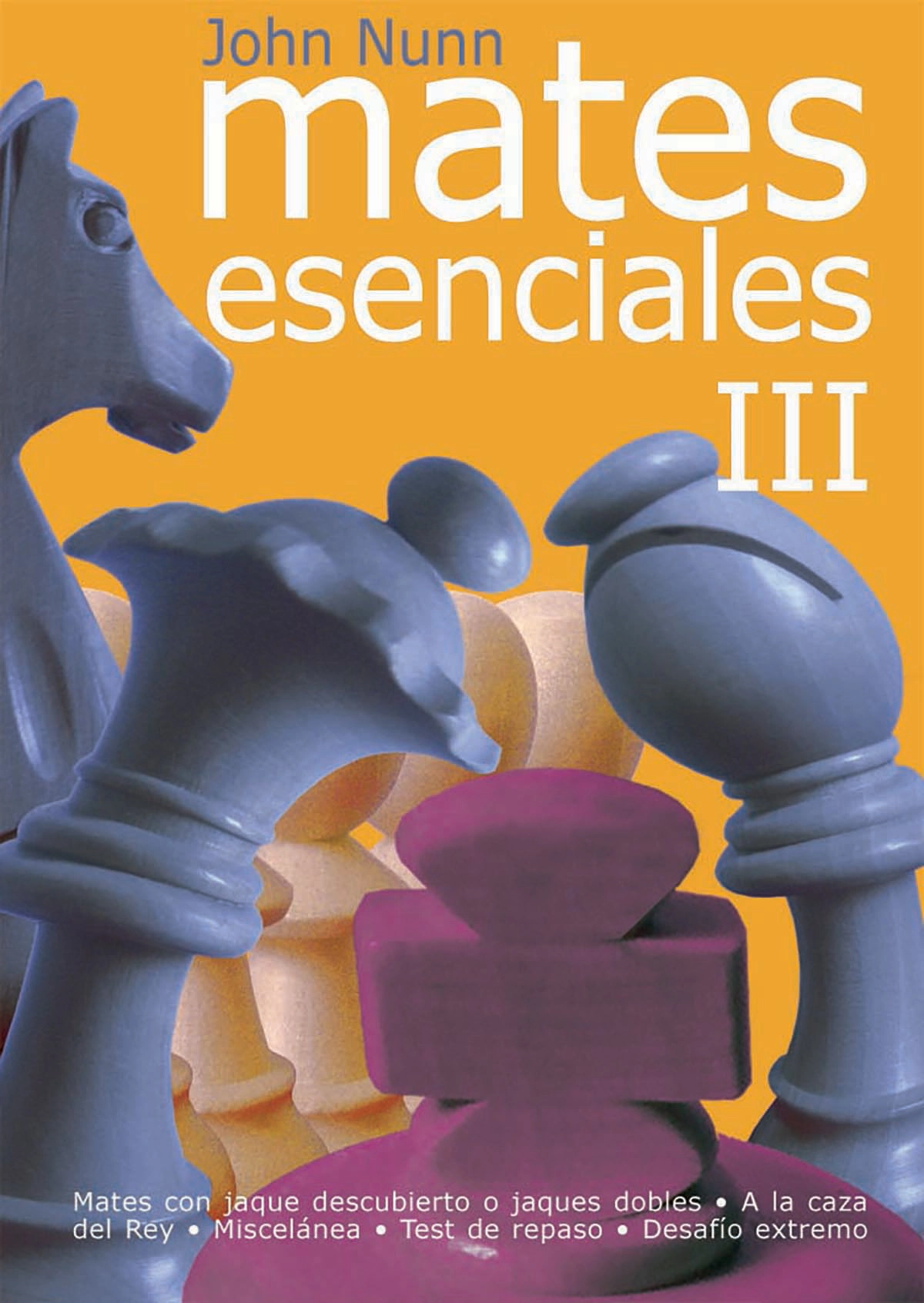
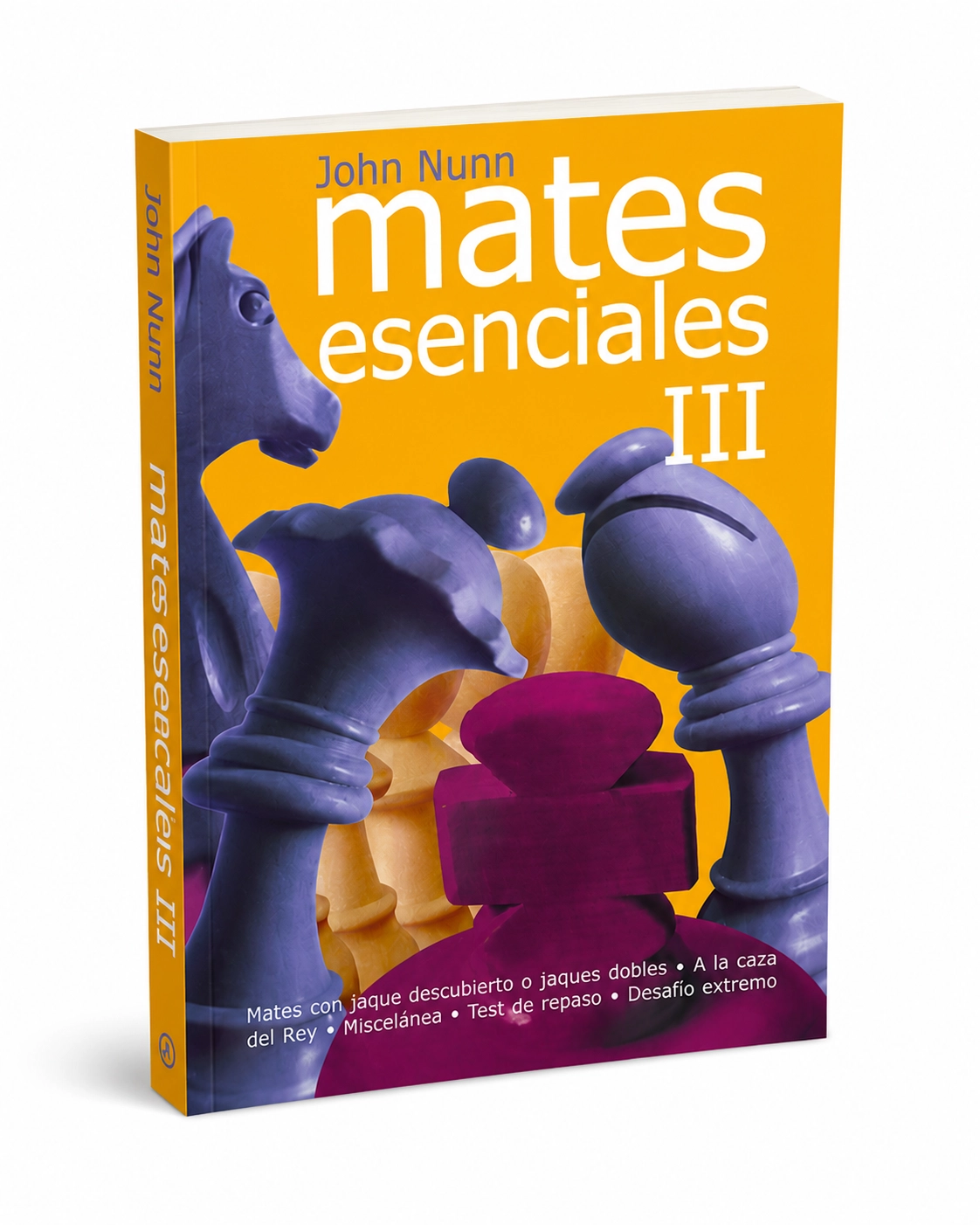
5 sections (chapters 13-17): Chapter 13 — Mate by discovered or double check (pp.6-21 / pp.22-33), Chapter 14 — King hunt (pp.34-37 / pp.38-41), Chapter 15 — Miscellaneous (pp.42-65 / pp.66-81), Chapter 16 — Review test (pp.82-92 / pp.93-99), Chapter 17 — Extreme challenge (pp.100-109 / pp.110-119). The Extreme Challenge: harder not because patterns are more complex, but because positions are less clearly defined — requires longer calculation, less intuitive sacrifices and rejecting false lines.
👤 About the author
John Nunn (born 1955): English Grandmaster, four-time Olympiad gold medallist, triple World Chess Solving Champion. Series preface by GM Murray Chandler.
♟️ Why we recommend it at Chesscul
At Chesscul this third volume covers the patterns that generate the most defensive errors in club chess: situations where the attacker sees something is there but can’t calculate all the way through. The Extreme Challenge chapter should be worked slowly, without time pressure, comparing your reasoning with solutions even when you found the right answer.
🔗 Recommended companions
- Essential Checkmates I: the first volume — the necessary starting point.
- Essential Checkmates II: the second volume with intermediate patterns.
- Bobby Fischer Teaches Chess: the ideal complement with the famous circular format.




Reviews
There are no reviews yet