Description
♟️ Why the French Defence?
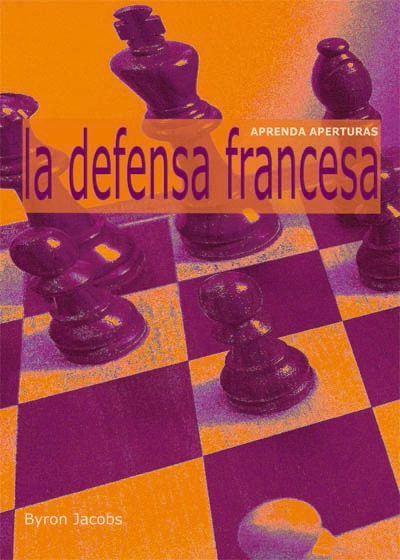
The French Defence is one of the most principled and reliable responses to 1.e4. Rather than fighting for the centre immediately, Black establishes a solid pawn structure with …e6 and …d5, accepting a slightly cramped position in exchange for a rock-solid foundation. From this base, Black launches counterplay on the queenside while White attacks on the kingside. The resulting positions are rich, complex and highly instructive for understanding chess strategy.
The French has been played at the highest level for over 150 years, chosen by players as different as Nimzovich, Petrosian, Kortchnoi and Nakamura. Its durability is a testament to its soundness. This guide from the Learn Openings series provides a thorough grounding in all the main French variations with a focus on the ideas that make each one work.
🎯 Who is this book for?
- Players who want to add the French Defence to their repertoire as Black
- Players who face the French as White and need to understand what Black is trying to achieve
- Intermediate players who find 1…e5 or the Sicilian too sharp and want a more strategic alternative
📖 Contents
The book covers all major French Defence variations:
- The Advance Variation (3.e5): White’s most aggressive choice and Black’s counterplay
- The Tarrasch Variation (3.Nd2): a flexible approach that avoids the sharpest theory
- The Winawer Variation (3.Nc3 Bb4): the most theoretically complex French — double-edged and rich
- The Classical Variation (3.Nc3 Nf6): the main line with 4.e5 and 4.Bg5
- The Exchange Variation (3.exd5): positional understanding and endgame technique
- Minor lines and early White deviations
👤 About the author
Byron Jacobs is a British chess author, FIDE Master and editor with extensive experience writing opening guides for club players. His books are known for clear organisation and practical accessibility.
♟️ Why we recommend it at Chesscul
At Chesscul we recommend this book to students who want a strategic, less theory-intensive alternative to the Sicilian against 1.e4. The French rewards understanding over memorisation, and Jacobs’s clear explanations make that understanding accessible.
🔗 Recommended companions
- Endgame Planning I: Shereshevsky covers the typical French endgames — the isolated queen’s pawn, the minority attack — in depth.
- Chess Move by Move: The Caro-Kann: another solid alternative to 1…e5 against 1.e4, useful for comparison when choosing a defence.
- Secrets of Chess Transformations: Marovic’s analysis of strategic transformations is particularly relevant to the French, where pawn structure transformations are central to the middlegame plans.







Reviews
There are no reviews yet