Description
♟️ Bishop or knight: when is each piece stronger?
The question of whether the bishop is better than the knight has no universal answer. It depends on the position, the pawn structure, the type of play and the phase of the game. Understanding when each piece is superior is not a matter of memorising rules: it’s a matter of recognising the patterns that emerge from real positions and learning to evaluate them with genuine judgment of your own.
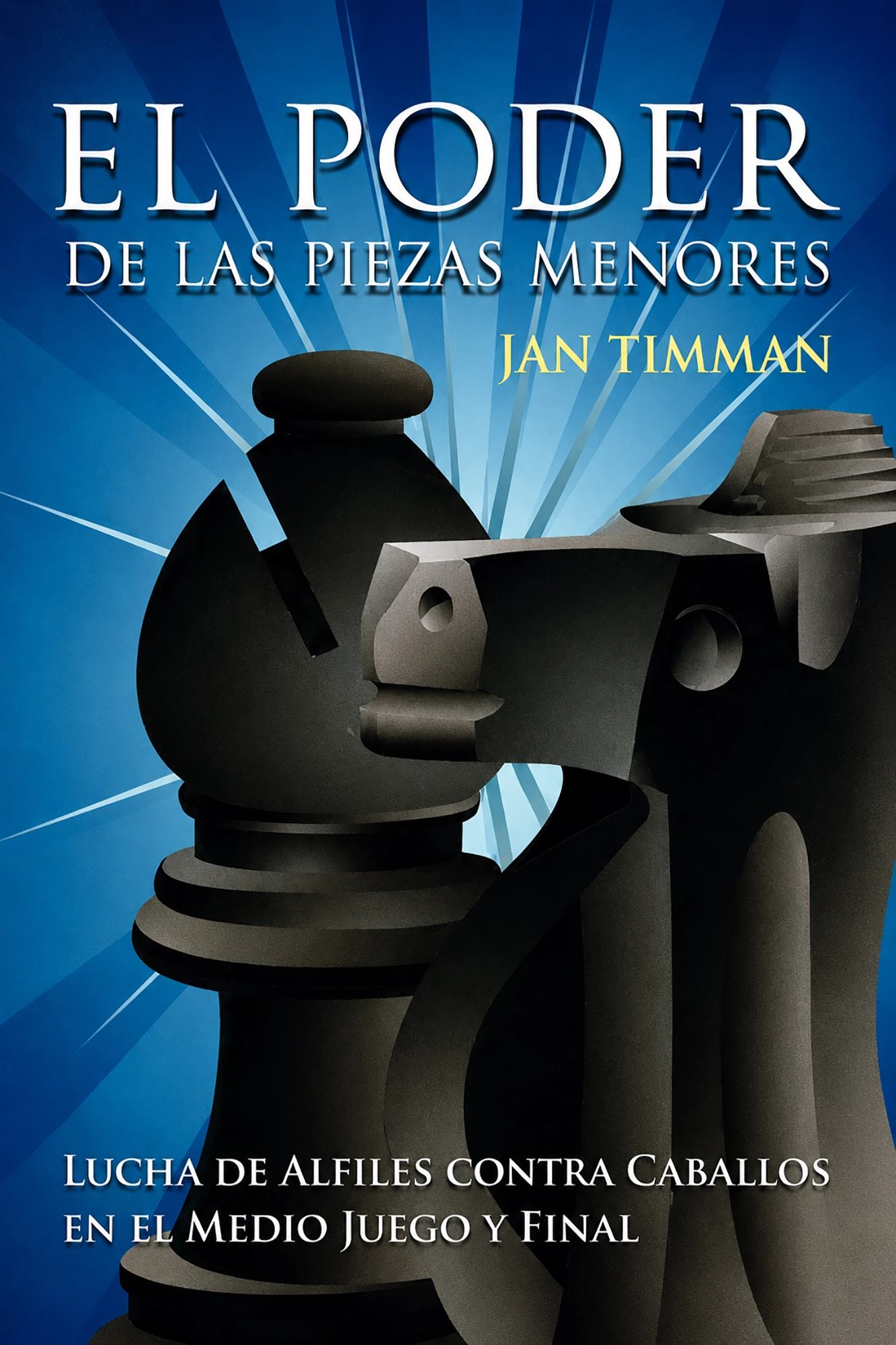
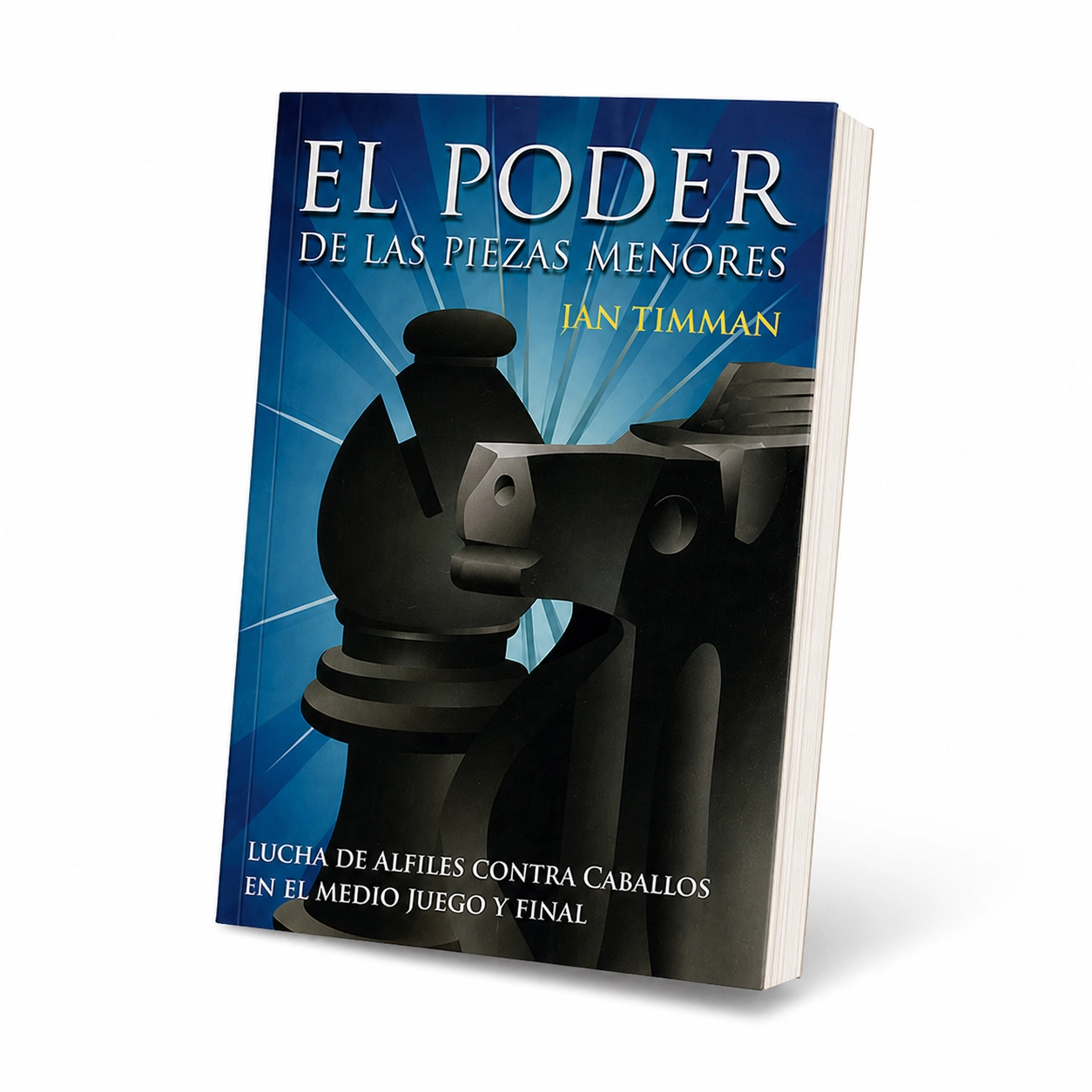
The Power of the Minor Pieces approaches this question honestly: Timman doesn’t give simple answers because real positions aren’t simple. He analyses 28 games by elite players — Kasparov, Karpov, Anand, Kramnik, Leko, Shirov and Timman himself, among others — and in each one studies the moment where the minor piece imbalance becomes the decisive factor. The analysis begins in the middlegame and follows through to the endgame.
🎯 Who is this book for?
- Advanced players who want to develop their own analytical judgment on the bishop vs knight imbalance
- Serious chess fans who want to improve their analytical capacity by studying deeply annotated elite games
- Coaches looking for high-quality material on the minor piece battle for advanced students
📖 Contents
The book is structured into 5 chapters with 28 annotated games, organised by type of imbalance:
- Chapter 1 — Knight Superiority. Games (12 games): Andersson-Browne, Karpov-Kasparov, Romanishin-Timman, Kasparov-Karpov, Karpov-Sokolov, Karpov-Yusupov, Anand-Kamsky, Leko-Topalov, Lautier-Kramnik, Polgar-Anand, Piket-Azmaiparashvili, Timman-Avrukh
- Chapter 2 — Knight Superiority. Endgames
- Chapter 3 — Bishop Pair Superiority (10 games): De Firmian-Alburt, Qi Jingxuan-Timman, Karpov-Seirawan, Kasparov-Sokolov, Ljubojevic-Khalifman, Bologan-Romanishin, Anand-Tiviakov, Leko-Topalov, Short-Polgar, Shirov-Kasparov
- Chapter 4 — Knight Pair Superiority (3 games): Hübner-Kortchnoi, Psakhis-Speelman, Ivanchuk-Kasparov
- Chapter 5 — Bishop and Knight Superiority (3 games): Karpov-Kamsky, Salov-Kamsky, Ponomariov-Vallejo
📚 Deep analysis, few games
Unlike middlegame books that present dozens of positions with superficial comments, this book works a small number of games with exceptional analytical depth. Timman enters the decisive moment of each game and analyses in detail how the minor piece superiority is built, maintained and converted. The solutions are not obvious and the analysis includes variations where the evaluation isn’t clear even with computer assistance.
👤 About the author
Jan Timman (Amsterdam, 1951) is a Dutch Grandmaster and one of the world’s best players during the 1970s, 80s and 90s. He was World Championship finalist in 1993 against Kasparov. He is a regular columnist for New in Chess magazine. Translated into Spanish by Ferrán Gómez.
♟️ Why we recommend it at Chesscul
At Chesscul we recommend this book to advanced students who already have a solid strategic base and want to develop their analytical judgment. The bishop vs knight question appears in almost every competitive game and most players answer it with general rules that don’t always work. Timman teaches concrete thinking, game by game.
🔗 Recommended companions
- Decision-Making in Major Piece Endgames: Boris Gelfand applies the same analytical depth to rook and queen endgames.
- 100 Endgames You Must Know: covers minor piece endings within a broader compendium — useful as prior theoretical grounding.
- Secrets of Chess Transformations: Marovic analyses the transformation mechanisms that Timman illustrates in these games.




Reviews
There are no reviews yet