Description
♟️ What is this book?
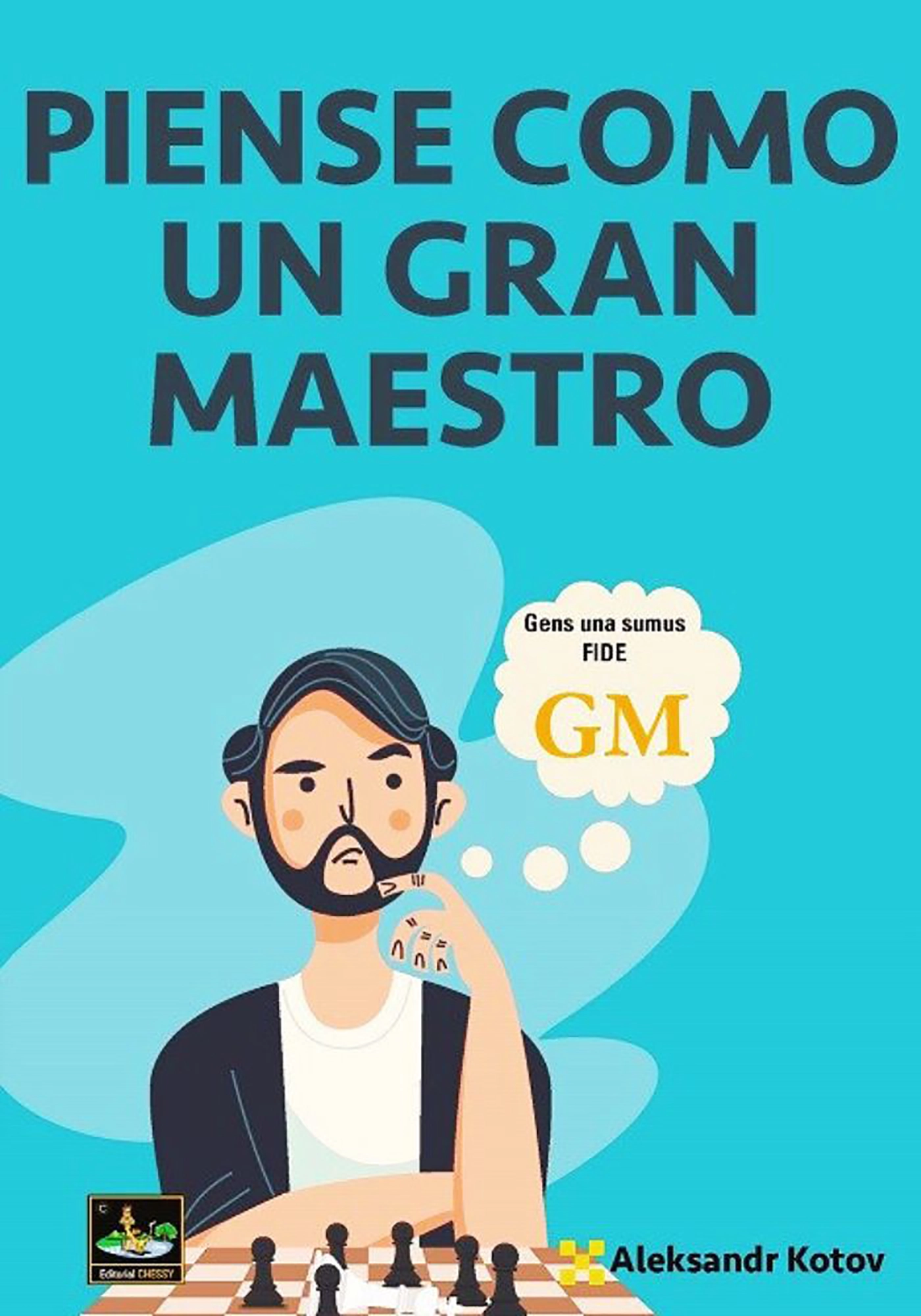
Think Like a Grandmaster is one of the most influential chess books ever written. Published in 1971, it introduced concepts — particularly the candidate moves tree and the systematic approach to calculation — that became foundational to chess education worldwide. Almost every subsequent book on the thought process in chess engages directly with ideas Kotov introduced here.
The core argument is simple: chess improvement requires a systematic approach to calculation, and most players fail to improve because they calculate in an unsystematic way that doesn’t scale to more complex positions.
🎯 Who is this book for?
- Intermediate players who want to understand the theoretical foundation of systematic calculation
- Players who have read more modern books on the thought process and want to understand the historical context
- Students who want a clear mental framework for how to approach critical positions at the board
📖 What’s inside
192 pages covering the main aspects of the chess thought process:
- The candidate moves tree: how to generate and evaluate the most important moves systematically
- Positional evaluation: how to assess a position before deciding on a plan
- The role of pattern recognition in calculation: when to rely on intuition vs. calculation
- Training calculation: how to improve the systematic aspects of the thought process
📚 Kotov in context
Think Like a Grandmaster has been criticized for presenting an idealized version of how grandmasters think that doesn’t fully match reality. That criticism is partially valid. But the book’s value lies in the discipline it introduces: the habit of identifying candidates systematically before moving — imperfectly applied, still more effective than no discipline at all.
♟️ Why we recommend it at Chesscul
At Chesscul we recommend this book as the historical foundation for understanding the chess thought process. Students who read it alongside modern texts like Aagaard’s Calculation get a richer understanding of why current approaches developed the way they did.
🔗 Recommended to pair with
- Calculation: Aagaard’s modern update of the systematic calculation approach Kotov introduced.
- Thinking Inside the Box: Aagaard’s framework for decision-making, the contemporary answer to the questions Kotov raised.







Reviews
There are no reviews yet