Search

Electronic Chess Boards

Related Posts

Frequently Asked Questions

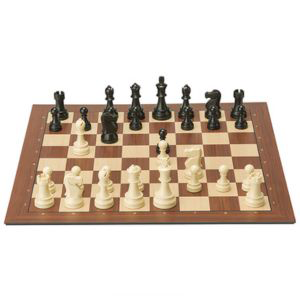
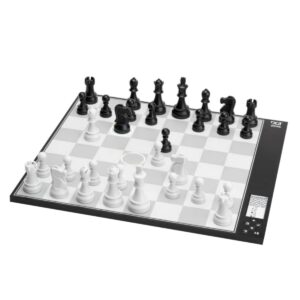
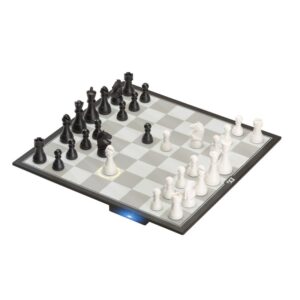
An electronic chess board is a physical board with built-in sensors and piece recognition that automatically detects every move you make. It connects via USB, Bluetooth, or WiFi to your computer or mobile device and allows you to play online, train with artificial intelligence, or record your games for later analysis. It lets you enjoy the real-board feeling with all the advantages of digital chess.

An electronic chess board is useful for much more than just playing casual games. With it, you can:

  • Play online on chess platforms by connecting the board to your PC or mobile device.

  • Play against engines or chess AI at different strength levels.

  • Automatically record and save your games for analysis.

  • Train from home with an experience very similar to a real tournament.

That is why many clubs, schools, and competitive players use it as a regular training tool.

Yes. Most smart electronic chess boards allow you to play online by connecting to an app or program on your PC or smartphone. Once configured, you will see your opponent’s moves directly on the physical board, and your moves will be sent automatically to the platform. It’s a comfortable way to play on Chess.com, Lichess, or other servers without constantly staring at a screen.

A traditional chess board has no electronics: you either record your games by hand or play without keeping a record.

An electronic chess board, on the other hand:

  • Detects pieces through sensors.

  • Can automatically record moves.

  • Connects via USB, Bluetooth, or WiFi to your devices.

  • Allows you to play online, analyze games, and train with AI.

If you only want a board to play occasionally, a traditional one is enough. If you want serious training and to take advantage of online chess, an electronic board offers many more possibilities.


To know which electronic chess board to buy, consider the following:

  1. Main use: playing online, training with AI, recording tournament games, club use, etc.

  2. Connectivity: check whether you need USB, Bluetooth, or WiFi and which devices it supports (PC, mobile, tablet).

  3. Piece recognition: look for reliable sensors and accurate move detection.

  4. Size and materials: there are portable models, tournament-size boards, wooden versions, and plastic ones.

  5. Compatible software: check which chess programs or apps it can connect to.

With these points clear, choosing the right board becomes much easier.

A smart chess board makes training more comfortable and effective:

  • You can analyze your games without entering the moves manually.

  • It is easier to follow study plans based on real games.

  • You combine the feel of a physical board with the power of analysis engines.

  • When playing online with a physical board, you train as if you were in a real tournament.

In short, you get the full potential of digital chess without giving up the over-the-board experience.

Yes. Many electronic chess board models are designed for children and beginners, with lightweight boards, comfortable pieces, and simple apps. Automatic move detection helps avoid recording mistakes, and training apps often include guided modes, exercises, and progressive levels, making it much easier to learn from home.

It depends on the model, but the process is generally similar:

  1. Connect the board to the device via USB, Bluetooth, or WiFi.

  2. Open the compatible chess app or program.

  3. Link the board within the software settings.

  4. Choose whether you want to play online, against AI, or record a live game.

From that point on, the board acts as a physical interface: you play on the board, and the device displays the clock, opponent, analysis, and other features.