



21,50 € Original price was: 21,50 €.20,43 €Current price is: 20,43 €.
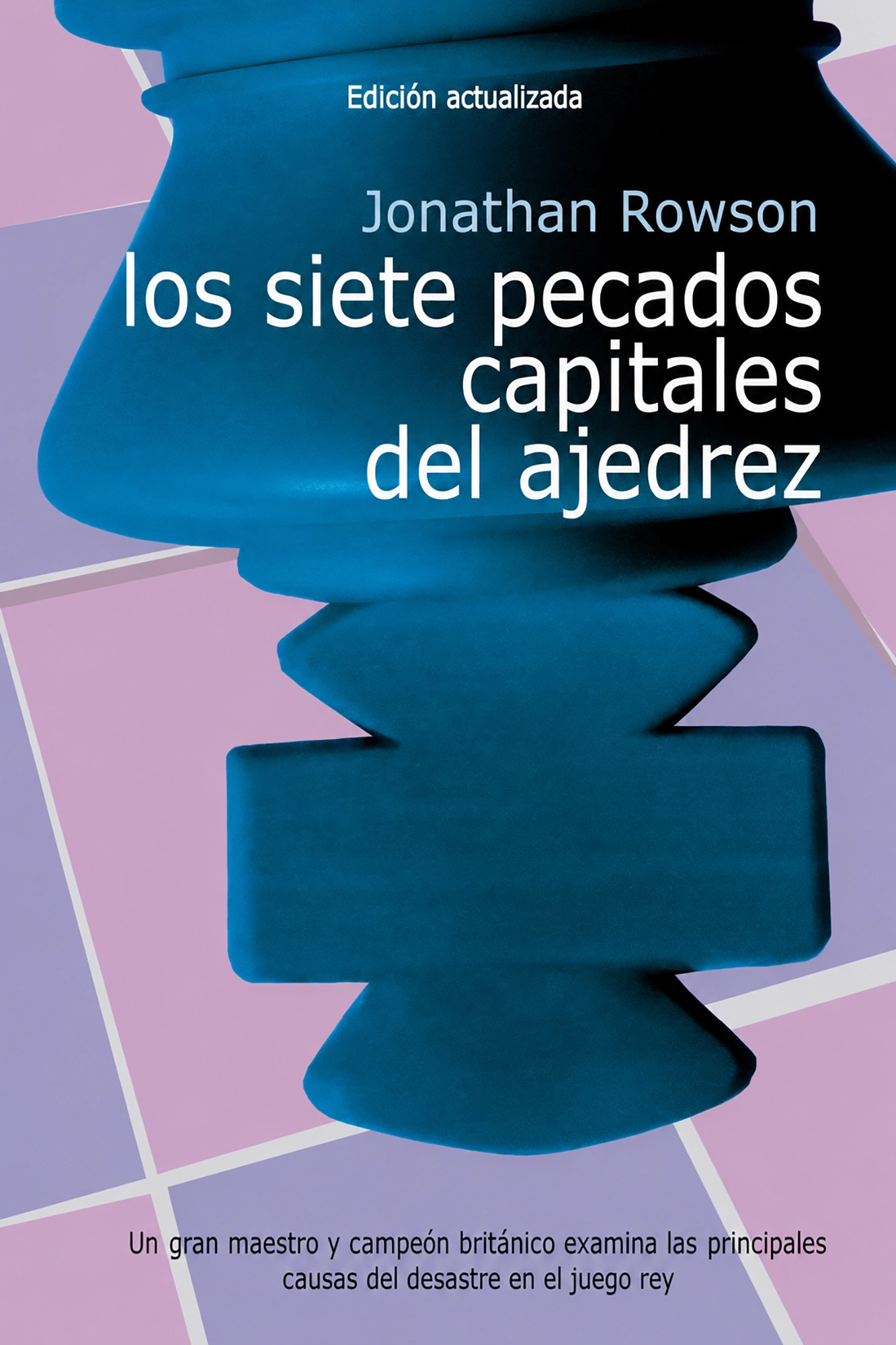
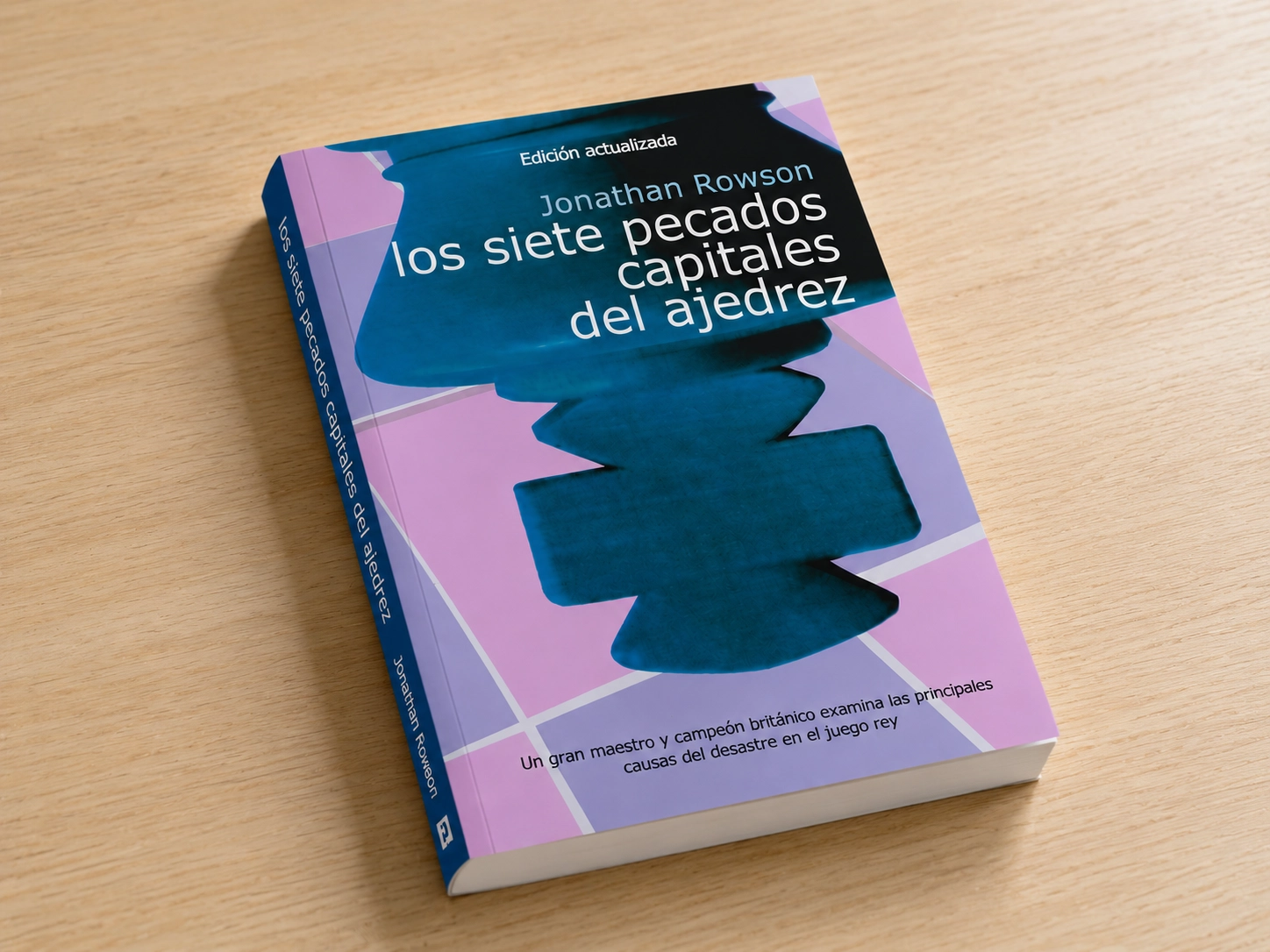
The most original book on the mental mistakes of chess players, written by three-time British Champion Jonathan Rowson: an analysis of the seven mental states that most often lead to bad decisions at the board.
This updated edition adds new examples and reflections on the seven “sins”: thinking, relaxation, greed, materialism, egoism, perfectionism, and distraction.
For intermediate and advanced players who want to identify which of these mental states is their most frequent mistake, and what they can do to manage it better.
En stock
♟️ What are the “Seven Deadly Sins” of chess?
The seven deadly sins of chess are not tactical or strategic mistakes: they are mental states that lead to bad decisions. Rowson identifies seven of them: thinking too much or too little, relaxing at the wrong moment, being greedy when patience is required, overvaluing material, ignoring the opponent’s ideas because of overconfidence, seeking perfection instead of something good enough, and losing concentration. Any competitive player will recognize all or several of them in themselves.
What makes this book especially valuable is that Rowson does not merely identify the sins: he analyzes them rigorously, shows examples from games where they have caused mistakes even among elite players, and offers concrete tools to recognize and manage them better. The result is a book that acts like a mirror: readers see themselves reflected in it and come to understand better why they make the mistakes they make.
🎯 Who is this book for?
Intermediate and advanced players who want to identify their most frequent mental mistakes and learn how to manage them.
Enthusiasts who make mistakes that have no technical explanation — mistakes of attitude, concentration, or emotional evaluation.
Coaches who want to work on the psychological factors of competitive performance with their students.
📖 Book contents
The book is organized into seven chapters, one for each “deadly sin” of chess:
Thinking: the mistake of thinking inappropriately — too superficially in positions that require deep calculation, or too deeply in positions that require quick evaluation.
Relaxation: the mistake of relaxing prematurely in winning positions, producing errors that turn a won position into a draw or a loss.
Greed: the mistake of seeking more than the position offers — winning material when the correct thing is to consolidate, attacking when the correct thing is to simplify.
Materialism: the mistake of overvaluing material at the expense of more important positional factors — time, initiative, king safety.
Egoism: the mistake of ignoring the opponent’s ideas because of overconfidence — failing to see their threats because one is too focused on one’s own.
Perfectionism: the mistake of looking for the perfect move instead of the sufficiently good one — spending too much time calculating variations when it is necessary to move.
Distraction: the mistake of losing the thread of the game — forgetting the plan, losing concentration, changing one’s mind without sufficient reason.
📚 The updated edition: new examples, same “sins”
This updated edition adds examples from games of the last decade — Carlsen, Caruana, Nepo, Gukesh — that illustrate the same seven sins in the context of modern chess. The mistakes Rowson identified twenty years ago remain exactly the same: this confirms that they are deep psychological phenomena, not artifacts of a particular era of chess.
👤 About the author
Jonathan Rowson, born in 1977 in Aberdeen, is a Scottish Grandmaster, three-time British Champion in 2004, 2005, and 2006, and holds a PhD in philosophy. He is also the author of Chess for Zebras, the book on the psychology of chess improvement that directly complements this one.
♟️ Why we recommend it at Chesscul
At Chesscul, we recommend this book to all students who compete in tournaments. There is no player who will not recognize themselves in at least two or three of the seven sins, and that recognition is the first step toward correcting them. It is one of the books that generates the most conversations in our classes about one’s own way of playing.
🔗 Recommended complementary reading
Chess for Zebras Rowson’s other book, which analyzes the same psychological phenomena from a more philosophical angle, oriented toward long-term improvement.
Never forget… you have an opponent in front of you! Dvoretsky addresses “egoism” — ignoring the opponent’s ideas — from the technical angle of prophylaxis.
How the Chess Player’s Mind Works? : Avni complements Rowson’s analysis with a more clinical perspective on cognitive psychology applied to chess.
| Weight | 0,43 kg |
|---|---|
| Dimensions | 17 × 24 cm |
| Autor | Jonathan Rowson |
| Editorial | La Casa del Ajedrez |
| Edición | Edición actualizada |
| Idioma | Español |
| Formato | Tapa blanda / libro físico |
| ISBN | 9788412692396 |
| Nivel | Intermedio / Avanzado |
| Tema principal | Psicología del ajedrez / Errores típicos / Pensamiento ajedrecístico |






Reviews
There are no reviews yet