
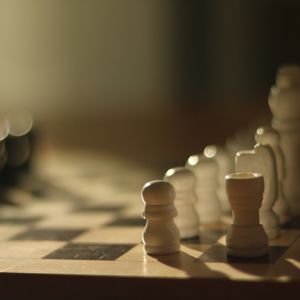
The design of chess pieces has not always been as we know it today. Although Staunton dominates modern chess, before its consolidation — and also afterward — there were numerous models that reflected how the game was understood in each era: from the symbolic and ceremonial to the purely functional.
Analyzing the evolution of chess piece design is not only a historical exercise. It allows us to understand why certain models disappeared, why others became references, and how chess gradually left behind the ornamental to focus on playability.
In this article, we review the most influential models and what they contributed to the development of chess as we play it today.
The origins: symbolic pieces and the representation of power
The first chess pieces, which emerged in Asia and were later adapted in the Islamic and European worlds, had a strong symbolic component. Their forms represented armies, hierarchies, and power structures more than a need for visual clarity.
In many cases, the pieces were abstract or stylized for religious or cultural reasons. The goal was not quick recognition, but the meaning of each figure within the game.
These pieces were perfectly functional in their context, but not very practical for modern competitive chess.
The Middle Ages and chess as an artistic object
In medieval and Renaissance Europe, chess became an object of prestige. The pieces were true works of art, carved in great detail and designed to impress as much as to be played with.
Kings, queens, and knights were represented with human features, armor, and symbols of status. These pieces reflected the power and culture of the time, but they sacrificed clarity and ergonomics.
Chess was both a game and a display of wealth and refinement.
The problem of the diversity of designs
As chess became more popular, this diversity of styles began to be a problem. Each region used different pieces, often difficult to distinguish for players who were not used to them.
In encounters between players from different places, this caused confusion, slowed down the game, and increased mistakes. The need for a common design began to become evident.
This context prepared the ground for a revolution in chess piece design.
The ظهور of Staunton and the paradigm shift
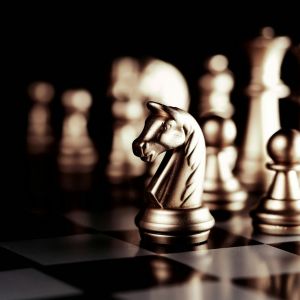
With the arrival of the Staunton design in the 19th century, the approach changed completely. For the first time, pieces were designed with playing in mind first and foremost, not display.
Staunton simplified forms, eliminated unnecessary ornaments, and established clear proportions. Each piece was immediately recognizable, even from a distance or in complex positions.
This model marked a before and after. From that moment on, competitive chess finally had a common visual language.
Alternative models that left their mark
Although Staunton became established as the standard, other models left their mark on history. Designs such as Dubrovnik or certain Soviet styles contributed ergonomic improvements and adaptations for intensive play.
These models did not break with Staunton, but reinterpreted it. They adjusted proportions, bases, and profiles to adapt to new needs without losing clarity.
That is why many of these designs continue to influence modern pieces.
Design in the contemporary era
Today, most pieces intended for serious play are based on Staunton. Variations focus on details: the type of knight, weight, finish, or material.
Innovation no longer seeks to reinvent the shape of the pieces, but to optimize the playing experience: better balance, greater stability, and better adaptation to different contexts.
Design has reached a point of maturity where functionality clearly takes precedence over ornamentation.
Why some historical designs are still valued
Some historical models are still highly appreciated, not so much for their pure functionality, but for their cultural and aesthetic value. They represent key moments in chess and connect the player with the history of the game.
When these models are correctly adapted to modern use, they can offer a very special experience, combining history and playability.
Conclusion
The evolution of chess piece design reflects the evolution of the game itself. From the symbolic to the functional, from the ornamental to the practical, chess has been refining its tools to focus on what is essential.
Iconic models are not only objects of the past, but references that explain why today we play the way we do and why certain design decisions remain irreplaceable. In addition, you can discover more here about the history of chess.


