
Currently, there are numerous chess formats and it’s hard to know them all. However, we’re going to explain them in this article so that, when another chess player mentions one, you’ll know exactly which one they mean. 😉
We’ve divided this article into 3 sections: the classical chess formats (which refer to different time controls), special formats, and the different chess variants—some of them quite popular today, such as Chess 960. Keep reading and discover them all!
Classical Formats (Chess Time Controls)
The classical formats of chess refer to different time controls, meaning the amount of time available to each player in a game. Each format directly affects strategy and decision-making: faster time controls require reflexes and instant calculation, while slower ones allow deeper planning.
There are essentially 4 main types of chess depending on the total time available to each player for the entire game, as we’ll see below. Many people think there are 3 types based on time control, but there are actually 4.
Types of chess based on the time available
Bullet chess
Bullet chess takes speed to the extreme: each player has 1 or 2 minutes for the entire game. At this pace, strategy takes a back seat and mouse speed (online) or quick piece-handling on a physical board is crucial. Very often, players win simply because their opponent runs out of time before being checkmated.
Learn more about bullet chess

Blitz chess
Blitz chess is a format in which each player has between 3 and 5 minutes for the entire game. It’s one of the most popular ways to play both online and over the board, since you can play multiple games in a short time. It requires speed, intuition, and good time management, because a single mistake can be decisive without time for a strategic recovery.
Learn more about blitz chess

Rapid chess
This format offers a balance between classical chess and blitz, with games lasting between 10 and 30 minutes per player. It’s a popular option for rapid tournaments and online games, since it allows deeper strategy without being too slow. Many major competitions include this format, such as the World Rapid Chess Championship.
Learn more about rapid chess
Classical chess
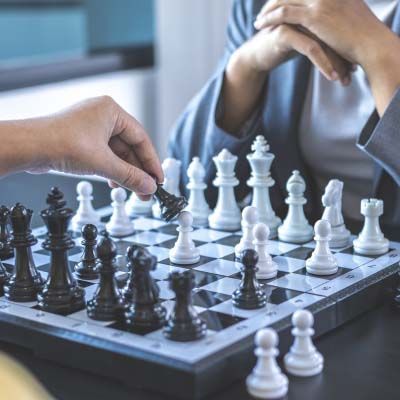
Classical chess is the standard format in official competitions, with time controls that exceed 60 minutes per player. At this pace, strategy, accurate calculation, and positional play become most important. It is the format used in events like the World Chess Championship and other elite competitions, where depth of analysis is key.
Learn more about classical chess

Special chess formats
Special formats differ from the classical ones because they introduce unique rules, formats, or conditions that change the dynamics of the game. They may focus on how the game is played (without seeing the board, on multiple boards at once, in teams, etc.) or on the structure of the match (tiebreaks, predefined positions, etc.). These formats are often used in exhibitions and special tournaments.
Blindfold chess
In blindfold chess, players cannot see the board or the pieces and must keep track of every piece’s location in their mind. Moves are announced verbally or through an arbiter who moves the pieces. It’s a demanding format that tests memory and visualization. Grandmasters such as Magnus Carlsen and Paul Morphy have demonstrated exceptional skill in this format.
Learn more about blindfold chess

Simultaneous chess
In this format, a single player faces several opponents at the same time, moving from board to board. It’s common in exhibitions where grandmasters play against amateurs, showcasing their ability to handle multiple positions simultaneously. In some cases, it’s combined with blindfold chess, which increases the difficulty.
Learn more about simultaneous exhibitions
Team chess
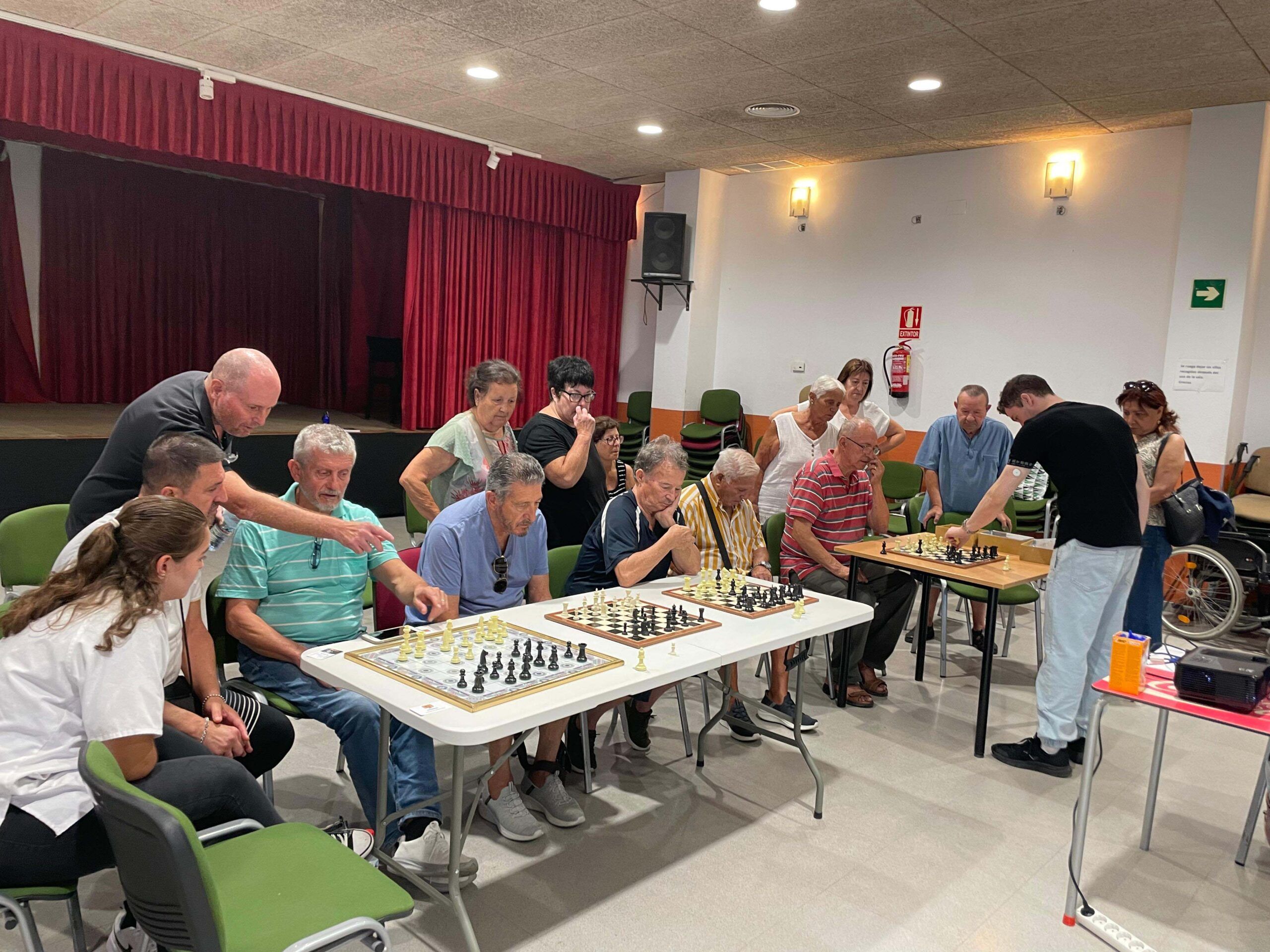
Unlike individual chess, in team chess several players compete representing the same group. Each player faces an opponent on a separate board, and the individual results are added together to determine the winning team. Events such as the Chess Olympiad and club leagues highlight this format, encouraging collective strategy and joint preparation.
Learn more about team chess

Correspondence chess
In this format, games are played remotely, with each player sending their moves by postal mail or via online platforms. Games can last weeks or even months, allowing deep analysis of every move. In the digital era, this format has evolved with chess engines being allowed in certain competitions, turning it into a test of theoretical preparation rather than real-time calculation.
Learn more about correspondence chess
Armageddon chess
Armageddon chess is a tiebreak format used in tournaments where White gets more time on the clock (for example, 5 minutes vs. 4), but Black automatically wins if the game ends in a draw. This creates a high-risk dynamic in which White must play for a win at all costs, while Black can adopt a more conservative approach.
Learn more about Armageddon chess

Thematic chess
In thematic chess, the game starts from a predefined position rather than the standard initial setup. It’s used to train specific openings or study particular structures. It’s common in Fischer Random (Chess 960) events and in tournaments that explore opening lines such as the Sicilian Defense or the Ruy López.
Learn more about thematic chess
Bughouse (pairs chess)
In this format, two players form a team, play two games, and pass the pieces they capture to their partner, who can then drop them onto the other board. This adds an improvisational element, since each player must adapt to their partner’s plans without knowing exactly what they are trying to achieve. It’s a fun and chaotic format often played in informal events.
Learn more about pass the pieces
Chess variants
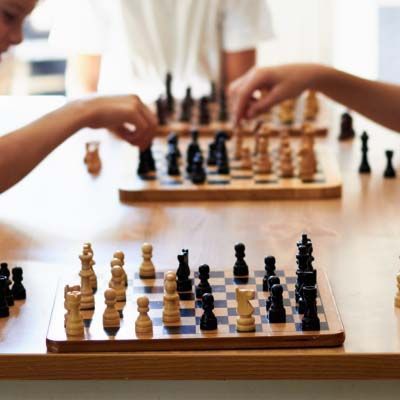
Chess variants are modifications of the traditional rules that change how the game is played. Some variants introduce new pieces, moves, or boards, while others change the objective of the game. These variants can be competitive, experimental, or simply recreational, but all of them add an element of innovation and challenge to classical chess.
Capablanca chess
Capablanca chess is a variant that introduces two new pieces: the Chancellor (combining rook and knight moves) and the Archbishop (combining bishop and knight moves). It is played on a 10×8 board, which increases tactical and strategic complexity. It was proposed by former World Champion José Raúl Capablanca, who believed classical chess was becoming too predictable at the top level.
Learn more about Capablanca chess

Fischer Random chess (Chess 960)
Also called Chess 960, this variant created by Bobby Fischer changes the starting position of the pieces (except the pawns), with 960 possible configurations. Castling is still possible, but the goal is to reduce opening theory and encourage creativity from the very first move. Today, there is a Chess960 World Championship featuring many of the best players in the world.
Learn more about Fischer Random chess (Chess 960)
Racing Kings
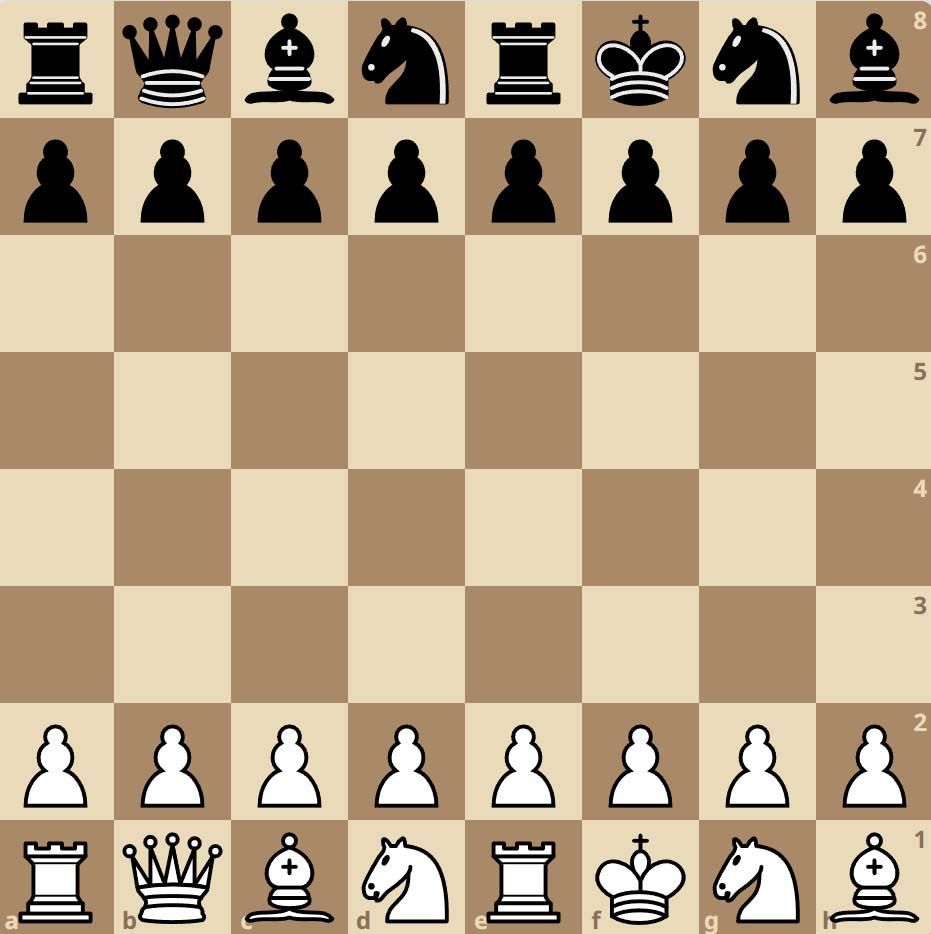
In this variant, the goal is not to checkmate, but to get your king to the eighth rank before your opponent. All other chess rules remain, but strategy changes dramatically, since players must open lines for their king instead of protecting it. It’s a very popular variant on some online platforms.
Learn more about Racing Kings

Four-player chess
This variant is played on an larger board with four players, either free-for-all (each player for themselves) or in teams (two vs. two). You can capture pieces from any opponent, and alliances can form strategically. It’s chaotic but very entertaining, and popular on many online platforms.
Learn more about four-player chess

Atomic chess
In this variant, whenever a piece captures another, it explodes and removes all pieces (except pawns) within one square. This adds an explosive tactical element, since players can sacrifice pieces strategically to create devastating blasts. Checkmate can occur without capturing the king directly, if an explosion affects it.
Learn more about atomic chess

Horde chess
Horde chess pits a large number of pawns against a standard army. Typically, one player has 36 pawns and the other has the normal chess pieces. The goal of the horde player is to get one of their pawns to the eighth rank and promote it, while the player with the regular pieces must find ways to break through the crowd.
Learn more about horde chess

Duck chess
In this variant, there is an extra piece on the board: a rubber duck (or any other marker). On each turn, a player must make a normal move and then reposition the duck on any empty square, blocking the opponent’s moves. The duck cannot be captured, so players can use it to prevent key opponent moves. It’s a fun and strategic variant that has grown in popularity in recent years.
Learn more about duck chess

As you can see, there are many ways to play chess, since there are numerous chess-related game types. Each one has unique characteristics, and personally, I’d recommend trying them all. 😊
We hope you enjoyed this article, and remember you can visit Chesscul’s official blog to learn openings, tactics, and strategy for free. Also, if you’re highly motivated about chess, you can even try a class at our school completely FREE!


