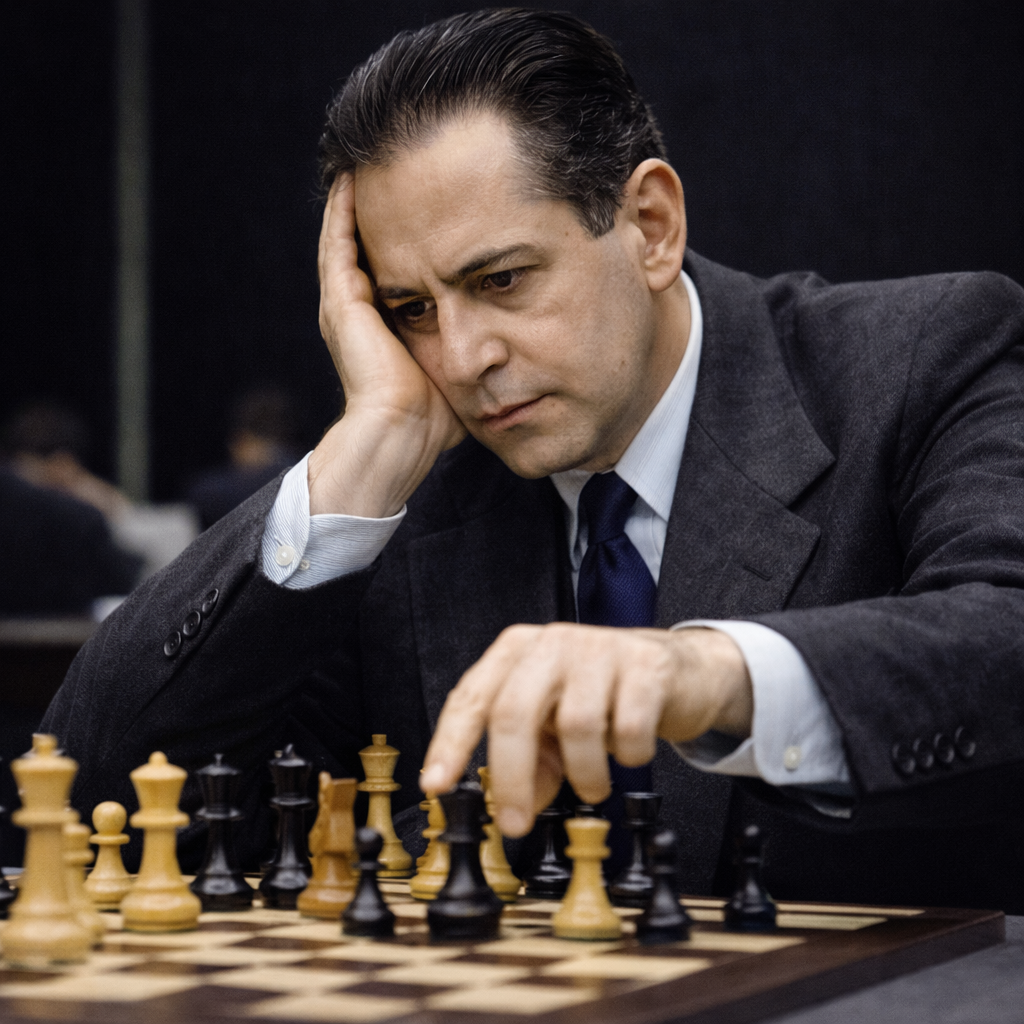
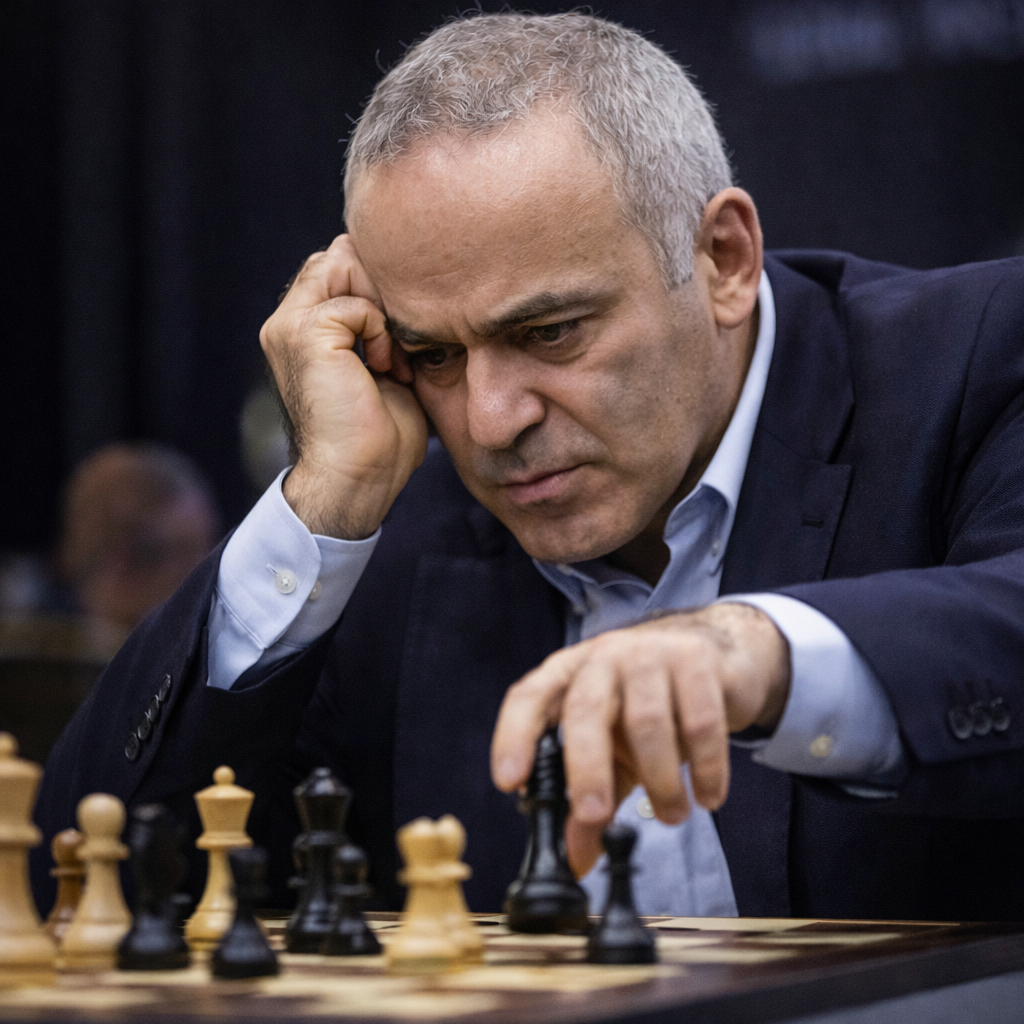
1. Introduction: why Garry Kasparov changed the history of chess
In the history of chess there are champions who dominate an era and others who define an era. Garry Kasparov belongs without question to the second category. His impact goes far beyond titles, records, or memorable games: Kasparov transformed the way professional chess is prepared, played, and understood.
Before Kasparov, elite chess was deeply influenced by positional control, prophylaxis, and strategic stability. With his arrival, the board filled with energy, dynamism, and offensive ambition. Kasparov introduced a mindset in which the initiative was the most valuable asset, even above structure or material.
He was world champion from 1985 to the year 2000, number one in the world rankings for an unprecedented period, and the protagonist of some of the most intense confrontations chess has ever known. But his true footprint is conceptual: modern chess —based on deep preparation, computer-assisted analysis, and the constant search for activity— is, to a large extent, a direct heir of Kasparov.
Talking about Kasparov is talking about chess as total struggle: intellectual, psychological, and energetic. It is talking about the player who did not accept passive positions, who did not conceive equality as a final destination, and who turned every game into a battle for the initiative.
2. Origins and context: childhood, early talent, and Soviet Baku
Garry Kimovich Kasparov was born on April 13, 1963 in Baku, a city located in the Caucasus, then part of the Soviet Union. Baku was not the traditional epicenter of Soviet chess, but it was an intense, competitive cultural environment marked by diversity. This context had a clear influence on Kasparov’s personality and combative character.
From a very young age he showed a special relationship with chess. He learned the game by watching games and solving problems, and soon stood out for exceptional memory and enormous calculating ability. However, his talent was not limited to the purely technical: from childhood he showed uncommon ambition and a strong will to impose himself.
A determining factor was family support and the emphasis on intellectual development. Kasparov grew up understanding that chess was not an occasional pastime, but a serious, demanding discipline worthy of total dedication. That early mindset explains his later work ethic and his obsession with preparation.
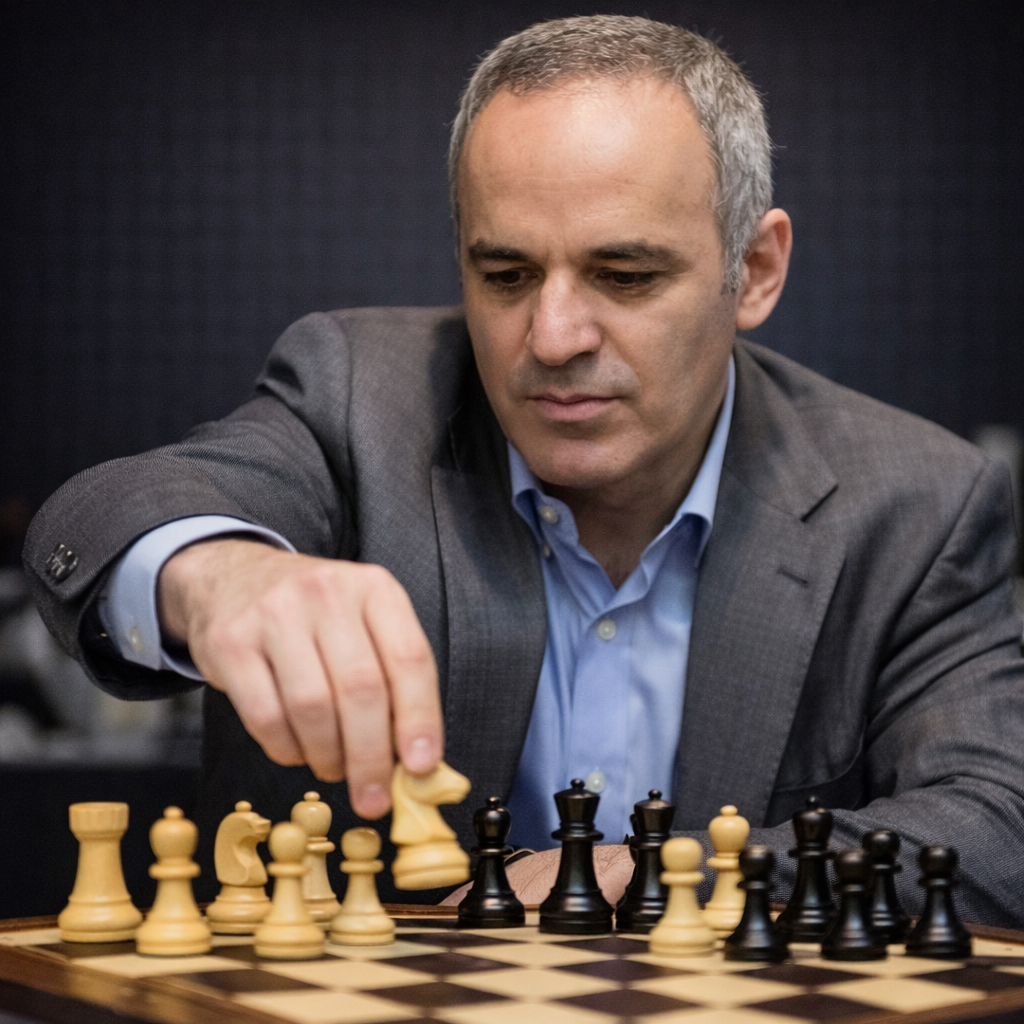
Unlike other prodigies, Kasparov was not a shy or reserved child at the board. From his first competitions, a trait could already be seen that would always accompany him: he played to win, not to draw nor to “play well.” That competitive instinct was the basis of all his later development.
3. Chess formation: discipline, ambition, and breaking with the classical mold
Kasparov was formed within the Soviet system, one of the most demanding and complete in the history of chess. He learned endgames, classical structures, strategic principles, and positional technique with the same depth as any other great talent of his generation. But very soon it became clear he was not going to be a standard product of the system.
While many players accepted classical dogmas as unquestionable truths, Kasparov studied them to understand when and why they could be broken. His approach was critical, inquisitive, and deeply ambitious. It was not enough for him to play “correct” positions if they did not offer possibilities for initiative.
From a young age he showed a natural inclination toward active play. He preferred positions with imbalances, tension, and attacking possibilities. This preference was not the result of recklessness, but of an early understanding that piece activity and initiative could compensate for structural weaknesses.
His training was marked by obsessive study. Kasparov analyzed for hours, reviewed historical games, and constantly searched for new ideas. He did not accept repeating schemes without understanding them. This mindset led him to develop his own style even before reaching the world elite.
At this stage a clear break with more conservative chess was already visible: Kasparov did not want to control the board; he wanted to dominate it.
4. Meteoric rise: from youthful prodigy to challenger for the throne
Kasparov’s rise to the elite was fast, but not improvised. In the late 1970s and early 1980s, his name began to appear strongly in international competitions. He did not just win; he did so with an aggressive style that unsettled far more experienced players.
Kasparov set the pace. His games were full of tension, calculated sacrifices, and constant pressure. Forcing the opponent to calculate for many moves was part of his strategy. Where others sought to simplify, he sought to complicate if that increased his options.
During this stage, several key traits of his chess identity were consolidated:
- Absolute confidence in his calculation
- Preference for initiative over safety
- Ability to generate attack even in seemingly quiet positions
- Courage to take risks if the position justified it
Kasparov did not wait for mistakes: he provoked them. His rise was that of a player who did not ask permission to reach the top, but advanced by imposing his style.
5. The assault on power: Kasparov against the system and against Karpov
Kasparov’s path to the world championship was one of the most tense and symbolic in chess history. To reach the top it was not enough to defeat the reigning champion; one had to confront an entire system consolidated around him.
That champion was Anatoly Karpov, a symbol of classical Soviet chess, positional control, and strategic stability. Karpov represented order; Kasparov, rupture. The confrontation between them was inevitable and went beyond the purely sporting.
Kasparov did not seek to adapt to the champion’s style. On the contrary: he arrived with the clear intention to impose his vision of chess. His games against Karpov were not only technical encounters, but psychological, strategic, and even ideological duels.
For Kasparov, beating Karpov meant more than winning a title. It meant proving that the chess of the future had to be active, dynamic, and ambitious. That conviction was the engine that drove his preparation and his competitive approach during those decisive years.
6. World champion: the beginning of a new era (1985)
In 1985, Garry Kasparov became world chess champion. With that victory he not only reached the top of the sport; he marked a historic turning point. For the first time in decades, world chess had a champion whose identity was based on initiative, aggressiveness, and constant energy.
Kasparov became the youngest world champion up to that point, and his style contrasted radically with that of his predecessors. Where containment had been prioritized before, activity was now valued. Where risks had been avoided before, they were now calculated and taken.
As champion, Kasparov did not limit himself to defending his title. He imposed a hegemony based on exhaustive preparation, uncompromising ambition, and total confidence in his play. Each title defense, each major tournament, reinforced the idea that chess had entered a new era.
His reign coincided with the extreme professionalization of chess: more analysis, more physical and mental preparation, and an almost scientific approach to the game.
7. The Kasparov style: dynamism, initiative, and permanent attack
Kasparov’s style is built around a central concept: initiative as a form of power. For him, having the initiative was not just another advantage; it was the main strategic objective.
Kasparov preferred unbalanced positions, with tension and attacking possibilities. He did not shy away from chaos if it favored the activity of his pieces. His chess was full of sacrifices —tactical and positional— whose goal was to keep the opponent under constant pressure.
Some fundamental characteristics of his style:
- Direct attacks on the king based on coordination and deep calculation
- Masterful use of active pieces, even at the cost of structure
- Ability to maintain the initiative for many moves in a row
- Courage to enter complex positions if that increased his options
Kasparov gave no respite. Even in seemingly equal positions, he kept the latent threat. The opponent knew that any inaccuracy could trigger a tactical avalanche.
This approach redefined elite chess. From Kasparov onward, playing passively was no longer a viable option at the highest level. Modern chess, as we know it today, is born in large part from this conception of the game.
8. Preparation and openings: theoretical revolution and obsessive work
One of the most decisive aspects of Kasparov’s legacy is his relationship with preparation. Before him, preparation was important; with Kasparov, it became decisive. He was one of the first champions to understand that modern chess is not won only at the board, but long before sitting down to play.
Kasparov turned preparation into a strategic weapon. He studied openings not only to “come out well,” but to steer the game into territories where his style was superior. He sought positions with clear imbalances, with potential initiative, and with room to press from the very first moment.
His approach had several key characteristics:
- Deep and systematic study of critical variations
- Constant introduction of theoretical novelties
- Specific preparation for each opponent
- Long-term analysis, not only memorization
Kasparov understood openings as a way to impose his narrative from move one. If the opponent did not know a specific line, he was immediately under pressure. And if he did know it, he still had to face a complex position, rich in tactical ideas.
In addition, Kasparov was not afraid to enter sharp theoretical territory. On the contrary: the more complex the position, the more he trusted his calculating ability and mental energy. This attitude changed the perception of risk at the elite level: risk was no longer something to be avoided, but something to be actively managed.
9. Competitive psychology: intimidation, energy, and mental dominance
If chess is a mental battle, Kasparov was one of its greatest psychological strategists. His presence at the board commanded respect even before the game began. Not only because of his level, but because of the emotional intensity he conveyed.
Kasparov played with an almost aggressive energy. His body language, his playing rhythm, and his attitude conveyed a clear message: he was there to win. Many opponents have acknowledged that playing against him was mentally exhausting, even when the position was objectively balanced.
His competitive psychology was based on several pillars:
1) Pace and constant pressure
Kasparov maintained a high pace when the position allowed it, forcing the opponent to make decisions under time pressure. This increased the probability of error.
2) Absolute confidence in his game
Even in complicated positions, Kasparov projected certainty. That confidence affected the opponent, who began to doubt his own evaluations.
3) Immediate punishment of mistakes
Against Kasparov, a single mistake could be fatal. His ability to turn an inaccuracy into a devastating attack reinforced his intimidating aura.
Kasparov understood that chess is not played only with pieces, but with people. And he knew how to use that understanding as a constant competitive advantage.
10. Kasparov and computing: databases, analysis, and Deep Blue
One of the most emblematic chapters of Kasparov’s career is his relationship with computing. He was a pioneer in the intensive use of databases and analysis engines, integrating technology as an essential part of preparation.
Kasparov understood before many others that the future of chess would pass through collaboration between the human mind and the machine. He used computers to explore ideas, verify variations, and discover hidden resources. But he always made it clear that the machine was a tool, not a substitute for human thought.
The culminating point of this relationship was his confrontation against the computer Deep Blue in the 1990s. These matches transcended chess and became a cultural symbol: the duel between human and artificial intelligence.
Regardless of the final result, those confrontations marked a before and after. They showed that chess had definitively entered the technological era and that computer-assisted preparation would be indispensable from then on.
Kasparov not only took part in that change: he was its protagonist.
11. Prolonged reign and dominance of the world ranking
For more than a decade, Kasparov was the absolute reference point of world chess. His dominance of the ranking was neither accidental nor brief: he remained number one for a record period, facing and surpassing several generations of grandmasters.
The most impressive thing about his reign was not only its duration, but the competitive distance he kept from his rivals. At many moments, Kasparov seemed to play in a category of his own, especially in top-level tournaments.
This dominance rested on three main factors:
- Superior preparation
- Inexhaustible competitive energy
- Ability to adapt
Kasparov did not stagnate. He adjusted his repertoire, updated his working methods, and kept searching for new ideas even when he was already the best in the world. That mindset explains why he managed to stay at the top for so long.
12. Final years as a player and retirement from professional chess
As the years went by, Kasparov remained competitive, but he also began to diversify his interests. Chess was still central, but it was no longer his only focus in life.
In 2005, after winning a top-level tournament, Kasparov announced his retirement from professional chess. The decision surprised many, but it fit his personality: he preferred to retire while strong, competitive, and relevant, rather than prolong his career without full motivation.
His retirement marked the end of an era. Chess lost its most dominant figure, but gained an intellectual reference willing to transfer his experience to other fields.
13. Kasparov off the board: thought, politics, and intellectual legacy
After leaving competition, Kasparov threw himself into other areas: writing, strategic thinking, outreach, and politics. His competitive mind found new fields in which to express itself.
Kasparov has reflected extensively on leadership, decision-making, history, and freedom. He has used chess as a metaphor to explain dynamics of power, strategy, and individual responsibility.
This facet strengthens his figure as something more than a sports champion. Kasparov is a chess intellectual, someone who understands the game as an expression of the human mind at its highest demand.
14. What to learn from Kasparov today: practical lessons for any chess player
Kasparov’s legacy is not only historical; it is deeply practical. Studying his chess offers lessons applicable to players of any level.
- Value initiative over comfort
- Do not fear complexity if you can calculate
- Preparation is a form of respect for the game
- Piece activity can compensate for weaknesses
- Confidence influences as much as the position
- Chess is also won off the board
Kasparov teaches that playing to win requires commitment, energy, and ambition.
15. Iconic games and recurring patterns (without notation)
Beyond specific games, Kasparov’s chess is recognized by clear patterns:
Explosive attacks on the king
Kasparov coordinated his pieces to launch crushing attacks, often sacrificing material to open decisive lines.
Prolonged initiative
He did not look for a single blow, but to maintain pressure for many moves, without allowing the opponent to reorganize.
Mastery of dynamic positions
Kasparov shone when the position was alive, with multiple threats and hidden resources.
Relentless punishment of mistakes
One inaccuracy was enough for the game to tilt definitively in his favor.
16. Conclusion: Kasparov as a symbol of modern chess
Garry Kasparov was not simply a world champion. He was the architect of modern chess. He transformed preparation, redefined the value of initiative, and brought the game to a level of demand without precedent.
His legacy lives in every grandmaster who prepares with computers, in every attack based on activity, and in every player who understands that chess is not only correctness, but struggle.
Kasparov showed that chess is energy channeled by the mind. And that vision continues to mark the path of contemporary chess.