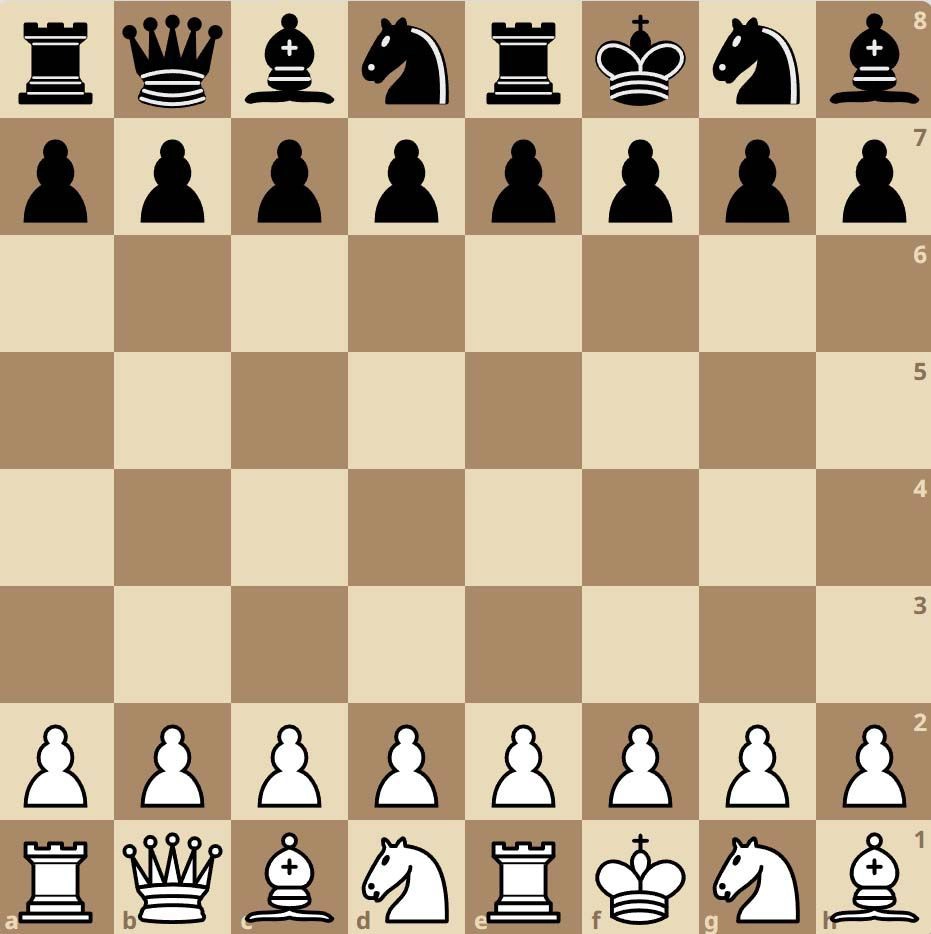
Horde chess is a chess variant in which players do not start with balanced armies. In this format, one player controls a “horde” of pawns, while the other plays with the standard pieces of classical chess.
This variant offers a unique approach to the game, where strategy changes radically. The horde player must advance and overwhelm the opponent, while the player with pieces must break the pawn structure and find gaps to deliver checkmate.
History and origin of Horde chess
Horde Chess is one of many modern variants designed to offer an asymmetrical challenge within the game of chess. Its exact origin is not documented, but it has gained notoriety in the online community in recent years, especially on digital platforms that allow experimentation with new formats.
This variant has been well received because it presents a completely different approach from traditional chess, forcing players to think in innovative ways and adapt to a non-standard game structure.

Key features of Horde chess
Horde chess introduces significant changes to the board setup and the strategies needed to win:
✅ An unequal army
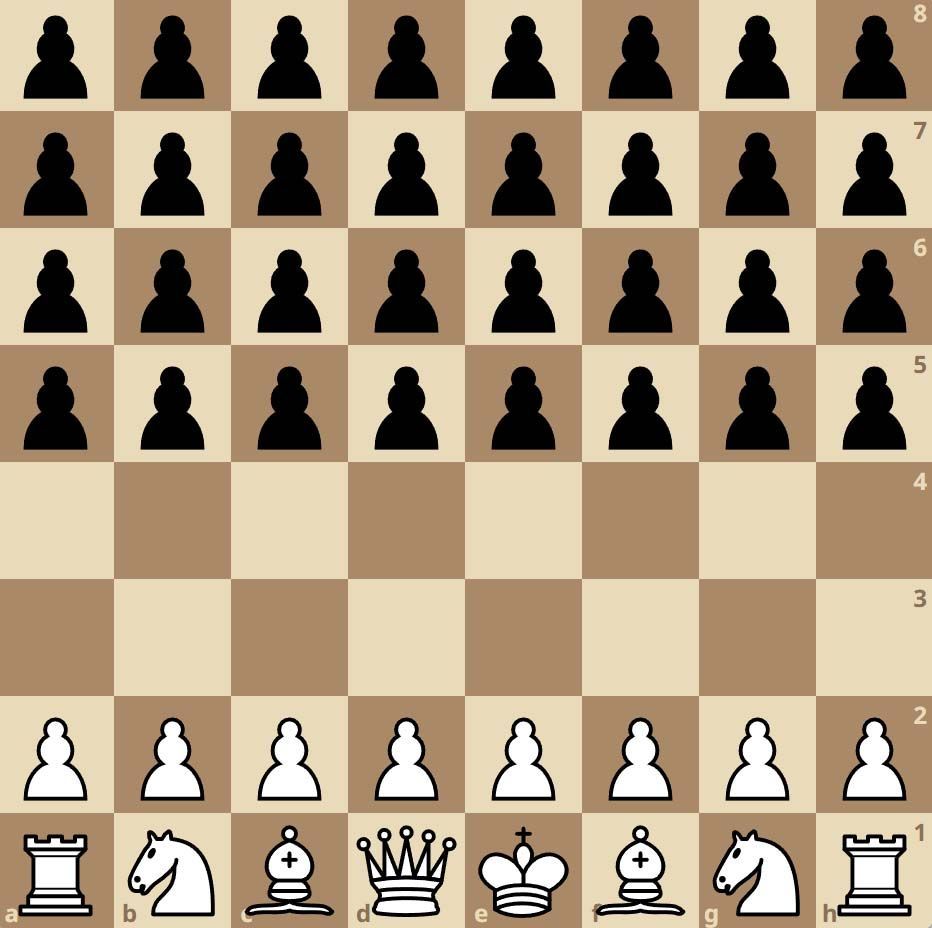
- The horde side plays with 36 pawns on the board.
- The other side has the standard chess pieces (king, queen, rooks, bishops, knights, and 8 pawns).
✅ Objectives of the game
- The horde wins if it manages to capture the enemy king by advancing its pawns.
- The player with pieces wins by checkmating the horde king, which is hidden behind the pawn ranks.
✅ Pawns follow standard rules
- The horde pawns move and capture normally.
- They can advance two squares on their first move and promote upon reaching the eighth rank.
✅ Asymmetrical and highly strategic play
- The horde side must use its overwhelming number of pawns to close lines and advance.
- The player with pieces must find ways to break the horde structure and activate their pieces before being surrounded.
Rules of Horde chess
Horde chess follows the basic rules of chess with a few key modifications:
🔹 Initial board setup
- The horde of pawns occupies the first four ranks of the board.
- The other player has their usual piece formation on the 8th rank and pawns on the 7th rank.
🔹 Win conditions
- The horde wins by capturing the enemy king.
- The player with pieces wins by checkmating the horde king.
🔹 Standard movement rules
- All pieces move the same way as in classical chess.
- The horde pawns can advance two squares on their first move and capture en passant.
🔹 Castling is still allowed
- The player with pieces may castle if the normal chess conditions are met.
Strategies for playing Horde chess
Since the board setup is completely asymmetrical, players must adapt their strategy to leverage their strengths and counter the opponent’s.
🔹 Strategy for the horde (the Pawn side)
- Advance en masse: Use the sheer number of pawns to close the board and limit enemy piece mobility.
- Create breaks on diagonals: Make sure pawns don’t block each other, keeping mobility and pressure.
- Tactical promotion: Aim to reach the eighth rank to promote pawns and obtain powerful pieces.
- Prevent the king from becoming exposed: Although the horde does not start with a visible king, if the pawn structure collapses it can become vulnerable.
🔹 Strategy for the player with pieces
- Break the horde structure quickly: Use your pieces to eliminate pawns at critical points and open space on the board.
- Play actively with knights and bishops: These pieces are especially effective at attacking the horde from a distance without getting trapped.
- Create weaknesses in the enemy formation: Look for gaps in the pawn structure and exploit them to infiltrate with the queen or rooks.
- Ensure king mobility: In the middlegame it may be necessary to move the king to a safer square where it cannot be reached by the horde.
Benefits of Horde chess
Horde Chess is not only an entertaining variant; it also offers multiple benefits for chess improvement:
✅ Encourages creativity – By not following traditional chess structures, it forces players to think in innovative ways.
✅ Improves tactical vision – Finding ways to break the horde formation or defend against mass attacks sharpens tactical awareness.
✅ Helps you better understand pawn structures – The central role of pawns in this variant improves your understanding of pawn play in classical games.
✅ Introduces a new strategic challenge – Playing with a material advantage but limited mobility improves adaptability.
✅ Ideal for fast and dynamic games – Since the game can become chaotic, many games end quickly, making it perfect for short, exciting sessions.
Challenges of Horde chess
⚠️ Different from classical chess logic – Players used to positional strategies may struggle to adapt.
⚠️ High volatility – A single move can completely change the course of the game, especially if the horde opens a path to promotion.
⚠️ Risk of early collapse – If the player with pieces breaks the pawn structure quickly, the horde can be left in a completely lost position.
⚠️ Less study material available – Although there are guides and videos, Horde Chess theory is not as developed as classical chess theory.
Conclusion
Horde Chess is a fun, strategic, and highly asymmetrical variant that offers a completely different experience from traditional chess. Its “horde versus classical army” dynamic forces players to develop creative strategies and think beyond conventional play.