
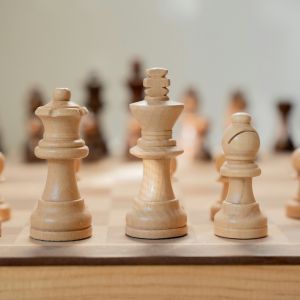
It is often said that “the pieces do not play,” and in a strict sense that is true. But anyone who has spent many hours playing chess knows that the equipment influences more than it seems. Not in the objective quality of the moves, but in how the game is experienced: the rhythm, concentration, comfort, and even the player’s mental state.
The pieces are the physical interface between thought and the board. Every move passes through them. If that interface is uncomfortable, unstable, or confusing, the player notices it, even if they cannot always explain why. If, on the other hand, it is well designed, the game flows.
In this article, we analyze how pieces really influence the playing experience, from a psychological and practical perspective, not a technical or commercial one.
Visual clarity and mental load
The human brain looks for clear patterns. When the pieces are easy to recognize and well proportioned, the player processes the position almost automatically. This reduces cognitive load and frees up mental energy for what matters: calculation and decision-making.
With confusing, poorly designed, or overly ornate pieces, the opposite happens. The brain has to constantly “confirm” which piece it is seeing. This extra effort is small, but continuous, and it ends up accumulating, especially in long games.
Good visual clarity is not noticed when it is well resolved, but it is deeply missed when it is absent.
Game rhythm and fluidity of movement
Chess has rhythm, even in slow games. Every move is part of a natural cadence: think, decide, move. The pieces directly influence that rhythm.
When a piece moves easily, rests firmly, and does not require correction, the rhythm is maintained. The gesture is clean, almost automatic. By contrast, unstable pieces that tip over or slide break that cadence.
These interruptions, although small, affect the feeling of control and can generate frustration, especially in time trouble.
Confidence and sense of control
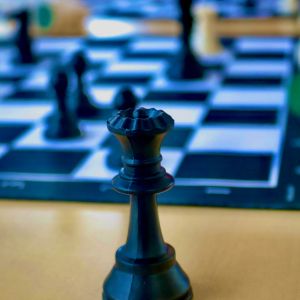
The stability of the pieces greatly influences the player’s confidence. A solid set conveys security: you know the piece will stay where you place it, that it will not fall or move accidentally.
This feeling of physical control carries over, in a subtle way, into mental control. The player feels more comfortable, more grounded, and less tense.
With poor or unstable pieces, a small constant unease appears that, even if unconscious, affects the mental state during the game.
Grip and the physical relationship with the game
Chess is not only mental; it is also physical. The grip of the pieces, their texture, and their shape influence how each move is experienced.
A good grip allows for precise and natural movements. The hand does not get tired, does not constantly adapt to uncomfortable shapes, and does not lose fluidity. In long sessions, this makes a real difference.
Poorly designed pieces, with uncomfortable edges or unnatural shapes, create micro-discomforts that, over time, turn into fatigue.
Fatigue in long games and training sessions
In long games or intensive training sessions, any discomfort is amplified. Inadequate weight, poor balance, or incorrect proportions contribute to fatigue that should not be there.
Well-designed pieces reduce physical and mental fatigue. The player can maintain concentration for longer without feeling “burdened” by the equipment.
This is especially important in study, club, and competition settings.
The psychological effect of “well-cared-for” equipment
There is also an important psychological component: playing with well-cared-for and well-chosen equipment creates a different attitude. The player tends to take the game more seriously, concentrate better, and respect the game more.
It is not a matter of luxury, but of coherence. Equipment that conveys care invites careful play.
This effect is very visible in educational and training environments.
When the equipment becomes an obstacle
The problem appears when the pieces draw too much attention to themselves. Excessively decorative, unstable, or unclear designs turn the equipment into an obstacle instead of an ally.
In those cases, the player struggles against the equipment instead of relying on it. This directly affects the experience and, in the long term, the enjoyment of chess.
Conclusion
Chess pieces influence the playing experience much more than it seems at first glance. They affect rhythm, mental clarity, confidence, and fatigue.
Choosing good pieces is not a whim or merely an aesthetic matter, but a way of taking care of the playing experience. When the equipment supports the game, chess flows better, is more enjoyable, and is played with greater comfort.
And that, for any player who spends hours in front of the board, matters a great deal.


