1. Introduction: who José Raúl Capablanca was and why he is a unique figure
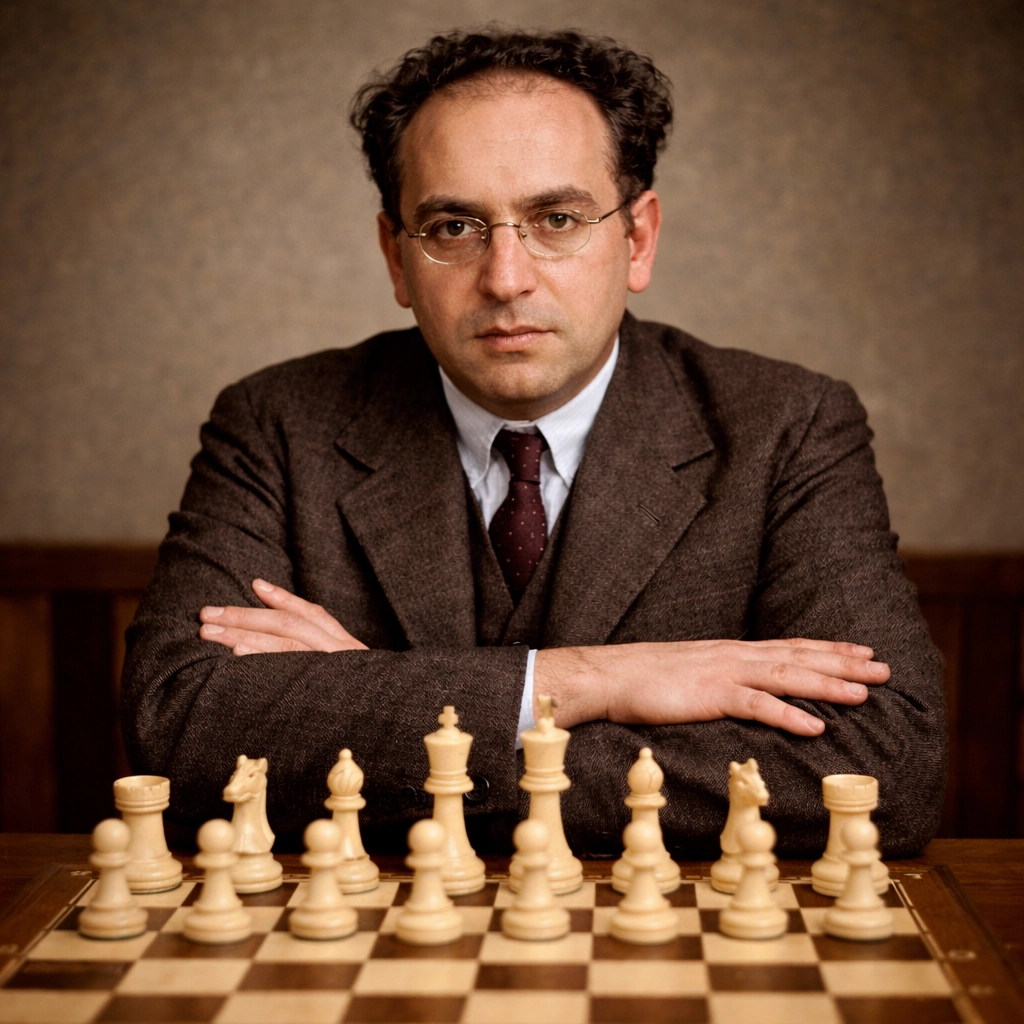
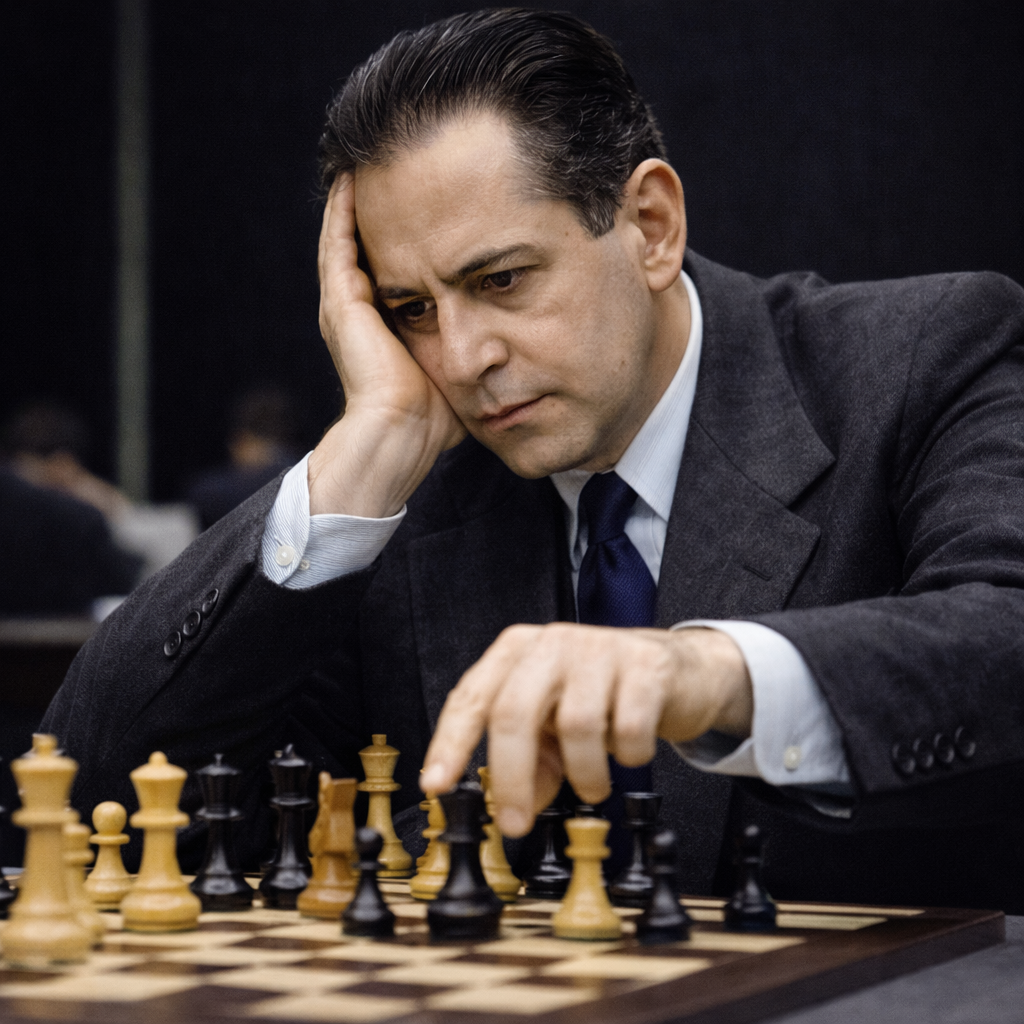
Talking about José Raúl Capablanca means talking about the most naturally gifted chess player who has ever existed. No other world champion has shown such a direct, intuitive and seemingly effortless relationship with chess. Capablanca did not seem to calculate: he simply saw.
His figure is unique because he represents something almost unrepeatable in modern chess: perfection without apparent effort. Where other champions needed endless hours of analysis and preparation, Capablanca solved complex positions with disconcerting naturalness.
Historically, Capablanca is important because:
- he brought chess technique to its highest expression
- he reduced the game to its purest essence
- he showed that simplicity can be lethal
- and he established an ideal of clarity that is still pursued today
Capablanca did not just win games: he made chess seem easy, something very few have achieved.
2. Chess before Capablanca: complexity, struggle and attrition
To understand the magnitude of Capablanca, it is necessary to understand the context of chess before his rise. At the beginning of the 20th century, the game was marked by:
- long strategic battles
- complex maneuvers
- the gradual accumulation of small advantages
Champions like Steinitz and Lasker had built a deeply competitive kind of chess, where psychological attrition and prolonged struggle were central elements.
Capablanca appears as a historical anomaly. Instead of intensifying complexity, he reduces it. Instead of forcing errors, he makes them inevitable through impeccable positional clarity.
His arrival represents a conceptual shift: chess can be won not only by fighting harder, but by playing better and more simply.
3. Origins, prodigious childhood and natural talent
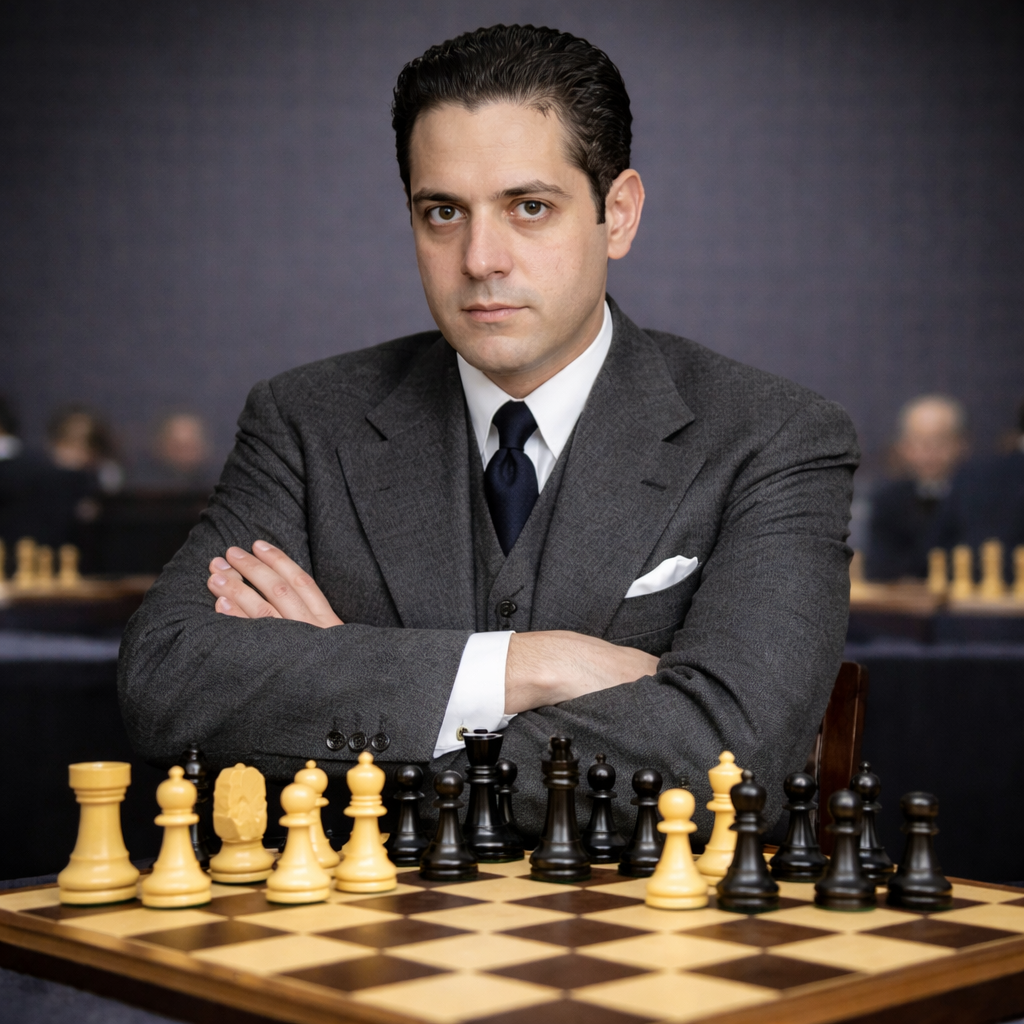
Capablanca’s story begins with one of the most extraordinary tales of early talent in sports. He learned to play chess when he was just a child, by observing games, and in a very short time he surpassed experienced adult players.
From childhood he showed:
- instant understanding of the rules
- exceptional visual memory
- uncommon positional intuition
Unlike other prodigies, Capablanca did not seem to force his learning. His progress was organic, natural, almost inevitable. Chess was not for him a puzzle to solve, but a language he mastered innately.
This precocity largely explains his later style: he never needed to overthink.
4. Meteoric rise to the world elite
Capablanca’s rise to the elite was as fast as it was decisive. As soon as he began competing internationally, it became clear that chess was facing an exceptional mind.
His progress was characterized by:
- clear victories against established masters
- a surprisingly low rate of losses
- an astonishing ease in adapting to any opponent
Capablanca did not just win tournaments: he dominated them without apparent strain. While others battled for hours in tense positions, he reached won endgames with an almost insulting economy of means.
Very soon he was considered the strongest player in the world, even before winning the title.
5. Capablanca as a player: simplicity, intuition and perfection
Capablanca’s style is the “cleanest” chess has ever known. His game is based on:
- precise selection of plans
- constant elimination of weaknesses
- maximum coordination of pieces
- minimal concession to chance
Capablanca did not seek brilliant combinations or spectacular attacks. He sought the best move, and almost always found it.
He was especially dominant in:
- balanced positions
- slightly superior endgames
- simple structures with minimal advantages
His genius lay in turning microscopic advantages into inevitable victories. Against Capablanca, error seemed only a matter of time.
6. The art of the endgame: Capablanca and absolute technique
If there is one aspect of the game where Capablanca reaches historical perfection, it is the endgame. For many experts, the greatest endgame player of all time.
His endgames are characterized by:
- perfect king placement
- impeccable piece coordination
- absolute understanding of pawns
- the total absence of unnecessary moves
Capablanca seemed to know the result of many endgames from the very first exchange. This ability allowed him to simplify with complete confidence, knowing that the endgame was under his control.
To this day, his endgames remain mandatory study material for any serious chess player.
7. Competitive psychology: serenity, confidence and natural dominance
From a psychological point of view, Capablanca was an extraordinarily stable competitor. He was rarely seen nervous, tense or overwhelmed.
His mentality was based on:
- absolute confidence in his understanding
- serenity even in difficult positions
- a permanent sense of control
This calmness had a devastating effect on his rivals. Playing against Capablanca was like facing an inevitable force: there was no drama, only precision.
Psychologically, he represented the ideal of the chess player who does not need to impose himself: he is simply better.
8. Capablanca and the conquest of the world championship
Capablanca’s conquest of the world championship was the logical culmination of his previous dominance. He arrived at the match as the clear favorite and confirmed every expectation.
His rise to the title symbolizes:
- the crowning of technical chess
- the triumph of clarity over complexity
- the validation of natural talent at the elite level
Capablanca did not conquer the title through chaotic struggle, but through constant and serene superiority. His victory consolidated a model of chess based on technical perfection.
9. His reign as world champion
The reign of José Raúl Capablanca as world champion was relatively brief, but extraordinarily significant from a historical point of view. Unlike other champions who ruled through psychological attrition or constant struggle, Capablanca reigned with a quiet authority, almost natural.
During his time as champion, Capablanca conveyed a clear impression:
no one seemed to be at his level in terms of pure understanding of chess. His play lacked obvious flaws, and his ability to avoid unnecessary risks made him an extremely difficult opponent to defeat.
His reign symbolizes a powerful idea: chess could be dominated through technical perfection and economy of means, without the need to resort to constant tension or overflowing creativity. This conception deeply influenced an entire generation of players.
10. The 1927 match against Alekhine: defeat and turning point
The 1927 World Championship against Alexander Alekhine is one of the most studied and debated episodes in the history of chess.
Capablanca arrived at the match as the favorite, backed by years of almost absolute dominance. However, Alekhine presented a radically different approach: obsessive preparation, deliberate complexity and a constant determination to avoid simplification.
The match represented a clash of philosophies:
- clarity and technique versus complexity and dynamism
- natural intuition versus systematic preparation
- positional control versus prolonged initiative
Capablanca’s defeat was not the result of a general technical inferiority, but of a specific difficulty: adapting to a kind of chess that consciously fled from simplicity, his natural terrain.
Historically, this match marks the end of one era and the beginning of another. It does not diminish Capablanca’s greatness, but it does show that chess was entering a new phase, more complex and demanding from the point of view of preparation.
11. Capablanca against the great champions of his time
The historical value of Capablanca is reinforced when analyzing his performance against the great champions and masters of his time. For years, he maintained outstanding results against practically all of them.
Against more tactical or aggressive players, Capablanca imposed order and clarity. Against technical players, he surpassed them with even finer understanding.
His chess worked especially well because:
- it neutralized the opponent’s initiative
- it punished the slightest inaccuracies
- it led the game into terrain where his superiority was unquestionable
Capablanca did not need to dominate his opponent emotionally. It was enough to play better, and he did so so naturally that many games seemed decided without visible effort.
12. Strengths and limitations from a modern perspective
Analyzed with engines and modern criteria, Capablanca still appears as an extraordinarily precise player, especially in technical positions and endgames.
Undisputed strengths:
- exceptional positional understanding
- practically perfect endgames
- natural piece coordination
- optimal plan selection
Relative limitations:
- less inclination toward chaotic positions
- dependence on clean structures
- less emphasis on deep opening preparation
These limitations are not defects in the strict sense, but consequences of his style. Capablanca played a kind of chess that minimized the need for extreme calculation, trusting in his overall understanding.
In many ways, he remains the absolute benchmark of “correct” chess.
13. Capablanca as a theorist and educator
Although he was not a revolutionary theorist in the classical sense, Capablanca left a deep mark as a communicator of well-played chess.
His writings and annotated games are characterized by:
- conceptual clarity
- absence of unnecessary artifices
- a practical and understandable approach
Capablanca did not aim to impress with endless variations, but to teach how to think correctly. His explanations are direct, precise and surprisingly modern.
For many players, Capablanca represents the ideal gateway to high-level chess: understand before memorizing.
14. The myth of the effortless genius
One of the most persistent ideas surrounding Capablanca is that of the effortless genius, someone who won simply thanks to his innate talent. Although this image contains some truth, it is also misleading.
Capablanca worked, studied and analyzed, but he did so in a different way:
- he trusted his intuition
- he avoided overanalysis
- he prioritized global understanding
The myth of the effortless genius has contributed both to his legend and to a certain undervaluation of his discipline. In reality, Capablanca was a model of intellectual efficiency, not of laziness.
15. José Raúl Capablanca in the history of chess
Capablanca’s place in the history of chess is absolutely central. He represents the ideal of clarity, chess reduced to its purest essence.
Historically, Capablanca symbolizes:
- technical perfection
- the supremacy of understanding over brute force
- the beauty of simplicity
He was not the most dominant champion nor the longest-reigning one, but he was one of the most conceptually influential.
16. Conclusion: the ideal of chess clarity
José Raúl Capablanca embodies an idea that remains deeply relevant:
chess is not always won by playing more, but by playing better.
His legacy is not based on theoretical revolutions or on a structured school, but on something subtler and more lasting: showing how a correct game of chess should be played.
For that reason, even in the era of engines and extreme preparation, Capablanca remains an eternal reference.
Not as a romantic memory of the past, but as the ideal every chess player aspires to, although few attain it.