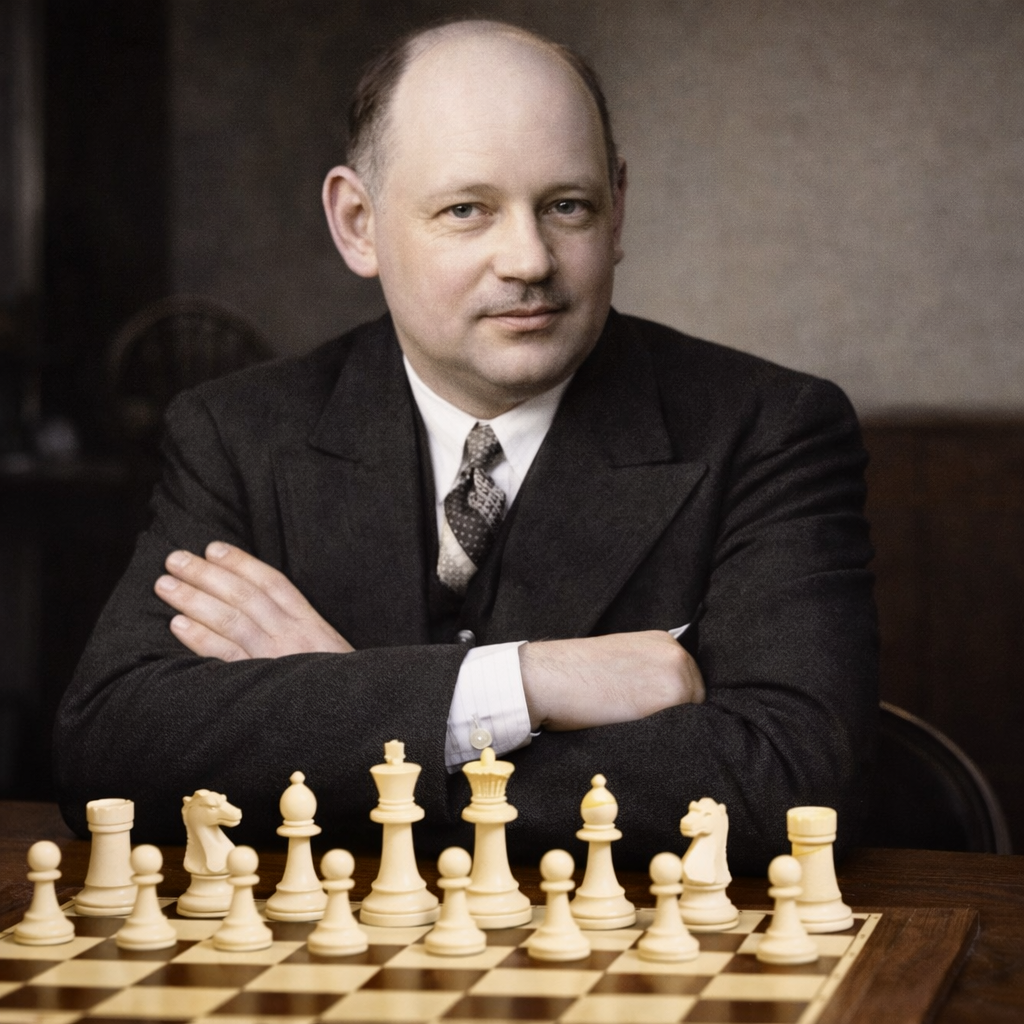

1. Introduction: Who Marc’Andria Maurizzi Is and Why He Is a Historic Figure
Marc’Andria Maurizzi is a historic figure because he embodies a key idea in modern chess: precocity is no longer surprising, but well-structured precocity still is. His rise is not the result of an anomaly or an excessive effort to break records, but of a coherent and sustained process.
For a long time, the history of European chess was shaped by isolated figures who occasionally disrupted the established order. In Maurizzi’s case, the context is different. His emergence fits into a clear continuity, within a system that develops players with strategic depth and emotional stability.
From a historical perspective, Maurizzi does not symbolize a rupture, but a confirmation: French chess has learned to produce talent consistently.
2. France as a Chess Ecosystem in Maturity
To understand Marc’Andria Maurizzi, it is essential to place him in the context of French chess over the last few decades. France has moved from relying on very specific figures to building a broad ecosystem, with strong clubs, structured training, and a solid competitive culture.
In this environment, talent is not accelerated artificially. It is supported, refined, and progressively exposed to demanding contexts. Maurizzi grows within this system, benefiting from a tradition that combines classical rigor with openness to modern methods.

Historically, this maturity phase is the hardest for any country to reach. The emergence of players like Maurizzi shows that France has moved beyond a period of dependence on individual standouts.
3. Childhood, First Steps, and Early Talent Identification
Marc’Andria Maurizzi’s talent is spotted early, but what matters is not only his age, but how it is channeled. From his first steps in competitive chess, he shows an unusual positional understanding, as well as a remarkable ability to remain calm in complex situations.
In his early games, there is no excessive reliance on superficial tactics or on opponents’ mistakes. From the beginning, his chess is based on piece coordination, accurate evaluation of structures, and clear planning.
From a historical perspective, this kind of start often indicates more stable careers. Talent is not burned quickly; it is managed.
4. Chess Training and the Weight of the French School
Maurizzi’s training clearly reflects the virtues of the modern French school: emphasis on strategic understanding, endgame study, and balanced theoretical preparation—without falling into extreme memorization.
This approach allows him to develop flexible chess, capable of adapting to new positions without losing coherence. When he leaves theory, he doesn’t panic; on the contrary, he seems comfortable navigating complex structures with clear principles.
Historically, this type of training has produced players less dependent on fashions and better able to evolve with the game. Maurizzi fits clearly into this tradition.
5. Marc’Andria Maurizzi as a Player: Solidity and Clarity
At the board, Maurizzi is defined by a solid, clear, and deeply rational style. He does not chase unnecessary spectacle or force positions without strategic justification. His chess is built through the patient accumulation of small advantages.
This way of playing may seem less flashy in the short term, but historically it has been one of the most effective styles for sustaining long careers. Maurizzi understands when to simplify, when to keep tension, and when to accept equal positions without taking unnecessary risks.
From a historical perspective, his style connects with the tradition of Europe’s great chess builders.
6. Balanced Precocity and the Absence of Artificial Pressure
Although Maurizzi earns the grandmaster title at a very young age, his career has not been marked by media overexposure or disproportionate pressure. This detail is key to understanding his development.
Chess history shows that many talents suffer when too much is demanded too soon. In Maurizzi’s case, his environment seems to have prioritized the process over the headline, allowing him to grow with room for error.
From a historical perspective, this prudent management is often one of the most decisive factors for competitive longevity.
7. First Relevant Results and Real Validation
Marc’Andria Maurizzi’s first important results do not appear as isolated blows, but as part of a logical and coherent progression. He competes confidently against experienced players and shows uncommon reliability for his age.
This kind of competitive validation is especially relevant because it shows his chess does not depend on favorable contexts, but can hold up across different formats and levels of demand.
Historically, this moment marks the real transition from youthful talent to a professional player in construction.
8. Psychological Maturity and Relationship With Competition
One of Maurizzi’s most striking traits is his relationship with competition. There is no sign of excessive anxiety or a constant need to prove himself. His attitude is restrained, reflective, and oriented toward learning.
This early psychological maturity has historically been one of the great virtues of players who build long careers. Maurizzi seems to understand that chess is a continuous process, not a sprint.
From a historical perspective, this trait can be as important as technical talent.
9. The Leap Into Adult Chess and the Disappearance of the Surprise Factor
The decisive moment in Marc’Andria Maurizzi’s career comes when the surprise factor disappears completely. In youth chess, even great talents enjoy a certain psychological advantage: opponents expect mistakes, nerves, or inconsistency. In adult chess, that condescension does not exist. Every game is played as if against a fully formed professional, regardless of age.
In this transition, Maurizzi shows a historically significant quality: he does not try to compensate for lack of experience with over-aggression. Instead of forcing positions or taking unnecessary risks, he adjusts his chess toward a more pragmatic and resilient approach. He learns to accept equal positions, to maneuver for dozens of moves, and to live with tension without needing to resolve it immediately.
From a historical perspective, this behavior is crucial. Many young talents fail precisely here, when they try to keep winning “as before.” Maurizzi, by contrast, understands that adult chess is not about proving something, but about sustaining.
10. Classical Chess as the Ultimate Test of Solidity
If there is one arena where a player’s true quality is measured historically, it is classical chess. Long games do not forgive structural shortcomings: they demand sustained concentration, emotional management, physical endurance, and deep understanding of positions that evolve slowly.
In this format, Marc’Andria Maurizzi looks especially comfortable. He does not seem impatient or dependent on tactical moments. His chess flows naturally in long games, where long-term planning matters more than isolated brilliance. This affinity with classical chess is no accident: it is the result of training oriented toward understanding rather than immediate impact.
Historically, players who have built long and respected careers have always had a strong relationship with classical chess. That Maurizzi has it from such a young age reinforces the idea that his chess is designed to endure, not just to stand out in brief cycles.
11. Structural Strengths and Natural Limits of the Process
Analyzing Maurizzi with historical rigor means going beyond praise and looking closely at his real strengths. The most evident is the internal coherence of his chess. There are no major contradictions between his strategic approach and his tactical decisions. Everything follows a clear logic, even when the position becomes complicated.
Another key strength is his emotional stability. Maurizzi does not seem to rely on the immediate result to validate his chess. He can lose a tough game and return to the board with the same clarity—something that historically has separated long-career players from those who burn out early.
His current limits are tied, as in almost all cases, to experience. In extremely dynamic positions or in very specific endgames, there is still room to grow. From a historical perspective, these limits are not a problem: they are the natural space where great players are built.
12. Comparison With Other Young European Talents
Placing Maurizzi within his European generation helps clarify his profile. Compared with other young talents who stand out through constant aggression or extreme theoretical preparation, Maurizzi occupies a different space: that of the patient builder.
While some contemporaries seek imbalance from the opening, Maurizzi seems more interested in reaching playable positions rich in nuance—where understanding matters more than memory. Historically, these types of players often take longer to reach their maximum peak, but they also tend to hold it for longer.
From this comparison, Maurizzi appears as a less noisy profile, but potentially more stable and deep within contemporary European chess.
13. France and the Value of Training Continuity
Marc’Andria Maurizzi’s career cannot be separated from the French context in which he is formed. Over recent decades, France has moved from relying on isolated figures to building a relatively stable ecosystem, where talent is supported with patience and structure.
Maurizzi is one of the clearest products of this continuity. He does not emerge as a miraculous exception, but as the logical result of a system that has learned not to burn stages. This institutional maturity is historically one of the hardest factors for any country to achieve.
From this perspective, Maurizzi represents not only himself, but a French chess culture that has understood that the long term is more valuable than the immediate headline.
14. Future Projection Without the Need for Mythology
Talking about Marc’Andria Maurizzi’s future requires conscious prudence. Chess history is full of players overloaded with expectations too early. In his case, the most sensible approach is not to ask “how far will he go,” but how he will keep growing.
If he maintains his psychological stability, his structural approach, and an environment that prioritizes the process, Maurizzi has room to develop a long and relevant career. He does not need to become an absolute symbol to be historically important; it is enough to sustain his level and continue evolving.
From a historical perspective, this kind of projection—without exaggeration, without artificial epic—tends to produce the most solid legacies.
15. Marc’Andria Maurizzi’s Place in Chess History
Although his career is still developing, Marc’Andria Maurizzi already holds a recognizable place in recent chess history: as a representative of well-managed precocity. He is not a walking record or an anomaly, but an example of how young talent can be integrated into an adult logic without breaking.
Historically, figures like this are often revalued over time. They do not generate constant headlines, but they appear again and again in major tournaments, building reputation through reliability.
His place in history will not depend only on specific titles, but on how he embodies this model of a solid, patient, and structural chess player.
16. Conclusion: When Talent Becomes Continuity
Marc’Andria Maurizzi does not represent the brilliant exception, but something rarer and more valuable: well-built continuity. His chess shows that precocity does not have to be synonymous with fragility or early burnout.
In an increasingly accelerated chess world, his figure recalls an essential historical truth: depth is still a competitive advantage. Not everything is won quickly, and not everything is built on impact.
If his career follows the course his training and chess suggest, Maurizzi will remain in contemporary chess history as a clear example that talent, when cared for and structured, does not need noise to leave a mark.