
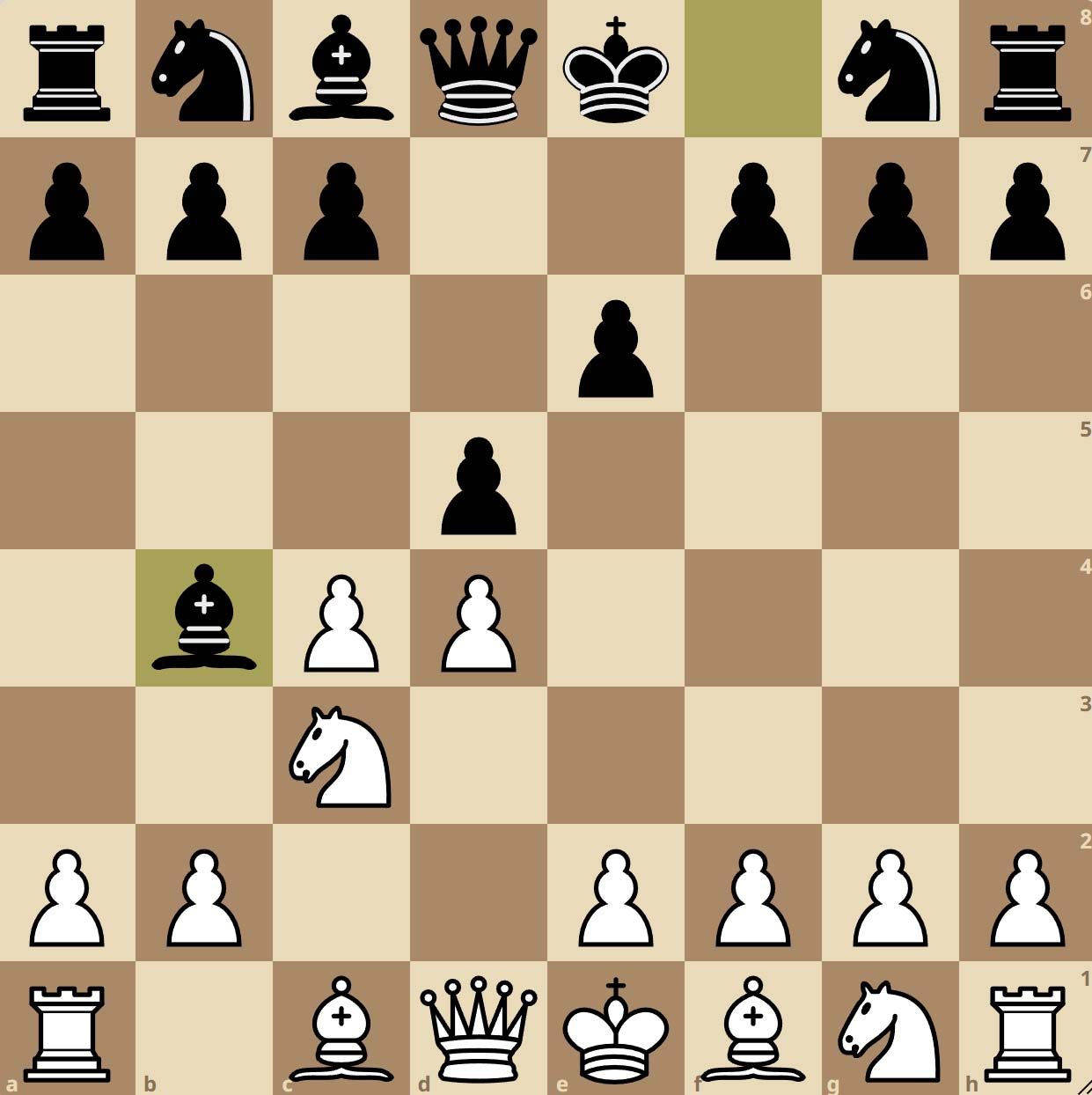
The Nimzo-Indian Defense is a solid and strategic opening employed by Black against 1.d4. It is characterized by the moves 1.d4 Nf6 2.c4 e6 3.Nc3 Bb4. This defense, introduced by Aron Nimzowitsch, aims to control the center and apply pressure on White’s position from the very first moves.
Objectives of the Nimzo-Indian Defense
The Nimzo-Indian Defense pursues several strategic objectives:
- Control of the center with pieces: Instead of occupying the center with pawns, Black seeks to control it through piece development, especially with the bishop on b4 pinning the knight on c3.
- Create weaknesses in White’s pawn structure: By pinning the knight on c3, Black threatens to capture it, potentially forcing White to recapture with the b-pawn and double their pawns.
- Quick and flexible development: Black develops minor pieces rapidly while keeping flexible options for the placement of major pieces and pawn structure.
Variations of the Nimzo-Indian Defense
1. Rubinstein System
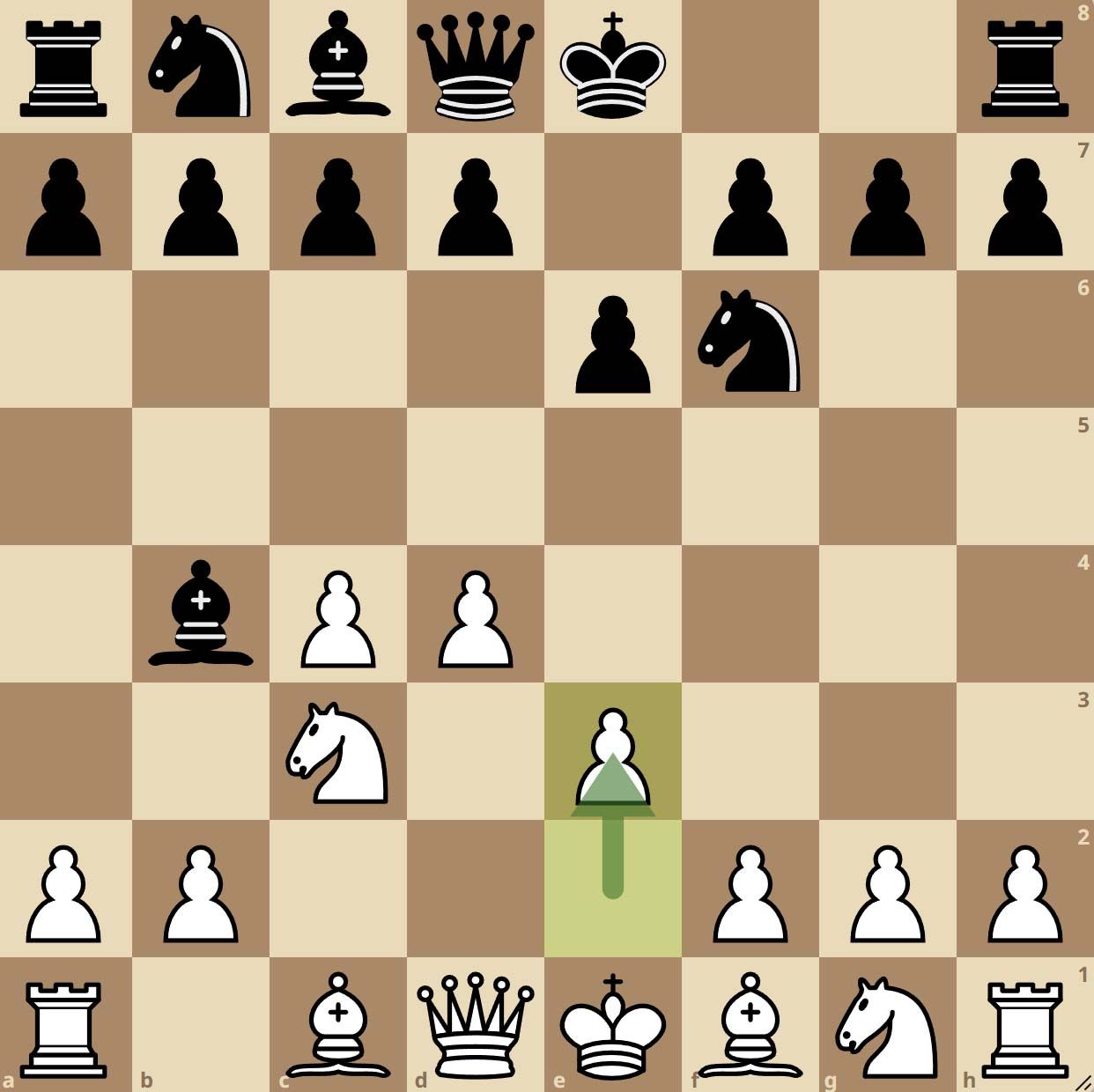
In the Rubinstein System, White opts for a solid and flexible setup, developing pieces without compromising pawn structure.
1.d4 Nf6 2.c4 e6 3.Nc3 Bb4 4.e3
2. Classical or Capablanca Variation
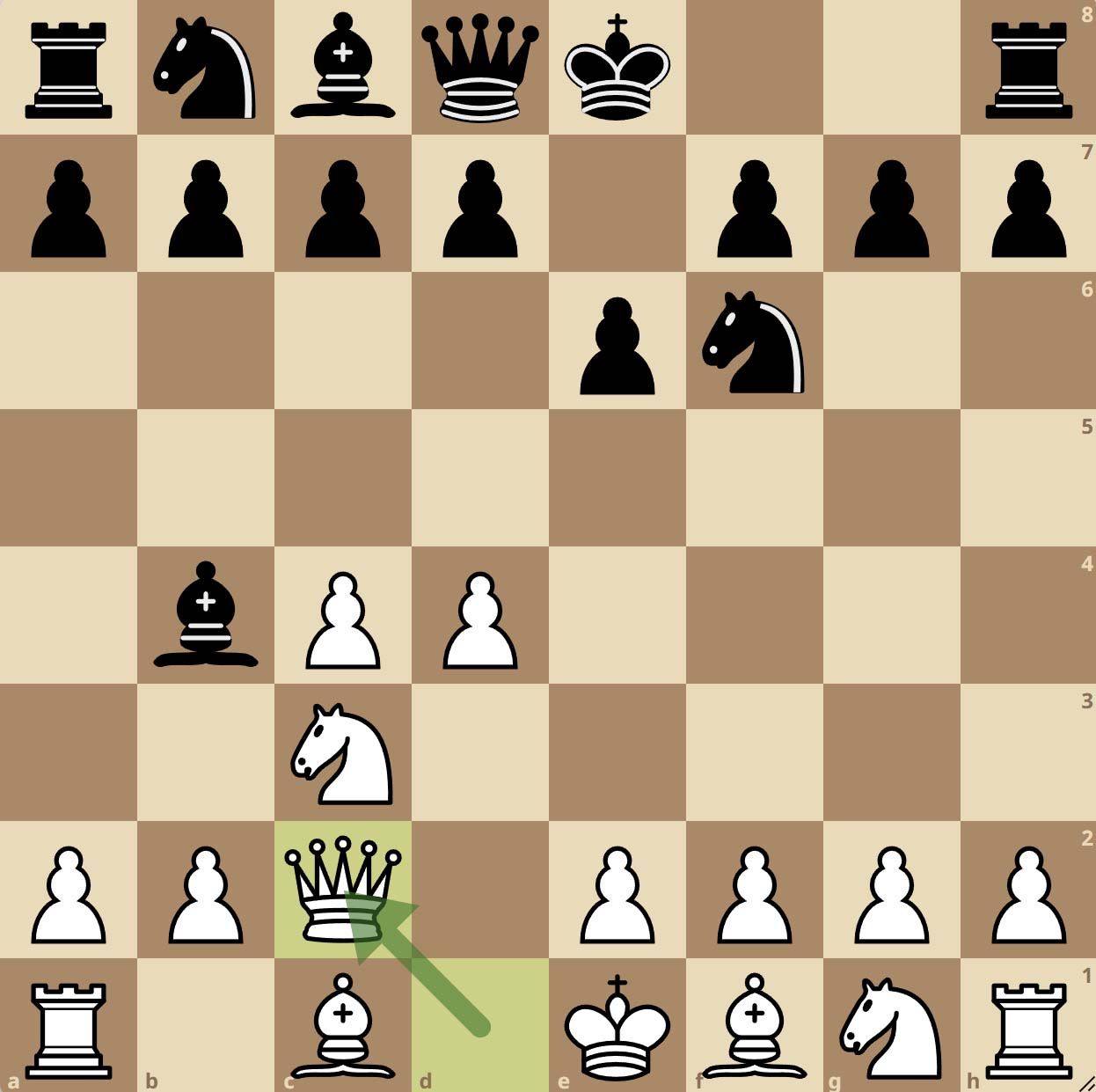
The Classical Variation avoids doubled pawns on the c-file by developing the queen early, maintaining central tension.
1.d4 Nf6 2.c4 e6 3.Nc3 Bb4 4.Qc2
3. Kasparov Variation
Named after Garry Kasparov, this variation involves natural knight development, preparing for castling and keeping flexible options in the center.
1.d4 Nf6 2.c4 e6 3.Nc3 Bb4 4.Nf3

4. Sämisch Variation
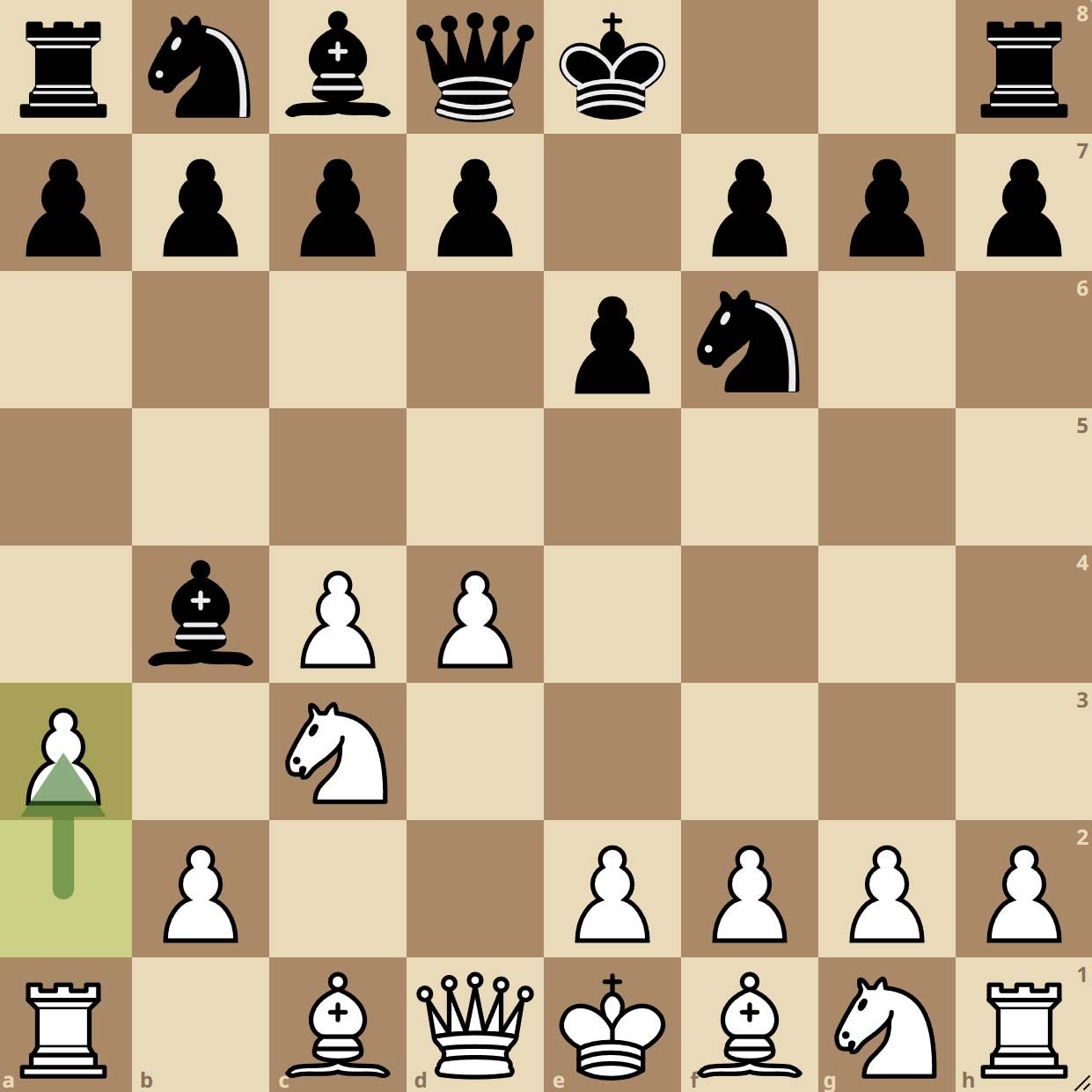
The Sämisch Variation is an aggressive line where White aims to gain the bishop pair at the cost of a weakened pawn structure.
1.d4 Nf6 2.c4 e6 3.Nc3 Bb4 4.a3
5. Kmoch Variation
In the Kmoch Variation, White seeks strong central control, although this comes at the cost of slower development and possible pawn weaknesses.
1.d4 Nf6 2.c4 e6 3.Nc3 Bb4 4.f3

Comparison of the Main Variations
| Variation | Advantages | Disadvantages |
|---|---|---|
| Rubinstein | Solid and flexible development | May lead to passive positions if not played properly |
| Classical | Avoids doubled pawns, retains bishop pair | Early queen development can be vulnerable |
| Kasparov | Natural development and fast castling | Less immediate pressure on the center |
| Sämisch | Gains the bishop pair | Weakens queenside pawn structure |
| Kmoch | Strong central control | Slower development and potential structural issues |
Tips for Playing the Nimzo-Indian Defense
To play the Nimzo-Indian effectively, consider the following tips:
- Know the key ideas: Be familiar with typical plans and resulting pawn structures from different variations.
- Flexible development: Keep your development and pawn structure adaptable based on your opponent’s responses.
- Central control: Use your pieces to apply pressure to the center and look for counterattacking opportunities.
- Avoid unnecessary weaknesses: Be cautious with pawn moves that could create long-term vulnerabilities.
Conclusion
The Nimzo-Indian Defense is a versatile and solid opening that offers Black a wide range of strategic possibilities. Mastering its variations and plans will allow you to confidently face opponents who start with 1.d4.
If you want to learn more about the Nimzo-Indian Defense, its lines and middlegame plans, sign up for our online chess school, your first class is FREE!


