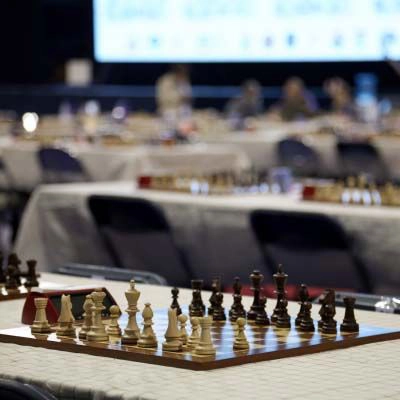

Rapid chess is a format in which each player has a reduced time control, generally between 10 and 25 minutes for the entire game. This format seeks a balance between the strategic depth of classical chess and the accelerated pace of blitz and bullet games.
Rapid chess has gained great popularity both in official FIDE (International Chess Federation) tournaments and on online platforms, where players from all over the world can compete without the extreme time pressure of blitz.
Unlike classical chess, where players have enough time to analyze complex variations and build long-term plans, rapid chess requires quick and accurate decisions, with less room for deep analysis and greater emphasis on time management.
Skills Developed in Rapid Chess
Although rapid chess does not allow the same analytical depth as classical chess, it develops essential skills for any competitive player:
🔹 Decision-Making Under Pressure
With a tighter time limit, players must quickly evaluate positions and find strong moves without excessive hesitation.
🔹 Efficient Time Management
Since time is a key resource, managing the clock properly can make the difference between victory and defeat.
🔹 Tactical Vision and Pattern Recognition
Rapid chess favors players with strong pattern recognition, allowing them to spot tactical combinations and opponent mistakes more quickly.
Main Time Controls in Rapid Chess
Although rapid games can vary in length, FIDE and online platforms have established standard formats commonly used in tournaments and casual play:
1. 15 minutes with 10-second increment per move (15+10)
- Official format in many FIDE rapid tournaments.
- Provides a balance between strategic calculation and dynamic play.
- Considered the ideal format for players who want to improve speed without sacrificing precision.
2. 10 minutes without increment (10+0)
- One of the most popular formats on platforms like Chess.com and Lichess.
- Requires speed and strong time management since no additional seconds are added per move.
- Favors players with quick reflexes and solid opening knowledge.
3. 25 minutes without increment (25+0)
- A format closer to classical chess but with less total time.
- Allows a calmer opening phase while keeping the middlegame and endgame dynamic.
4. 20 minutes with 5-second increment (20+5)
- An intermediate format between classical and rapid chess.
- The 5-second increment helps players avoid extreme time trouble.
The Appeal of Rapid Chess
Rapid chess combines the best elements of classical and blitz chess, offering a vibrant yet strategic playing experience.
🏆 Growing Popularity in Tournaments
Major events such as the FIDE World Rapid Chess Championship have established this format as a serious competitive discipline. Elite players like Magnus Carlsen, Hikaru Nakamura, and Alireza Firouzja have shown that rapid chess is a true test of skill.
🌍 Accessibility on Online Platforms
Rapid chess has gained a massive player base thanks to Chess.com, Lichess, and FIDE Online Arena, where users can compete against opponents worldwide at any time.
🔥 Ideal for Players Seeking Excitement
Unlike classical chess, which can last for hours, rapid games allow players to play multiple games in less time, maintaining excitement and engagement.
📈 Training and Continuous Improvement
Rapid chess is an excellent training tool, enabling players to practice openings, sharpen tactical vision, and strengthen chess intuition through frequent games.
Limitations and Criticism
Although rapid chess has many advantages, it also faces some criticisms and challenges:
⚠️ Less Strategic Depth
Compared to classical chess, rapid chess limits deep analysis, sometimes leading to more superficial play in complex positions.
⚠️ Higher Risk of Mistakes
Time pressure increases the likelihood of tactical and strategic errors. In many games, the outcome depends more on clock management than pure quality of play.
⚠️ Mental Fatigue
Playing many rapid games consecutively can be mentally exhausting and may reduce the overall quality of decision-making.
Conclusion
Rapid chess has established itself as an attractive and challenging format, offering a balance between strategy, intuition, and speed. While it does not allow the same depth as classical chess, it remains an ideal option for players who want to improve their mental agility and enjoy dynamic games in less time.