

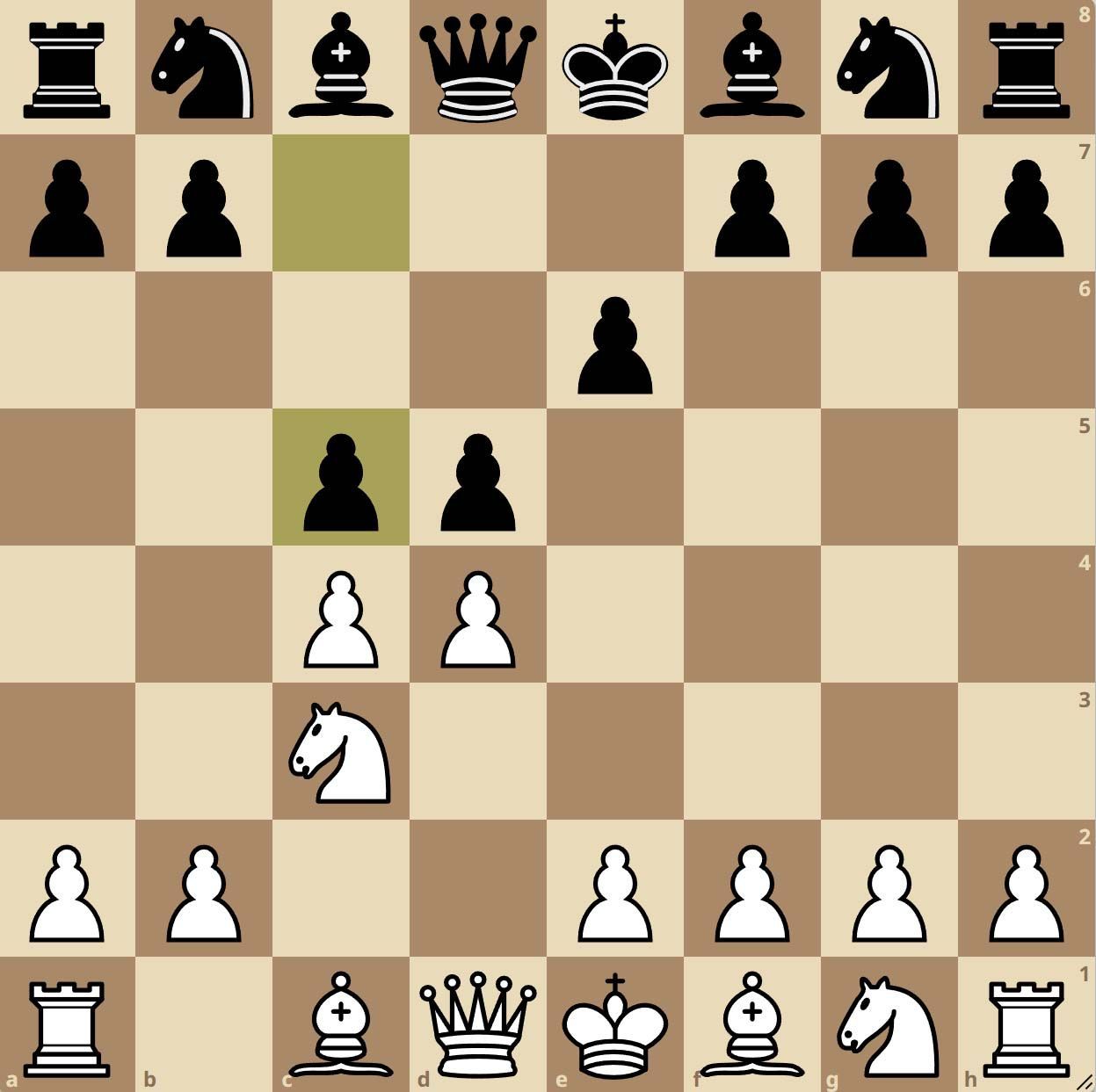
The Tarrasch Defense is a variation of the Queen’s Gambit Declined characterized by the moves 1.d4 d5 2.c4 e6 3.Nc3 c5. With this sequence, Black seeks a direct confrontation in the center of the board, accepting the possibility of ending up with an isolated pawn on d5 in exchange for greater piece activity and central control. This defense was popularized by the German grandmaster Siegbert Tarrasch, who argued that active piece play fully compensated for the structural weakness of the isolated pawn.
Objectives of the Tarrasch Defense
The Tarrasch Defense pursues several strategic objectives that Black must keep in mind for effective execution:
- Dynamic central control: By advancing the pawn to c5, Black challenges White’s center and aims to establish strong control over the central squares.
- Rapid piece development: This defense facilitates quick development of the minor pieces, especially the bishops, which find open diagonals for active play.
- Generation of active play: Despite the potential weakness of the isolated pawn on d5, Black obtains dynamic positions that offer attacking chances and counterplay.
Tarrasch Defense Variations
1. Main Line
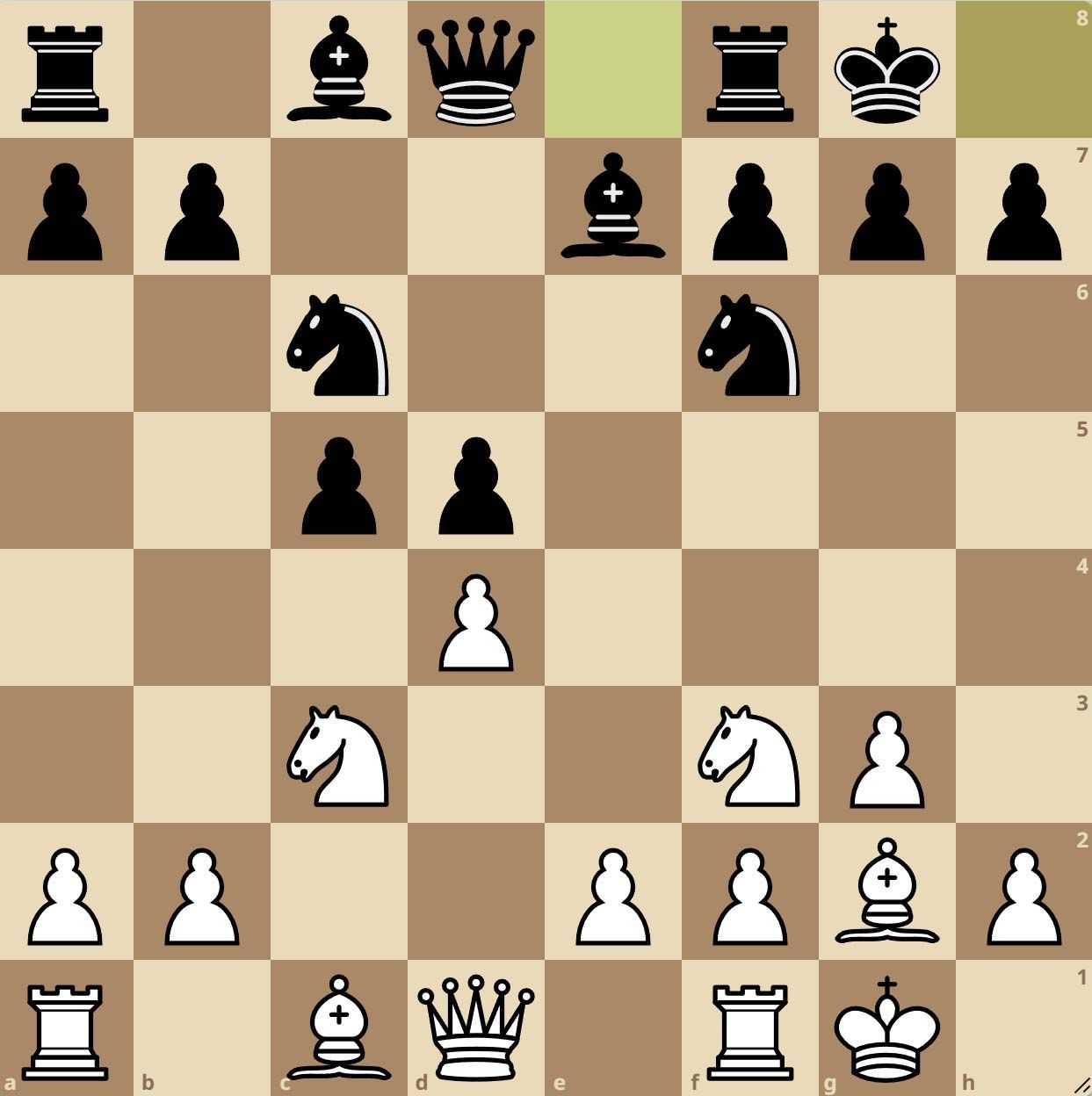
In the Main Line, White aims to isolate Black’s queen’s pawn and then apply pressure against it. Black, in turn, tries to exploit active piece play to counterbalance this strategy.
1.d4 d5 2.c4 e6 3.Nc3 c5 4.cxd5 exd5 5.Nf3 Nc6 6.g3 Nf6 7.Bg2 Be7 8.0-0 0-0
2. Swedish Variation
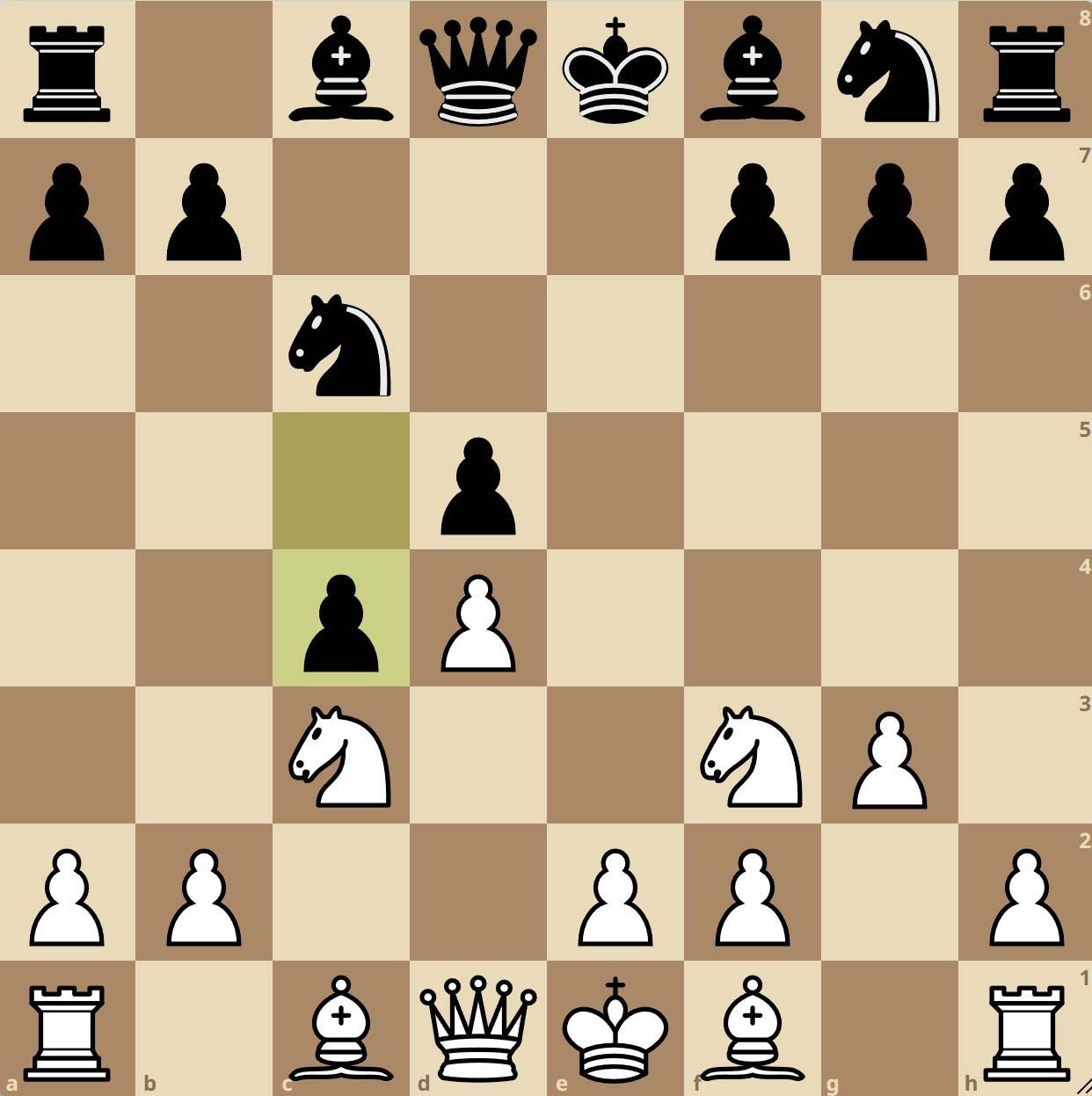
The Swedish Variation, also known as the Folkestone Variation, is a less common line in which Black advances the pawn to c4, aiming for an asymmetrical pawn structure and queenside play.
1.d4 d5 2.c4 e6 3.Nc3 c5 4.cxd5 exd5 5.Nf3 Nc6 6.g3 c4
3. Semi-Tarrasch Defense
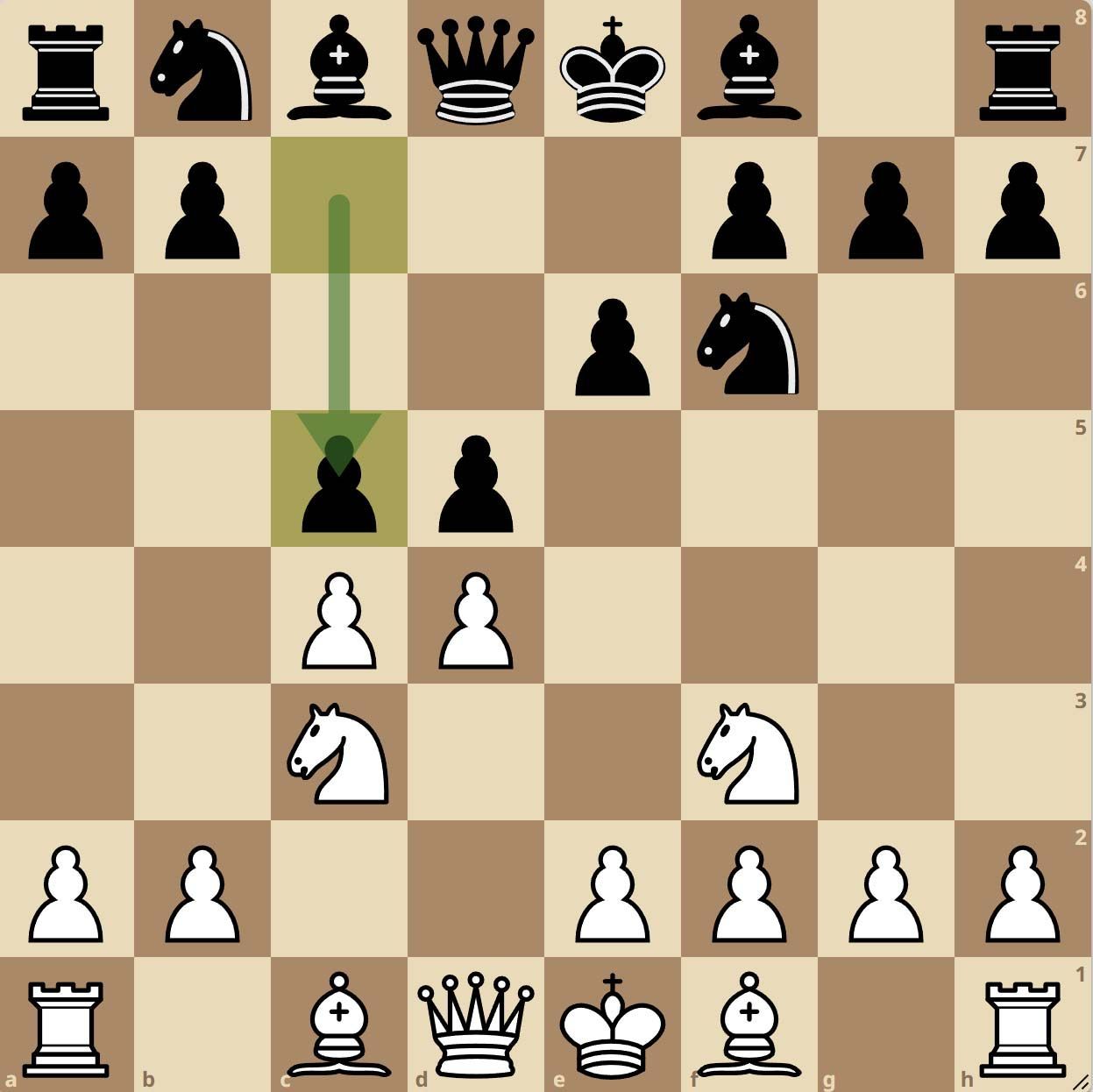
The Semi-Tarrasch Defense is an alternative in which Black avoids the isolated pawn, aiming for a more solid structure while retaining counterplay options.
1.d4 d5 2.c4 e6 3.Nc3 Nf6 4.Nf3 c5
Comparison of the main variations
| Variation | Advantages | Disadvantages |
|---|---|---|
| Main Line | Active piece development and central control | Isolated pawn on d5 that can become a target |
| Swedish Variation | Imbalanced play and attacking chances on the queenside | Fixed pawn structure that may be exploited |
| Semi-Tarrasch Defense | More solid pawn structure with no obvious weaknesses | Less dynamism and fewer counterplay opportunities |
Tips for playing the Tarrasch Defense
To employ this defense effectively, it is important to keep the following aspects in mind:
- Understand pawn structures: Become familiar with the positions arising from the isolated pawn on d5 and the associated strategic plans.
- Rapid development: Prioritize the development of your minor pieces and castling to ensure king safety and good coordination.
- Seek active piece play: Use the mobility of your pieces to generate threats and maintain the initiative.
Conclusion
The Tarrasch Defense offers Black a dynamic and aggressive option against the Queen’s Gambit, providing active development and counterplay opportunities at the cost of a potentially weakened pawn structure.
If you want to learn more about the Tarrasch Defense, its lines, and typical middlegame plans, sign up for our online chess school, where we offer the first class FREE!


