

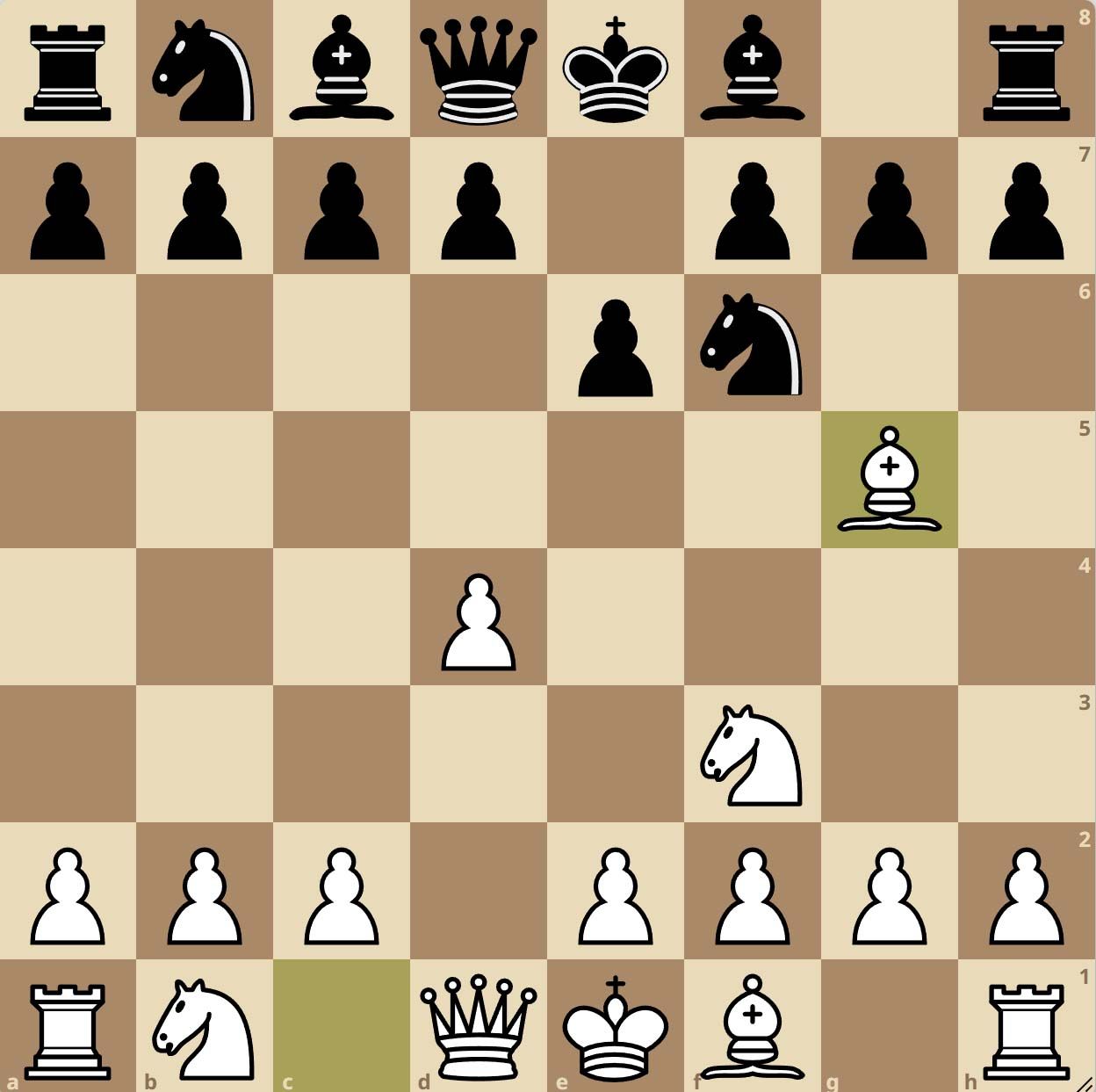
The Torre Attack is an opening characterized by the moves 1.d4 Nf6 2.Nf3 e6 3.Bg5. This system is named after the Mexican Grandmaster Carlos Torre Repetto, who popularized it in the 1920s. Unlike other openings, the Torre Attack is more of a setup than a rigid move order, allowing White to develop their pieces harmoniously and prepare attacks on the kingside.
Objectives of the Torre Attack
The Torre Attack pursues several strategic objectives:
- Fast and flexible development: White aims for efficient development of the minor pieces, especially the dark-squared bishop to g5, before committing to a specific central pawn structure.
- Central control: Although White does not immediately occupy the center with pawns, they exert pressure on it and keep the option of playing e4 at the right moment.
- Preparing a kingside attack: By placing the bishop on g5, White creates the possibility of attacking Black’s castled position, especially if Black develops the knight to f6.
Torre Attack Variations
1. Classical Variation
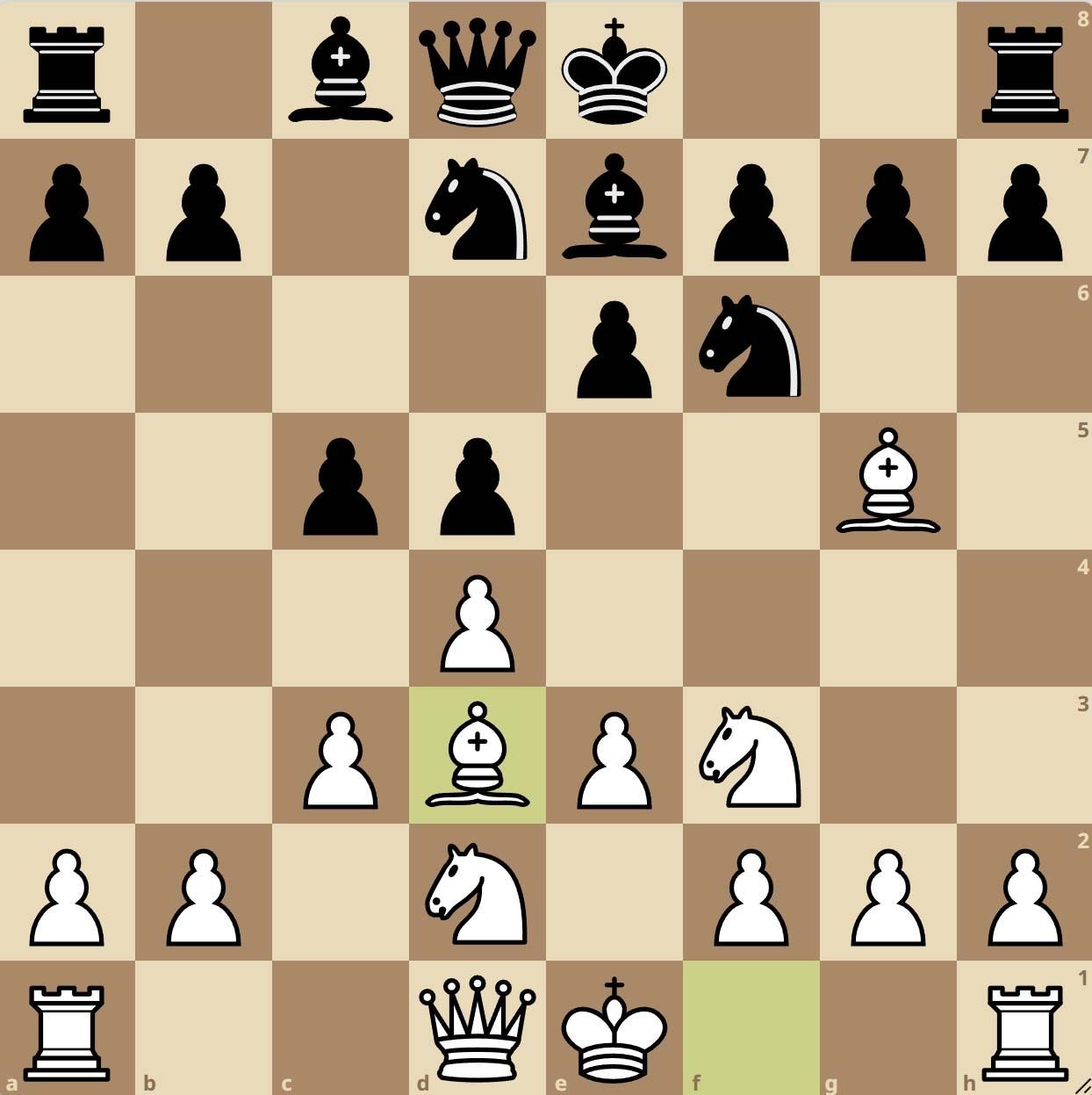
In the Classical Variation, White continues with e3 and Bd3, aiming for solid development and preparing to castle kingside. This approach allows White to keep a flexible pawn structure and remain ready to react depending on Black’s setup.
1.d4 Cf6 2.Cf3 e6 3.Ag5 d5 4.e3 c5 5.Cbd2 Ae7 6.c3 Cbd7 7.Ad3
2. Variation with g6
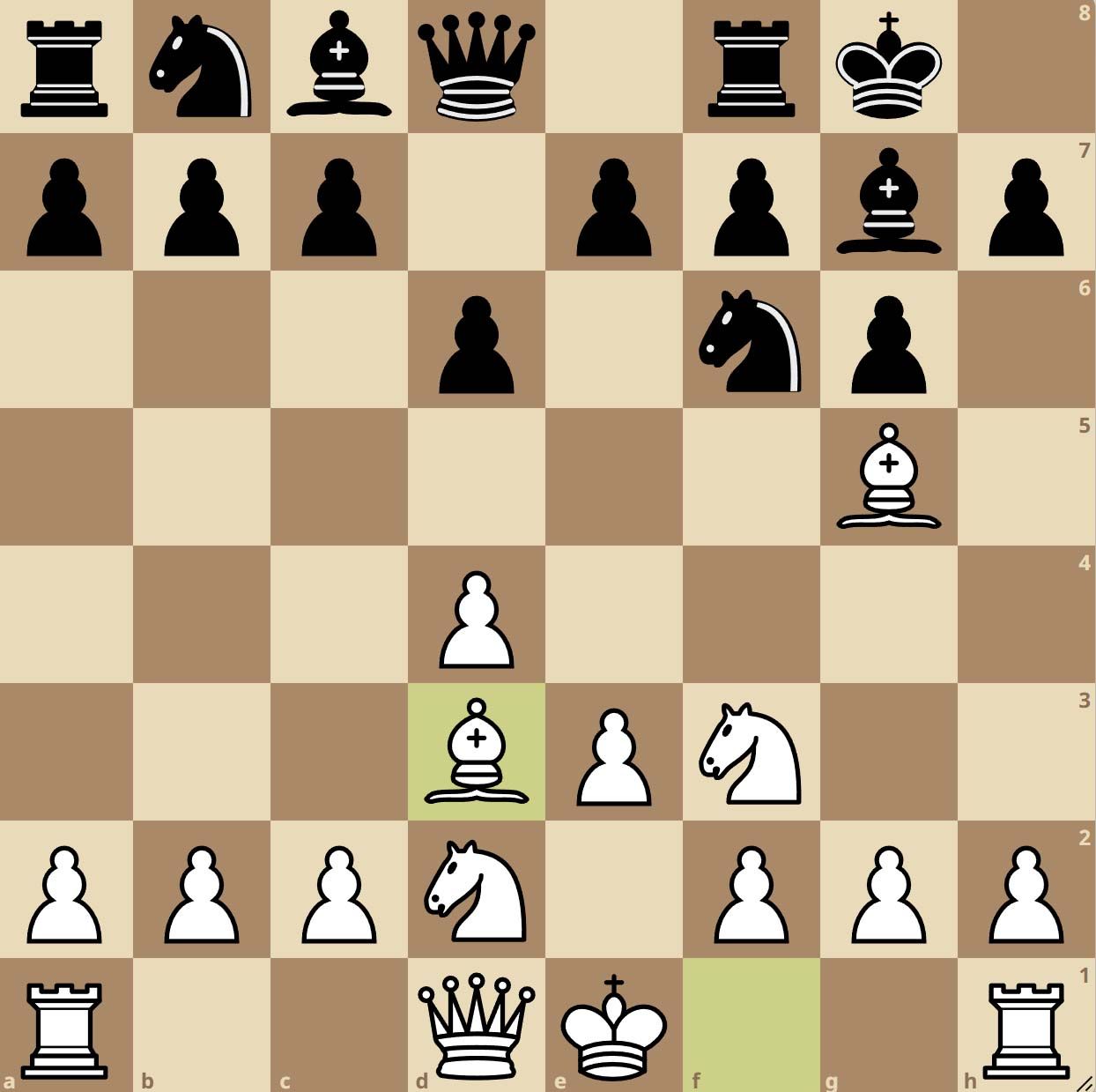
In this variation, Black fianchettoes the king’s bishop with g6 and Bg7. White can respond by developing naturally and preparing the e4 advance to gain space in the center and launch a kingside attack.
1.d4 Cf6 2.Cf3 g6 3.Ag5 Ag7 4.Cbd2 O-O 5.e3 d6 6.Ad3
3. Tartakower Variation
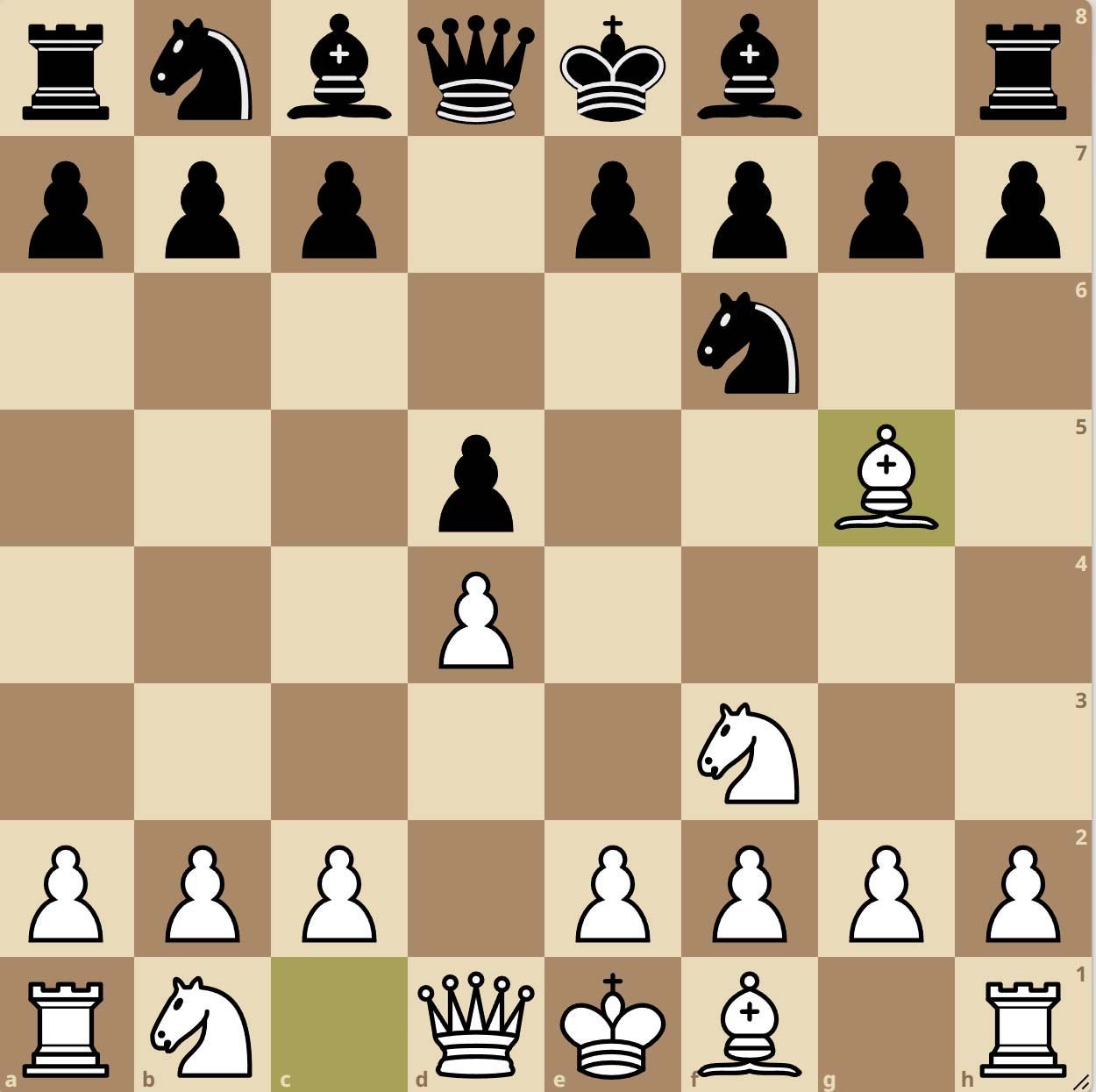
Named after Grandmaster Savielly Tartakower, this variation is characterized by the initial moves 1.d4 d5 2.Nf3 Nf6 3.Bg5. White aims to put pressure on the knight on f6 and prepares the e4 advance in order to control the center.
1.d4 d5 2.Cf3 Cf6 3.Ag5
Comparison of the main variations
| Variation | Advantages | Disadvantages |
|---|---|---|
| Classical Variation | Solid and flexible development | It can become passive if not played accurately |
| Variation with g6 | Possibility of a quick kingside attack | Black can counter with active play in the center |
| Tartakower Variation | Immediate pressure on the f6 knight | Black can defend and seek counterplay in the center |
Tips for playing the Torre Attack
To get the most out of the Torre Attack, consider the following tips:
- Know the typical plans: Familiarize yourself with common strategic ideas, such as the e4 advance and kingside attacking plans.
- Pay attention to your opponent’s pawn structure: Adapt your plans depending on Black’s pawn setup, especially if they have fianchettoed their king’s bishop.
- Avoid passivity: Although the Torre Attack is a solid opening, it is important to look for active opportunities and not settle for a passive position.
Conclusion
The Torre Attack is a versatile opening that offers White both positional and tactical opportunities. By understanding its variations and typical plans, players can surprise their opponents and obtain favorable positions from the opening.
If you want to learn more about the Torre Attack, its lines, and its typical middlegame plans, sign up for our online chess school, where we offer the first class FREE!


