
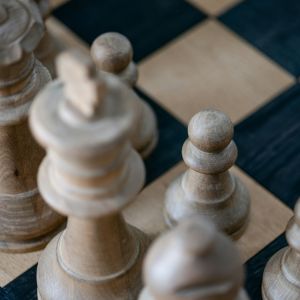
One of the most common confusions when buying chess pieces is thinking that they all serve equally well for playing. Many pieces are visually attractive, imposing, or highly detailed, but that does not mean they are suitable for real play. This is where a key distinction appears, one that is worth understanding well: pieces designed for tournament play versus pieces designed mainly for decoration.
The problem is not choosing decorative pieces, but doing so while believing they will work just as well for daily play. In practice, this usually translates into discomfort, fatigue, constant tipping, or even stopping using the set over time.
In this article, we are going to explain what really distinguishes tournament pieces from decorative ones and how to avoid making the wrong choice depending on the use you are going to give them.
What defines pieces designed for tournament play
Tournament pieces are designed with a very clear goal: to facilitate play. Everything about them responds to functional criteria: proportions, stability, visual recognition, and comfort in the hand.
These types of pieces usually follow the Staunton style or very close variants, because that design has proven to be the most efficient for play. The heights are intended not to overcrowd the square, the bases are wide to ensure stability, and the weight is balanced to allow precise movements.
In addition, tournament pieces prioritize clarity. There are no superfluous elements that distract or details that make it harder to distinguish one piece from another in complex positions or time trouble.

What characterizes decorative pieces
Decorative pieces, on the other hand, are created with a different intention. They seek to make a visual impact, tell a story, or represent a specific theme. That is why they often have more elaborate designs, exaggerated heights, or very marked sculptural details.
This makes them attractive as display objects or as special gifts, but it introduces problems when they are used for regular play. The proportions are not always functional, the weight may be poorly distributed, and stability is usually secondary to aesthetics.
It is not unusual for decorative pieces to tip over easily, take up too much space on the board, or become uncomfortable to handle after a while of play.
The playing experience: where the difference is noticeable
The difference between both types of pieces becomes evident when playing for more than a few minutes. With tournament pieces, the player forgets about the equipment and focuses on the game. The pieces move naturally, rest well on the board, and do not create mental friction.
With decorative pieces, the opposite happens. The player has to be more careful, reposition pieces that fall over, or adapt to shapes that are not very ergonomic. This breaks the rhythm of play and can be frustrating, especially in long games.
That is why many decorative sets end up being used very little, despite being visually very attractive.
Why decorative pieces are avoided in tournaments and clubs
In competitive or educational contexts, decorative pieces have no place. Clubs, schools, and tournaments look for reliable, comfortable, and consistent equipment, not eye-catching objects.
The use of standard pieces reduces errors, discussions, and unnecessary adjustments. All players recognize the pieces instantly and play under equal conditions.
For this reason, decorative pieces are rarely seen in environments where chess is practiced regularly and seriously.
The most common mistake when buying pieces
The most common mistake is buying decorative pieces thinking they will serve “for everything”: playing, displaying, and gifting. In practice, this rarely works well.
If the main goal is to play, especially on a regular basis, the pieces must be functional first. Aesthetics can come afterward, but never at the expense of playability.
Mentally separating these two uses avoids many disappointments.
When it does make sense to choose decorative pieces
This does not mean that decorative pieces do not have their place. They do, and a very clear one. They are an excellent option for:
- special gifts
- space decoration
- collecting
- occasional games without demands
In these cases, their value does not lie in the playing experience, but in the visual and emotional impact they create.
Conclusion
Tournament pieces and decorative pieces respond to very different needs. The former are designed for frictionless play; the latter, to attract attention and convey character.
Choosing well is not a matter of quality or price, but of real use. Understanding this difference will allow you to enjoy chess more and avoid purchases that, over time, end up sitting on a shelf.


