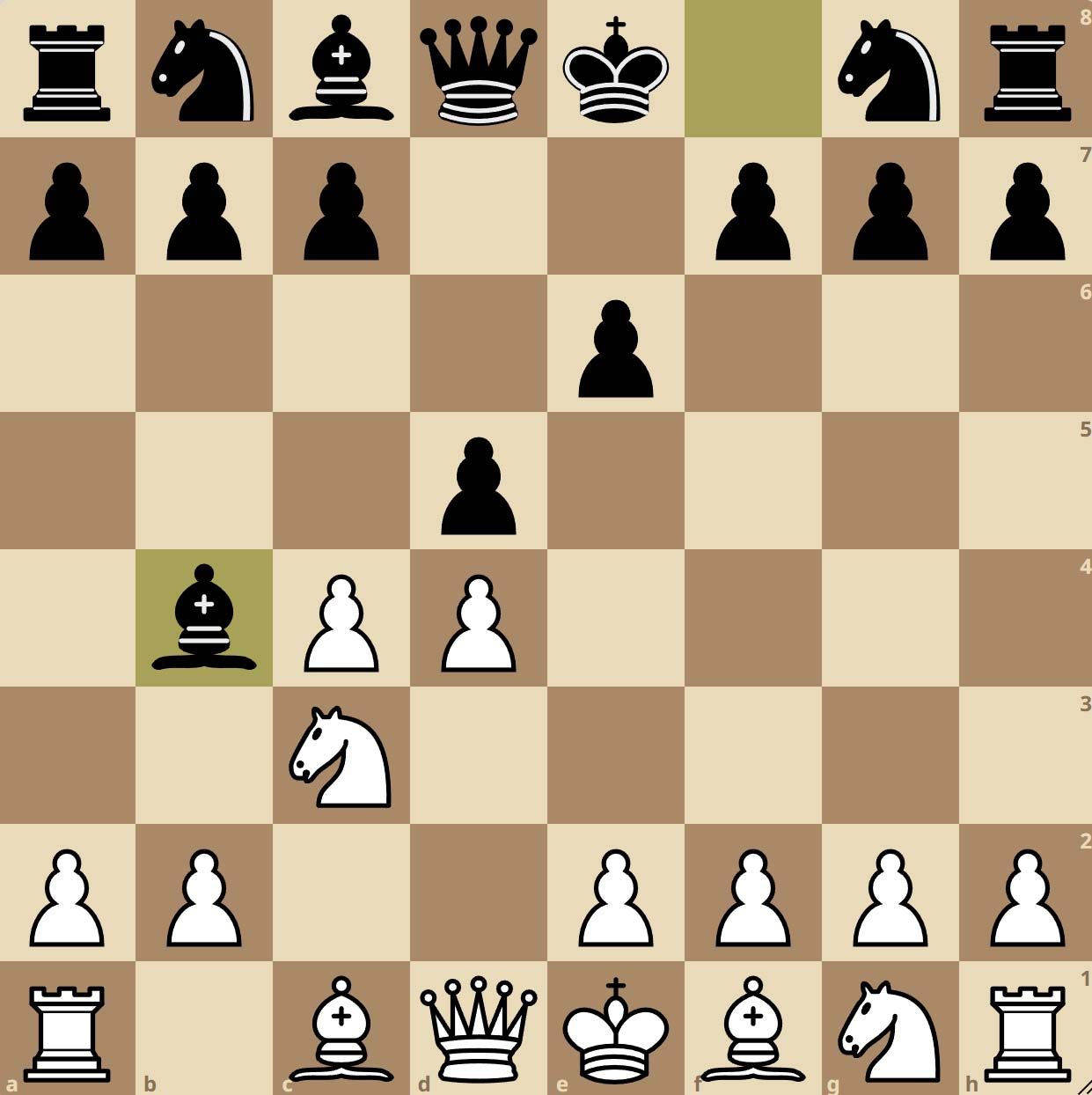
The Alekhine Defense is an unconventional opening that allows White to quickly occupy the center. Developed and employed by former World Champion Alexander Alekhine, this defense is characterized by the initial moves: 1.e4 Nf6
History of the Alekhine Defense
This defense was introduced into professional chess by champion Alexander Alekhine in the 1920s as a way to surprise opponents and challenge classical central control strategies. Since then, it has occasionally been used in top-level tournaments due to its provocative and unique nature.
Strategic Concept of the Alekhine Defense
The idea behind the Alekhine Defense is to provoke White into overextending their central pawns, creating a target that Black can later aim to undermine and attack. While White gains central space early, this advantage can turn into a weakness if Black successfully counterattacks in the middlegame.

Main Variations of the Alekhine Defense
1. Modern Variation
This line arises after 1.e4 Nf6 2.e5 Nd5 3.d4 d6 4.Nf3 g6. Black develops their pieces flexibly, often opting for a kingside fianchetto, which offers both defensive solidity and counterplay options. An alternative line is 4… Bg4.

2. Four Pawns Attack
This is one of White’s most aggressive responses: 1.e4 Nf6 2.e5 Nd5 3.d4 d6 4.c4 Nb6 5.f4. White advances a full pawn chain into the center, aiming for a direct assault. However, the structure also creates weaknesses that Black will try to exploit in later stages.

3. Exchange Variation
This line starts with 1.e4 Nf6 2.e5 Nd5 3.d4 d6 4.exd6, where White opts for simplification by exchanging pawns in the center. The result is often a quieter position, offering positional opportunities for both sides.
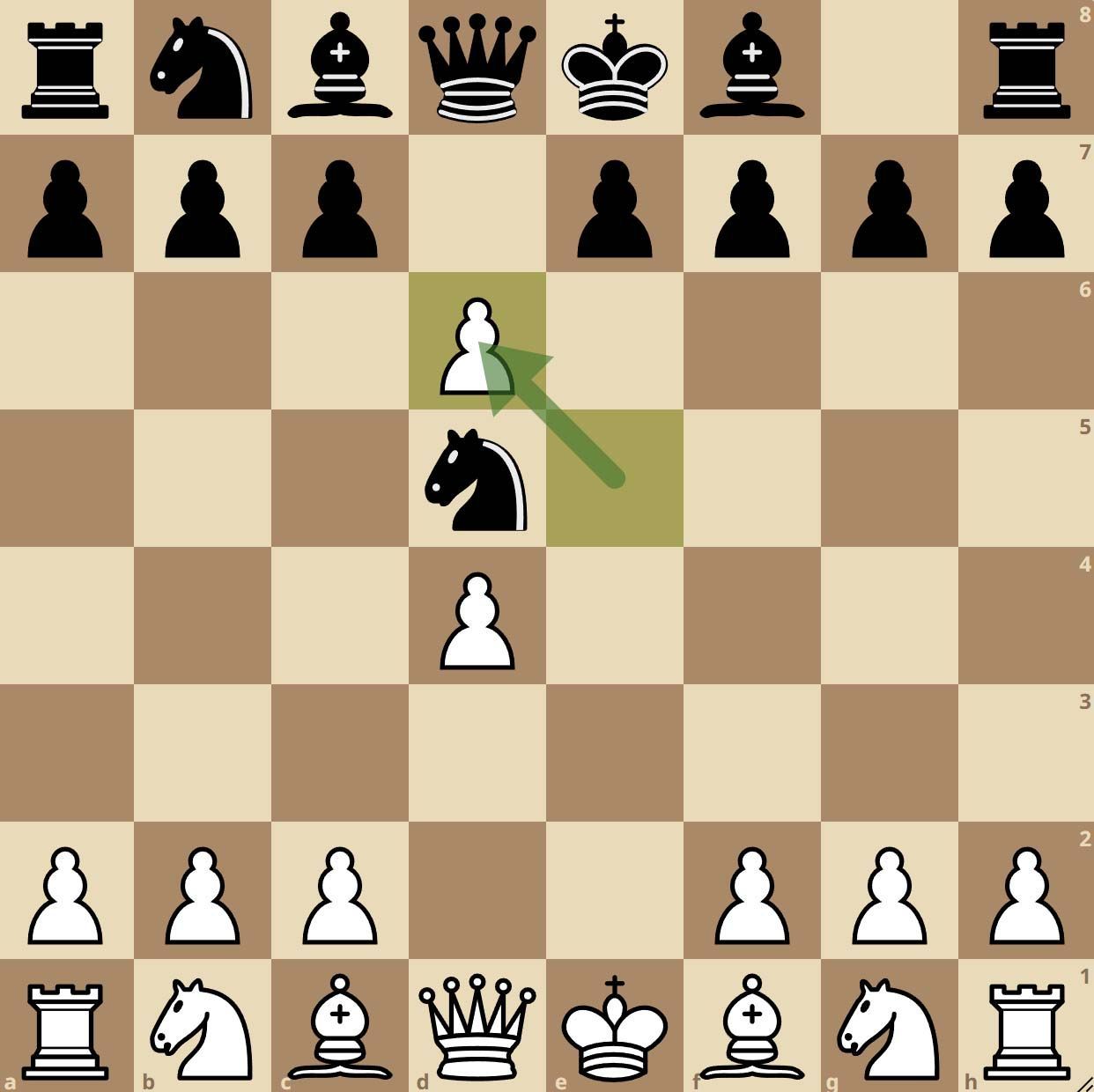
4. Two Knights Variation
This variation is defined by 1.e4 Nf6 2.e5 Nd5 3.Nf3. White develops the knight without immediately pushing in the center, aiming for flexibility and keeping options open for future moves.

Comparison of Alekhine Defense Variations
| Variation | Advantages | Disadvantages |
|---|---|---|
| Modern Variation | Flexible development, counterplay possibilities | Requires precise control or White may dominate the center |
| Four Pawns Attack | Aggressive play and central dominance | Leaves weaknesses that Black can target |
| Exchange Variation | Quieter, more simplified positions | Fewer opportunities for dynamic attacks |
| Two Knights Variation | Flexible development, keeps central tension | May allow White to seize initiative due to slower pressure |
Common Mistakes in the Alekhine Defense
- Overextending pawns: White must be cautious not to push too far, as these advances can later become targets.
- Neglecting piece development: Despite central control, White should not delay the development and coordination of pieces.
- Underestimating Black’s counterplay: Black often waits for White’s overextension to strike back. This potential must be monitored closely.
Conclusion
The Alekhine Defense is a fascinating choice for players who enjoy a provocative and tactical approach. Although not as common as other defenses, its structure invites flexible and aggressive play, where Black aims to exploit any weaknesses in White’s center. It’s a complex defense that can lead to dynamic positions, ideal for experienced players with a good tactical eye.