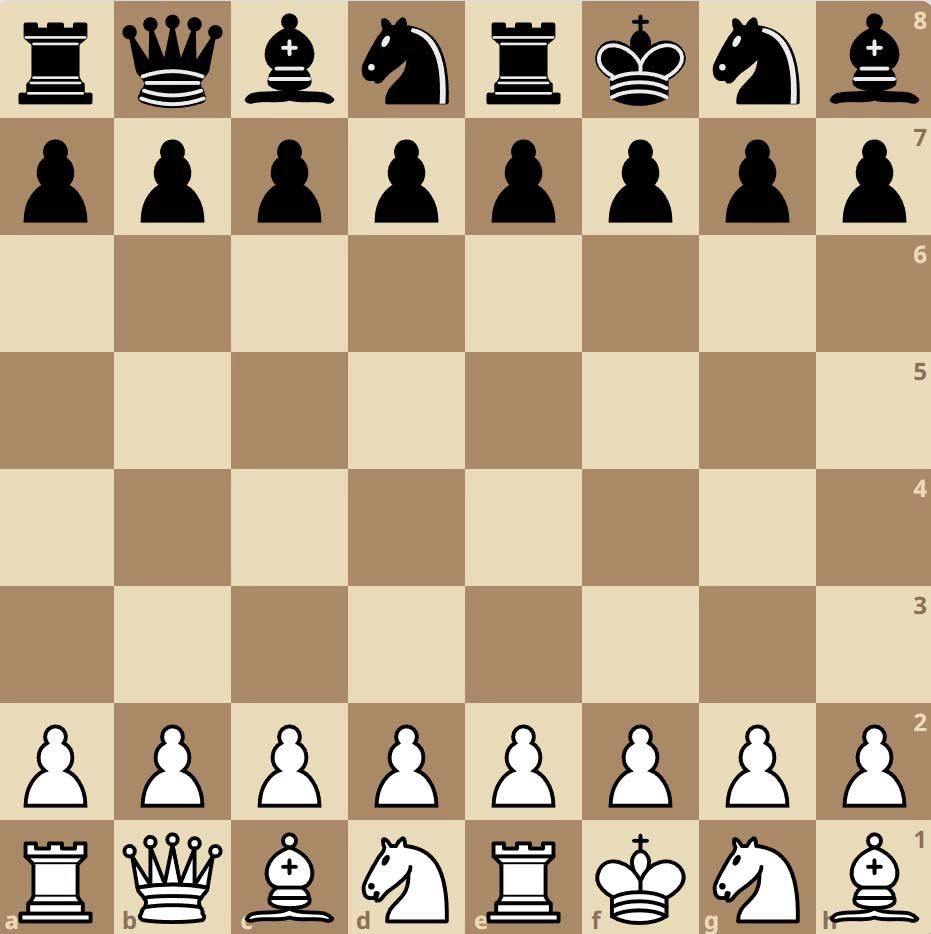

Duck Chess is a chess variant that introduces an extra element on the board: a duck. This quirky mode combines classic chess strategy with a touch of chaos and creativity, because on every turn players must move a piece and also reposition the duck, adding a new layer of complexity to the game.
Unlike conventional chess, where the only pieces on the board are the standard ones, in Duck Chess players can use the duck as a barrier to block moves or disrupt the opponent’s strategic plans.
This variant has become especially popular on some online chess platforms, where players have embraced this fun and challenging dynamic as an alternative way to enjoy chess.
History and origin of Duck Chess
Duck Chess is a relatively new chess variant that originated on online platforms, where it was introduced as an experimental option to offer a more playful approach to the game.
The idea of adding a neutral piece that can be moved by both players is not entirely new, but the “duck” concept has been particularly well received by the chess community because of its simplicity and the fresh dynamics it creates.
Today, this variant has grown in popularity, with online tournaments and casual games among players looking for a different and more entertaining way to play chess.

Key features of Duck Chess
Duck Chess follows many of the rules of classical chess, but with one major difference:
✅ The duck as an extra piece on the board
- The duck is a neutral piece that does not belong to either player.
- It cannot capture and cannot be captured, but it can be placed on any empty square after each turn.
✅ Mandatory duck move every turn
- On each turn, a player must make one move with a piece and then move the duck to any empty square on the board.
- You cannot skip the duck move, which makes strategic planning more complex.
✅ Move blocking
- The duck can block piece movement, since no piece (except knights) can move onto a square occupied by the duck.
✅ It does not “stop” check or checkmate
- Although the duck can block squares, it does not override the rules of check and checkmate. If a player is in check, they must make a legal move to escape the threat, regardless of the duck’s position.
✅ More complexity and tactical chaos
- The duck can disrupt well-calculated plans, since its position changes every turn.
- It forces players to think more flexibly and consider new ways to attack and defend.
Rules of Duck Chess
Duck Chess follows standard chess rules with a few key modifications:
🔹 Each turn has two actions
- Make a move with one of your pieces.
- Move the duck to any empty square on the board.
🔹 The duck blocks movement
- Any piece (except knights) cannot move onto the square where the duck stands.
- This can be used to block attacks or prevent the opponent’s plans.
🔹 The duck cannot be captured
- Unlike normal pieces, the duck is never removed from the board.
- It must be moved every turn.
🔹 Checkmate is still the win condition
- The duck does not change the concept of check or checkmate.
- A player wins by delivering checkmate to the opponent’s king, regardless of the duck’s position.
Strategies for playing Duck Chess
Because the duck adds a new tactical dimension, players must adapt their strategies to make the most of this mechanic.
🔹 Use the duck to block your opponent’s moves
- You can place the duck on key squares to prevent the opponent from moving an important piece.
- Blocking diagonals, files, or escape squares can be crucial to gaining an advantage.
🔹 Keep your own pieces mobile
- It’s important not to block yourself with the duck.
- Avoid placing the duck where it interferes with your own key ideas.
🔹 Create traps and restrictions
- Using the duck to limit the opponent’s options can force mistakes.
- In attacking positions, the duck can block a possible escape square for the enemy king.
🔹 Protect your castled position
- Placing the duck near your own king can sometimes serve as extra defense in certain structures.
🔹 Force awkward duck placements
- Since your opponent must move the duck after their piece move, you can sometimes steer them into placing the duck on an unfavorable square.
Benefits of Duck Chess
Duck Chess is not only fun—it also offers several strategic benefits:
✅ Encourages creativity – Adding a non-standard element forces players to develop new strategies.
✅ Builds adaptability – Because the duck changes position every turn, players must stay flexible in their planning.
✅ Improves tactical awareness – The duck is a powerful blocking tool, strengthening your ability to foresee lines and restrictions.
✅ Makes games more social and entertaining – Its humorous, chaotic touch makes it ideal for casual games with friends.
✅ Breaks monotony – For players who want a refreshing change from standard chess, this variant offers something new without replacing the core movement rules.
Challenges of Duck Chess
⚠️ More complex planning – The duck’s influence makes it harder to calculate attack and defense lines accurately.
⚠️ The duck can backfire – If you move it poorly, it may end up helping your opponent instead of blocking their plans.
⚠️ Trickier for new players – Although the rules are simple, adapting to the duck requires a shift in mindset.
⚠️ Less study material – Since it’s a recent variant, there’s limited theory on advanced Duck Chess strategy.
Conclusion
Duck Chess is a fun, challenging, and surprise-filled variant that changes traditional chess by introducing a neutral element on the board. Its blocking mechanic adds a fresh tactical dimension that forces players to rethink their plans and adapt constantly.
We hope you enjoyed this article, and remember that you can visit our official Chesscul blog to explore all the chess variants that exist, and also to learn openings, tactics, and strategy for free. Plus, if you’re highly motivated to improve at chess, you can also try a class at our school completely FREE!