

Pawn chains are one of the most important structures in chess, as they have a major impact on a player’s overall strategy. Understanding how to properly form and take advantage of pawn chains can be the key to controlling the board and achieving a more solid position. In this article, we’ll explore what pawn chains are, how to form them effectively, and how to use them to your advantage throughout the game.
What is a Pawn Chain?
A pawn chain is a formation of pawns where each pawn is protected by another pawn from the same side, forming a diagonal structure. In other words, pawns are positioned in such a way that one “supports” the next in a sequence that moves diagonally across the board. This structure provides solid defense and allows control of important areas of the board, especially the center.
Pawn chains are crucial throughout the game, as they are the foundation of many defensive and offensive strategies. However, they also have vulnerabilities that must be managed properly.
Key Characteristics of a Pawn Chain
- Diagonal formation: Pawns in a chain are placed so that each pawn is on an adjacent square to the left or right of its nearest “partner.”
- Mutual support: Pawns in a chain protect each other, which provides stability and makes it difficult for the opponent to attack without a solid plan.
- Control of the center: Pawn chains allow players to control the center of the board, which is a major strategic advantage in most games.

How is a Pawn Chain Formed?
Forming a pawn chain requires planning and precision. Randomly pushing pawns is not enough; each move must be part of a broader plan to build a solid structure. Below are some common ways to form pawn chains:
1. Advancing Central Pawns
One of the most common ways to form a pawn chain is by advancing pawns in the center of the board. This creates a structure where pawns can support each other as they move forward, providing a strong base for major pieces.
Example:
Imagine you have pawns on squares d2 and e2. If you push the pawn from d2 to d4, and then from e2 to e4, you’ve created a pawn chain stretching across the central squares (d4–e4). This gives you central control and mutual support.

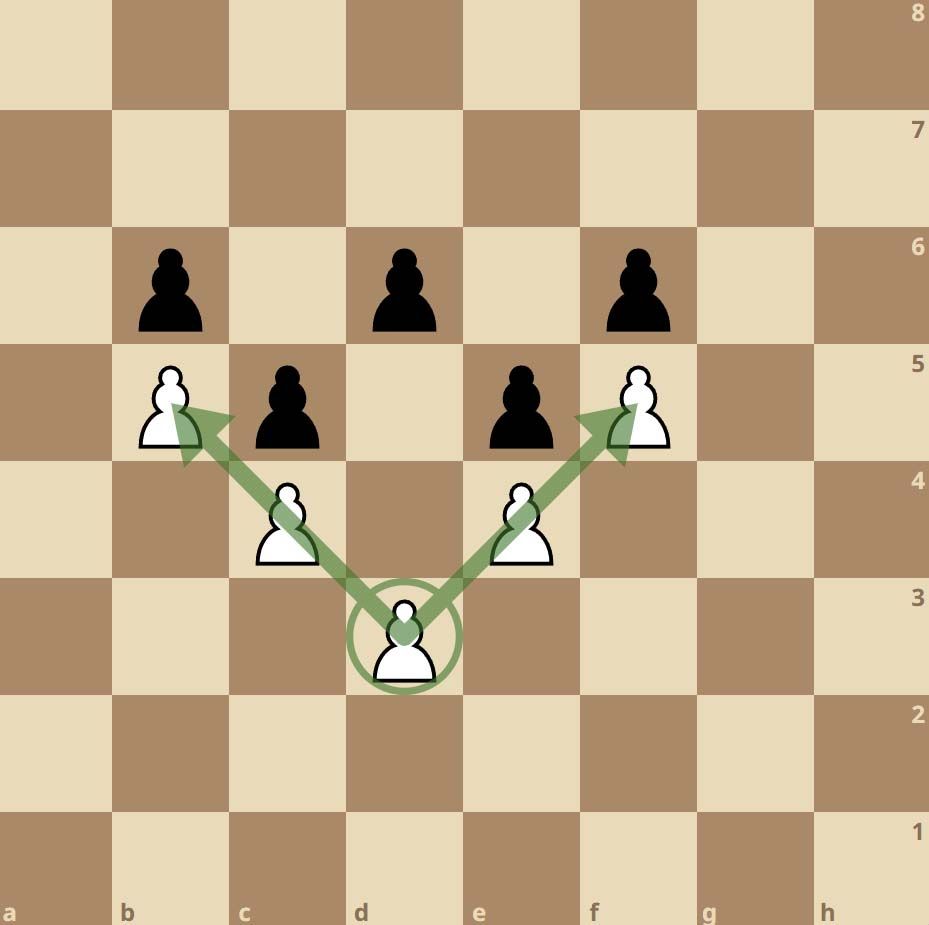
2. Using a Backward Central Pawn
Sometimes a player can create a pawn chain by using a backward central pawn as a base . Although a backward central pawn alone does not form a full chain, it can become the base for connecting adjacent pawns as they advance.
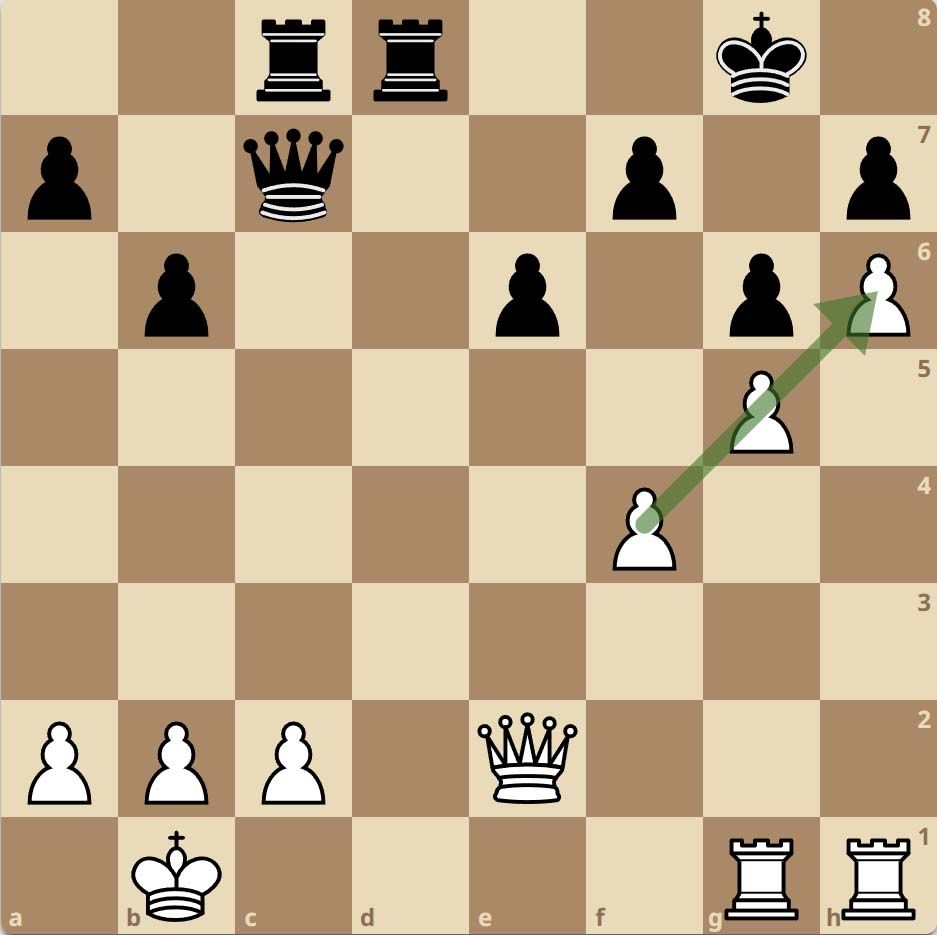
3. Flank Pawn Movement
Forming pawn chains isn’t limited to the center, they can also be formed on the flanks. By advancing pawns in those areas in an organized way, a player can create a chain that helps control whichever side of the board the action is unfolding on.
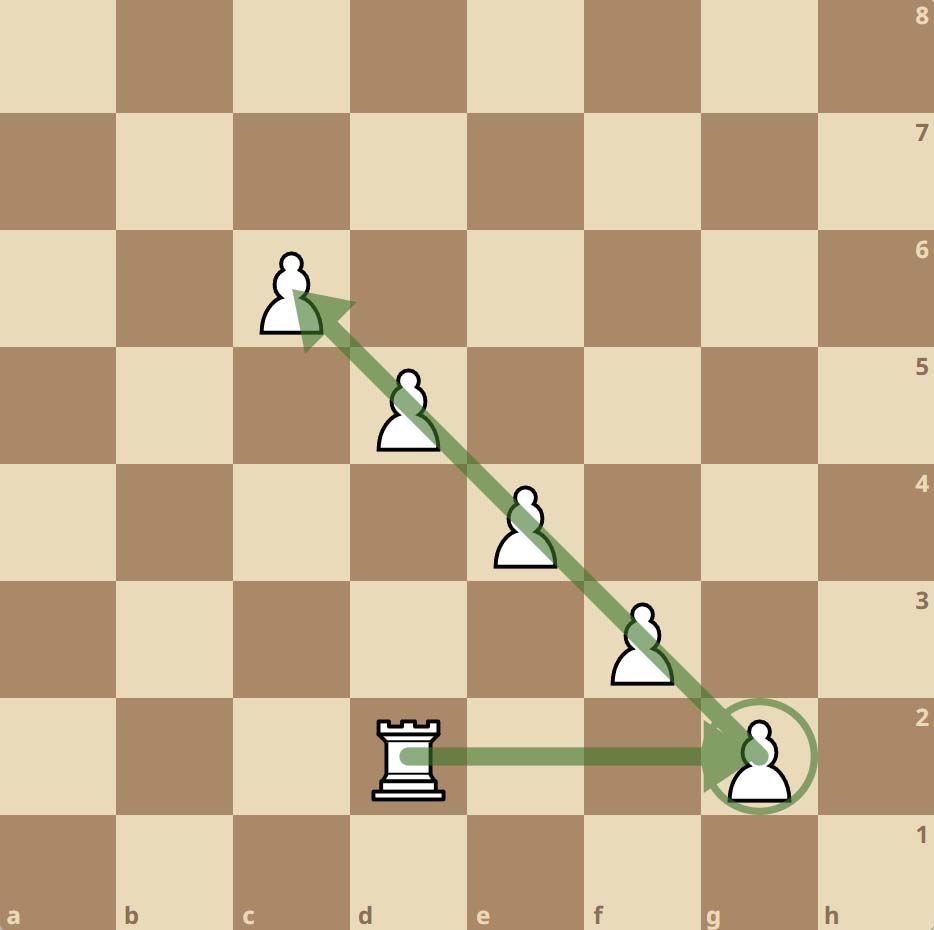
4. How to Reinforce the Pawn Chain
If a player has a pawn chain on the board, it can be further reinforced with major pieces like rooks, knights, or the queen. Placing a rook to defend the base of the chain, for example, offers greater protection and strategic value.
Advantages of Pawn Chains
Pawn chains are one of the most powerful structures in chess, and forming them correctly can offer several strategic benefits. Some of the main advantages of a pawn chain include:
1. Central Control
One of the most obvious advantages of pawn chains is their ability to control the center of the board. Because chains extend diagonally, pawns can cover a large number of key central squares, a major asset during the game.
2. Solid Defense
Pawn chains provide solid defense since pawns protect one another. This makes it harder for the opponent to attack directly and forces them to commit major pieces, which may disrupt their strategic plans.
3. Restricting the Opponent’s Options
Well-formed pawn chains can restrict your opponent’s piece development. If you manage to create a chain in the center or on a flank, you can limit their space and force them to respond to your threats.
4. Potential for Promotion
A solid, well-protected pawn chain can also serve as a path to pawn promotion. A pawn placed strategically in a chain may advance toward the eighth rank without being attacked, offering the chance to promote to a queen or another powerful piece.
Disadvantages of Pawn Chains
Although pawn chains have many strengths, they also come with a few disadvantages that must be considered. Some of the main drawbacks include:
1. Vulnerability at the Ends
One of the main weaknesses of a pawn chain is that its endpoints can be vulnerable. If your opponent manages to target the pawns at the edges, they could break the chain and create serious defensive issues.
2. Difficulty Advancing Pawns
Especially in long chains, pawns can become difficult to maneuver. If your chain is blocked, advancing pawns may be challenging, and that delay can be used by your opponent to strike elsewhere.
Conclusion
Pawn chains are one of the most powerful and complex structures in chess. If managed well, they provide firm control over the board and open up both offensive and defensive possibilities. Knowing how to form, use, and defend pawn chains is fundamental to building a successful strategy. By understanding their strengths and weaknesses, you’ll be able to make the most of this crucial element of the game.
To learn more about chess strategy, or if you want to improve your game, visit the entries on our blog for free. 😉


