
Pawn structures are a fundamental aspect of chess, as they influence how games develop on both a strategic and tactical level. In chess, pawns play a crucial role in controlling the center, enabling piece development, and creating weaknesses or strengths on the board.
In this article, we’ll explore what pawn structures are and how to evaluate them, analyzing the different configurations that can arise during a game and how they impact overall strategy. We’ll also discuss various types of structures, such as passed pawns, isolated pawns, doubled pawns, and related concepts, and how each one can affect the dynamics of a game.
What are pawn structures?
Pawn structures are the configurations created by pawn movements on the board. These formations influence many strategic decisions during a game, as they affect piece mobility, center control, and the creation of weaknesses that the opponent may exploit. A solid pawn structure enables strong piece development, while a weak one can limit a player’s strategic and tactical options.
There are several types of pawn structures, each with its own characteristics. Some of these are advantageous, while others can be burdensome. Below, we’ll look at key pawn structures every player should know and how to evaluate them.

Types of Pawn Structures
In chess, there are several fundamental pawn structures that shape the course of a game. Knowing them well is essential to understanding how a position is organized and how strategic decisions should be made. Let’s explore some of the most important pawn structures every chess player should know.
1. Carlsbad Structure
The Carlsbad structure is common in several openings, such as the Queen’s Gambit and the Caro-Kann Defense. In this structure, one player (usually White) has a passed pawn on the queenside (on the “a” or “b” file), while the other has a doubled pawn on the “c” file. It is characterized by central tension and doubled pawns on the queenside.
In the Carlsbad, players must handle pawn positions carefully, as pressure on the passed pawn can increase as the game develops. The player with the passed pawn will try to push it forward, while the opponent will aim to undermine the queenside pawn structure.
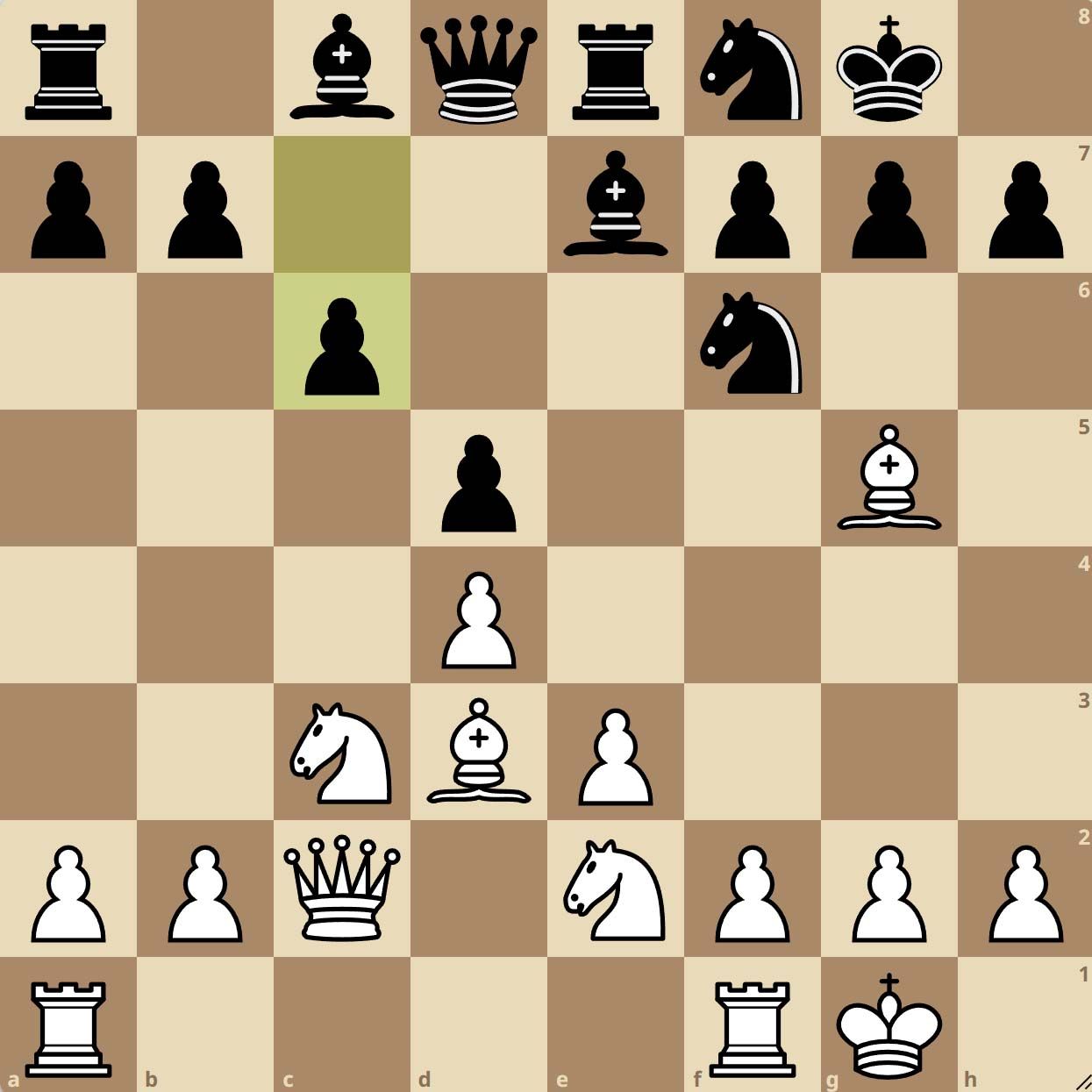
2. Isolated Queen’s Pawn (IQP)
An isolated queen’s pawn occurs when a player has a pawn on the “d” file with no pawns on the adjacent “c” or “e” files to support it. This structure is marked by the presence of an isolated pawn, which, though a weakness, can serve as a powerful attacking asset in the middlegame due to the resulting activity of the pieces.
The player with the IQP must be strategic: protect the pawn while using it to control the center and create threats elsewhere. This type of structure often arises in the Queen’s Gambit, where early exchanges lead to an isolated “d” pawn.

3. Symmetrical Pawn Structures
Symmetrical pawn structures occur when both players have similar pawn formations, i.e., pawns on the same files or in mirror positions. Strategic decisions tend to be more balanced, but also trickier, as both players fight for the initiative and active positions.
One key characteristic of symmetrical structures is that they often lead to dynamic games, where small details or errors can have a big impact. A classic example is the “pawn square” structure in openings like the Italian Game, where both players mirror each other in the center.

4. Slav Structure
This structure is commonly seen in the Slav Defense, which follows the moves 1.d4 d5 2.c4 c6. Here, Black supports the “d5” pawn with “c6”, creating a solid and well-defended center that is hard to challenge.
In the Slav structure, Black forms a solid pawn chain, where “c6” supports central control. Meanwhile, White must look for space advantages, often on the queenside or in the center. The closed nature of the Slav favors positional players who prefer strategic maneuvering over sharp tactics.

5. Sicilian Structure
The Sicilian pawn structure is one of the most famous and complex, typically arising from 1.e4 c5. In this formation, Black plays the “c” pawn to challenge White’s central control and aims for a dynamic and flexible structure. There are many variations within the Sicilian Defense, but in general, Black’s structure tends to be more open and active.
Black may have a backward pawn on the “d” or “e” file, often “d6”, which can become a target if White advances and coordinates properly. Sicilian structures require a solid grasp of tactical plans and pawn maneuvers, as positions tend to be highly dynamic.

Other Pawn Structures
In addition to the examples above, many other pawn structures can arise depending on the opening, middlegame, and tactical decisions of the players. These include the “French Structure” found in the French Defense or the “Stonewall Structure,” among others.

Key Concepts for Evaluating Pawn Structures
Below are the most important concepts you should understand when evaluating a pawn structure. Each concept is explored in depth in other articles on our blog, so click the corresponding link if you want to dive deeper. 😉
Passed Pawn
The passed pawn is one of the most powerful aspects of pawn structures in chess. It is a pawn that has no opposing pawns on adjacent files, meaning it has a clear path to advance to the eighth rank (or first rank if it’s a black pawn) and become a more powerful piece, usually a queen.
The passed pawn can be a great advantage, as it provides a constant threat to the opponent, forcing them to defend and diverting their attention from other areas of the board. However, a passed pawn can also be vulnerable if not well protected by other pieces. To learn more about the passed pawn and how to use it to your advantage, check out our detailed article here.

Isolated Pawn
The isolated pawn is another type of structure that can have a significant impact on a game. It is a pawn that has no other pawns on the adjacent files, making it vulnerable to attacks. Isolated pawns are usually a weakness since they can’t be supported by other pawns and are easier targets for the opponent’s pieces.
However, in some cases, isolated pawns can offer attacking opportunities or space control, if used strategically and properly protected by major pieces. To learn more about how to handle an isolated pawn, you can read our article here.

Doubled Pawns
Doubled pawns are formed when two pawns of the same player are stacked on the same file. This structure is generally considered a weakness because doubled pawns have reduced mobility and are easier to attack. Doubled pawns cannot be effectively defended by other pawns and tend to create weaknesses in the position.
However, in certain situations, doubled pawns can be useful for controlling key squares or as part of a broader plan, especially when supported by major pieces. To learn how to play with doubled pawns and how to defend against them, visit our detailed article on doubled pawns.

Backward Pawn
A backward pawn is one that lags behind the opponent’s pawns in a pawn structure. This pawn is considered a weakness because it cannot advance easily and may be attacked by enemy pieces. Backward pawns are often vulnerable to major pieces like rooks and queens, which can apply pressure and exploit them.
Although backward pawns are often a weakness, in some cases they can be useful for defending other squares or for opening attacking lines when they manage to advance with proper support. For more details on backward pawns and how to evaluate them, check out our article on the backward pawn.

Pawn Chain
A pawn chain is a formation in which pawns support each other diagonally, creating a solid structure that makes it difficult for the opponent to attack them. Pawn chains are strong defensively because they provide mutual support and protect key squares in the center of the board.
However, pawn chains can also be vulnerable to flank attacks, where pawns may become undefended. A well-positioned chain can be very difficult to break, but if it extends too far, it can become weak on the flanks. To learn more about pawn chains and how to use them, check out our detailed article on the pawn chain.

Pawn Majority
Pawn majority refers to a situation in which a player has more pawns on one file or one side of the board compared to their opponent. This numerical advantage can be decisive, as the player with more pawns can advance their pieces and create threats on the board. A pawn majority on the kingside or queenside can be key to victory in the endgame.
However, having a pawn majority does not guarantee victory, as correct coordination with major pieces is essential to make use of this advantage. To learn more about how to evaluate and play with a pawn majority, visit our article on the pawn majority.

Pawn Islands
Pawn islands are groups of pawns that are separated from each other by empty files or by the opponent’s pieces. The more pawn islands a player has, the more vulnerable their position becomes, as each island needs to be defended by major pieces, which can reduce mobility on the board.
Pawn islands represent a structural weakness, as they make coordinated defense and piece mobility more difficult. To learn more about how to manage and avoid pawn islands, read our detailed article on pawn islands.

How to Evaluate Pawn Structures
To evaluate a pawn structure, it’s important to consider several factors, such as center control, king safety, potential weaknesses, and attacking opportunities. Each type of pawn structure has its own strengths and weaknesses, so it’s crucial to assess how it fits into your overall game plan and how to maximize its potential while minimizing vulnerabilities.
Key Factors to Consider When Evaluating Pawn Structures:
- Center control: Pawn structures that allow strong central control are usually more favorable. Well-placed central pawns provide space for piece development and limit the opponent’s options.
- King safety: Pawn structures should protect the king. Make sure you don’t leave gaps in your defense that can be exploited by enemy attacks.
- Piece mobility: Evaluate whether the pawn structure allows your major pieces to move freely or if it restricts them.
- Structural weaknesses: Some pawn formations create weaknesses that can be targeted by the opponent. Evaluate if your structure exposes you to such weaknesses.
Conclusion
Pawn structures are an essential part of chess strategy. By understanding how they form and how to evaluate each type of structure, you’ll improve your game and make better decisions throughout the match. Whether you’re dealing with a passed pawn, an isolated pawn, or a pawn chain, the key lies in understanding how these structures influence the overall position and how they can be used to your advantage.
To learn more about chess strategy, or if you want to improve other aspects of your game, check out our blog posts for free. 😉


