
The Petrov Defense, also known as the Russian Defense, is a solid and strategic opening for Black against 1.e4. Although it has a reputation for leading to symmetrical or drawish positions, it offers both tactical and dynamic possibilities. This defense has been employed by world champions such as Vladimir Kramnik and Anatoly Karpov, and it remains a popular choice in modern chess.
The Petrov Defense is defined by the moves 1.e4 e5 2.Nf3 Nf6. With this sequence, Black aims to create symmetry while preparing a counterattack in the center.
Main Goals of the Petrov Defense
- Quick equality: Black aims to neutralize White’s initiative early, leading to a balanced position.
- Central counterattack: The knight on f6 immediately challenges the e4 pawn, provoking early decisions from White.
- Simplification: Many Petrov variations lead to early piece exchanges, often transitioning into equal endgames.

Main Variations of the Petrov Defense
1. Classical Variation
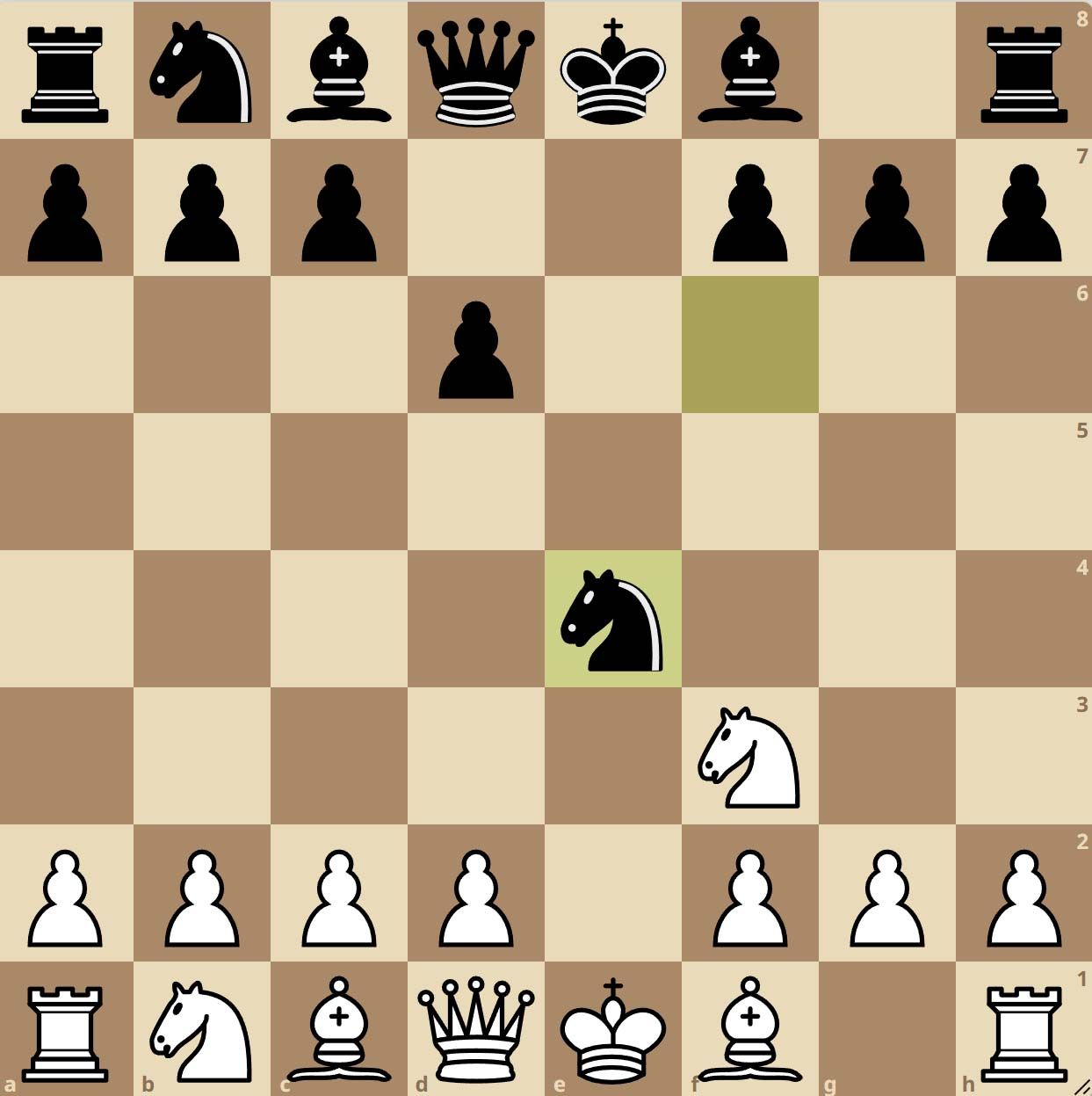
In the Classical Variation, White captures on e5, and Black counters by attacking the knight, aiming to recover the pawn and simplify the position.
1.e4 e5 2.Nf3 Nf6 3.Nxe5 d6 4.Nf3 Nxe4
2. Cochrane Gambit
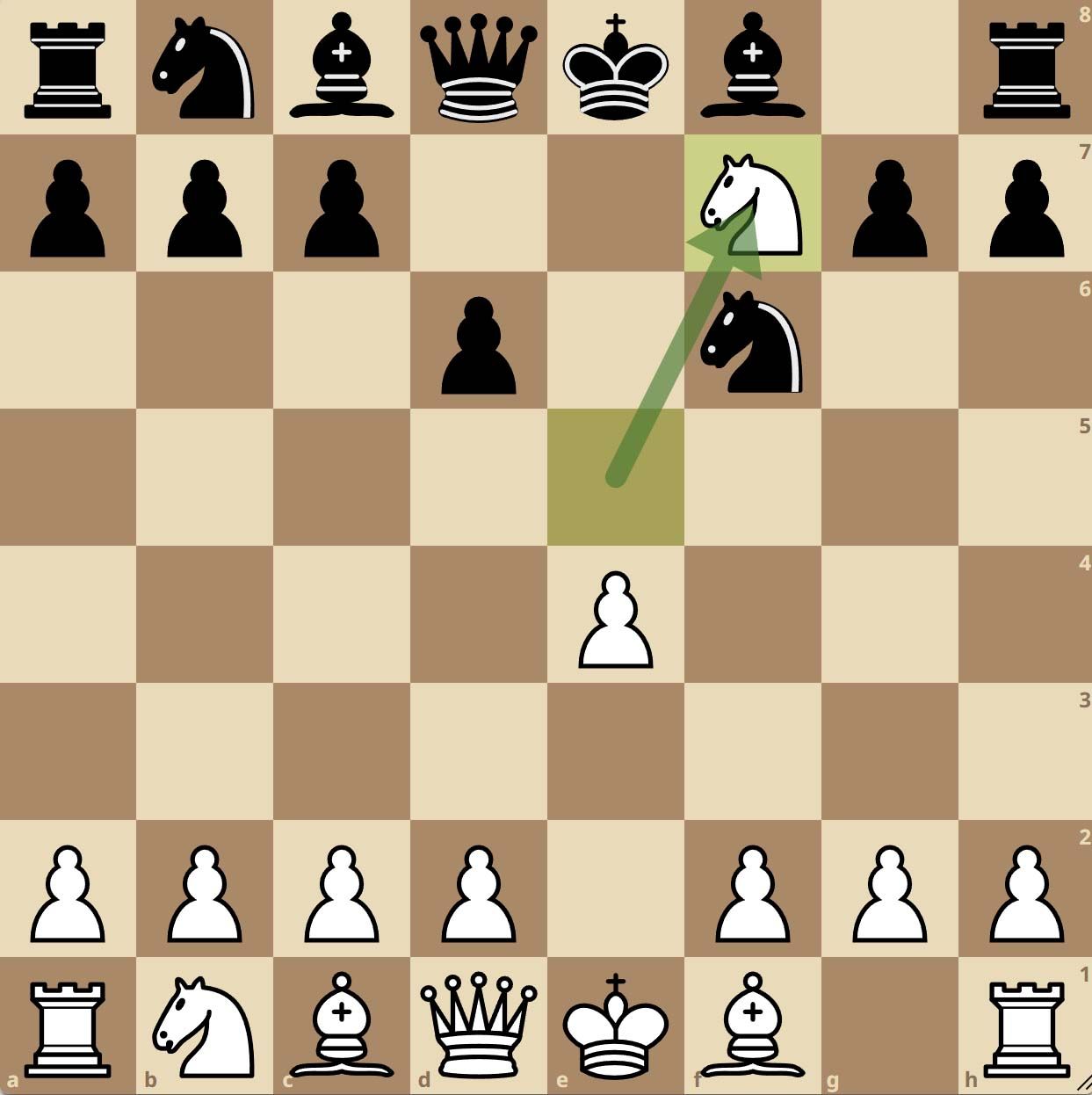
The Cochrane Gambit is an aggressive line where White sacrifices material to destabilize Black’s king and launch a sharp attack.
1.e4 e5 2.Nf3 Nf6 3.Nxe5 d6 4.Nxf7
3. Steinitz Variation
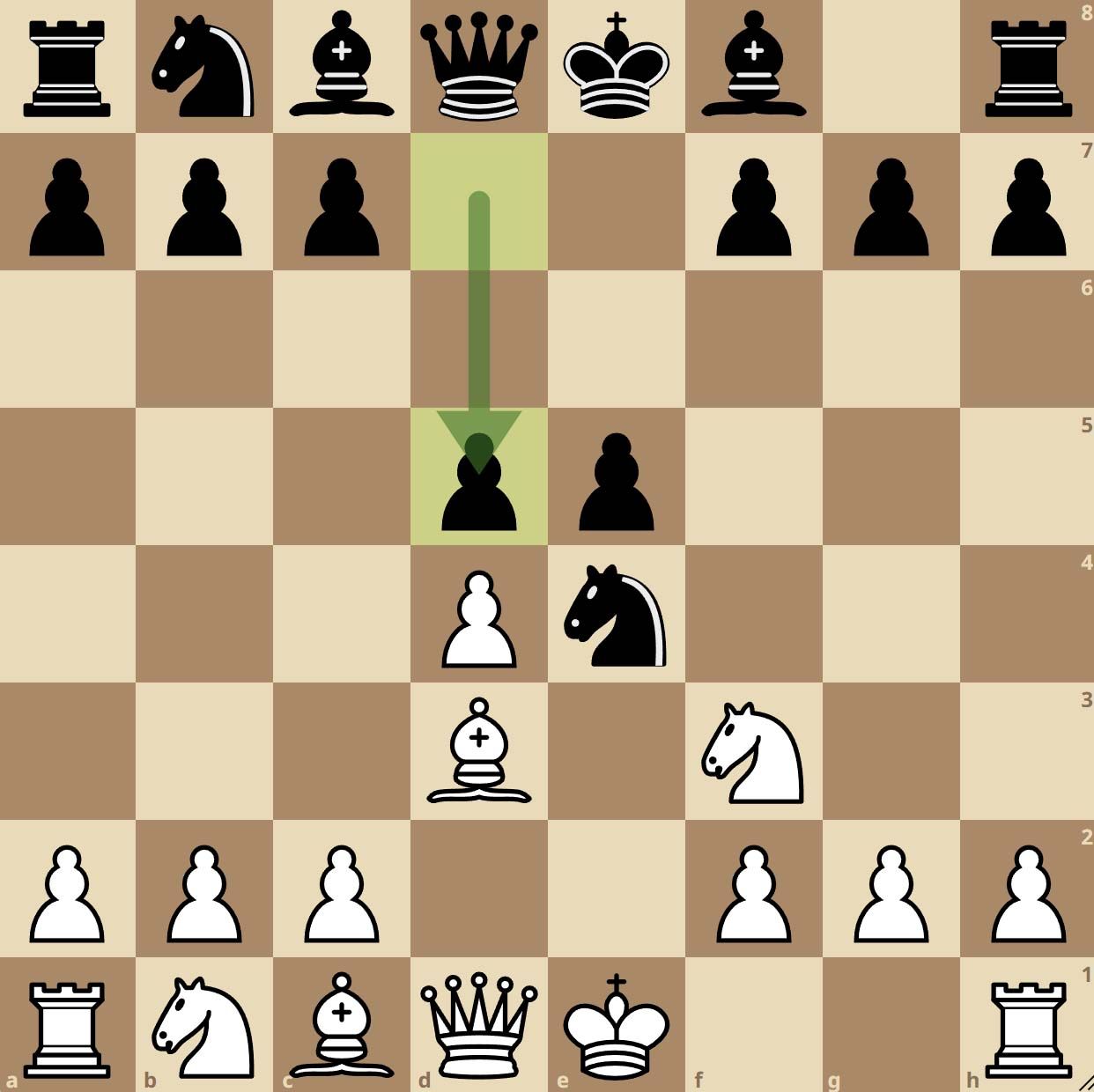
In the Steinitz Variation, White avoids early exchanges, instead developing pieces and keeping central tension while Black looks for counterplay.
1.e4 e5 2.Nf3 Nf6 3.d4 Nxe4 4.Bd3 d5
4. Three Knights Variation
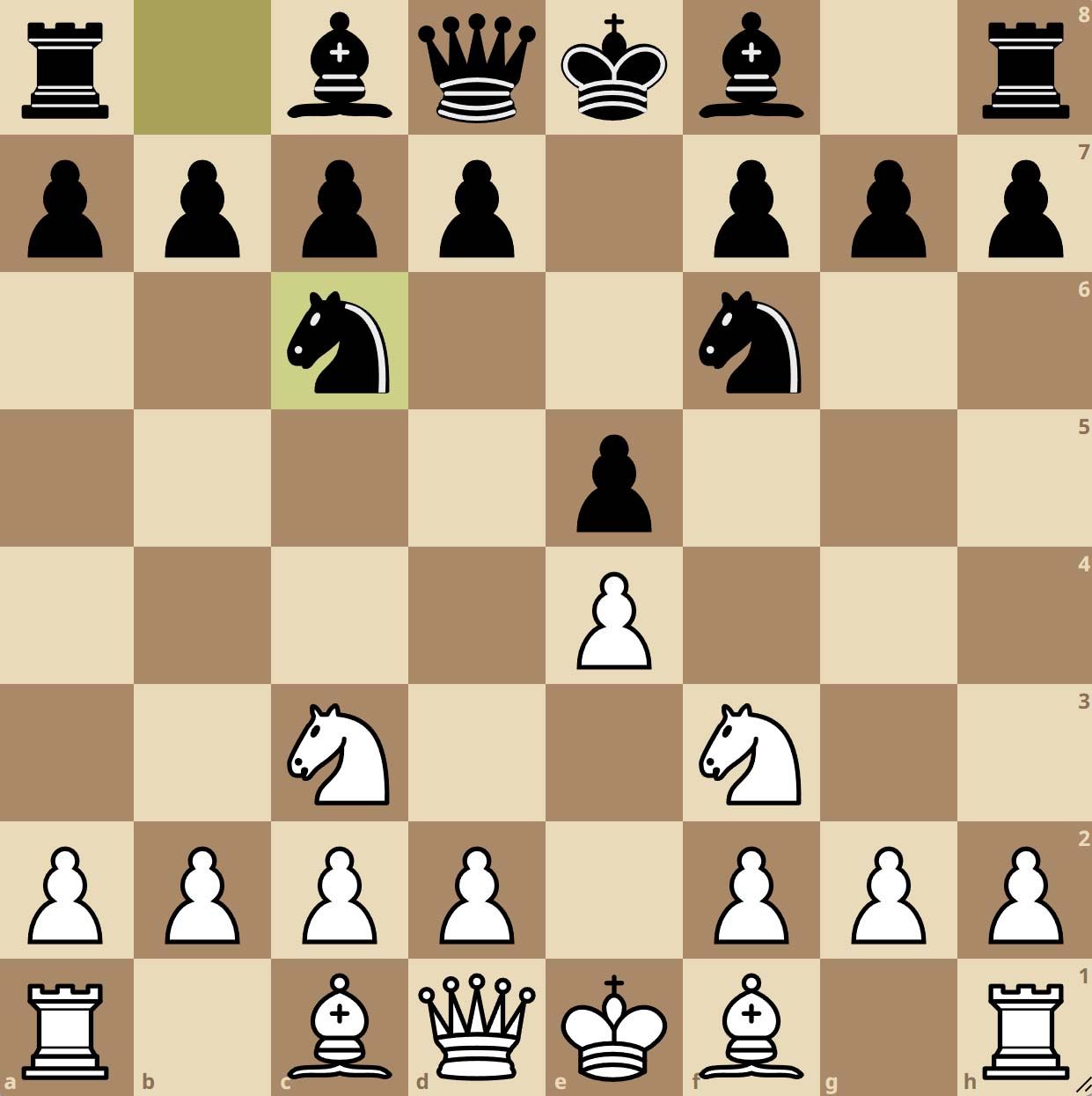
In the Three Knights Variation, both sides develop their knights. The game may transpose into the Four Knights Opening.
1.e4 e5 2.Nf3 Nf6 3.Nc3 Nc6
5. Italian Variation
In the Italian Variation, White develops the bishop to c4, targeting the f7-square. Black must play precisely to maintain balance.
1.e4 e5 2.Nf3 Nf6 3.Bc4 Nxe4 4.Nc3

Comparison of the Main Variations
| Variation | Advantages | Disadvantages |
|---|---|---|
| Classical Variation | Fast equality, solid pawn structure | Can lead to simplified positions with fewer attacking chances |
| Cochrane Gambit | Aggressive attempt to launch an early attack | Sacrificed knight puts White at a material deficit if the attack fails |
| Steinitz Variation | Greater central control, smoother development | Black can counterplay and neutralize the initiative |
| Three Knights Variation | Natural development, transpositional options | Can result in quieter positions with fewer dynamic chances |
| Italian Variation | Early pressure on f7, fast development | Black can equalize if precise and well-prepared |
Tips for Playing the Petrov Defense
Here are a few important tips to help you avoid common mistakes in your games:
- Know the variations: Study the different lines of the Petrov Defense to be ready for White’s responses.
- Quick development: Develop your minor pieces efficiently and castle early to ensure king safety.
- Control the center: While the Petrov aims for early equality, it’s crucial to keep central pressure and seize counterplay when available.
Conclusion
The Petrov Defense is a very interesting choice for Black. Besides being a well-known opening that offers reliable play, it may also catch your opponent off guard. Be sure to study all the key lines to avoid common traps, and understand the typical strategic plans in this opening.
If you want to learn more about the Petrov Defense, its lines, and middlegame plans, join our online chess school, your first class is FREE!


