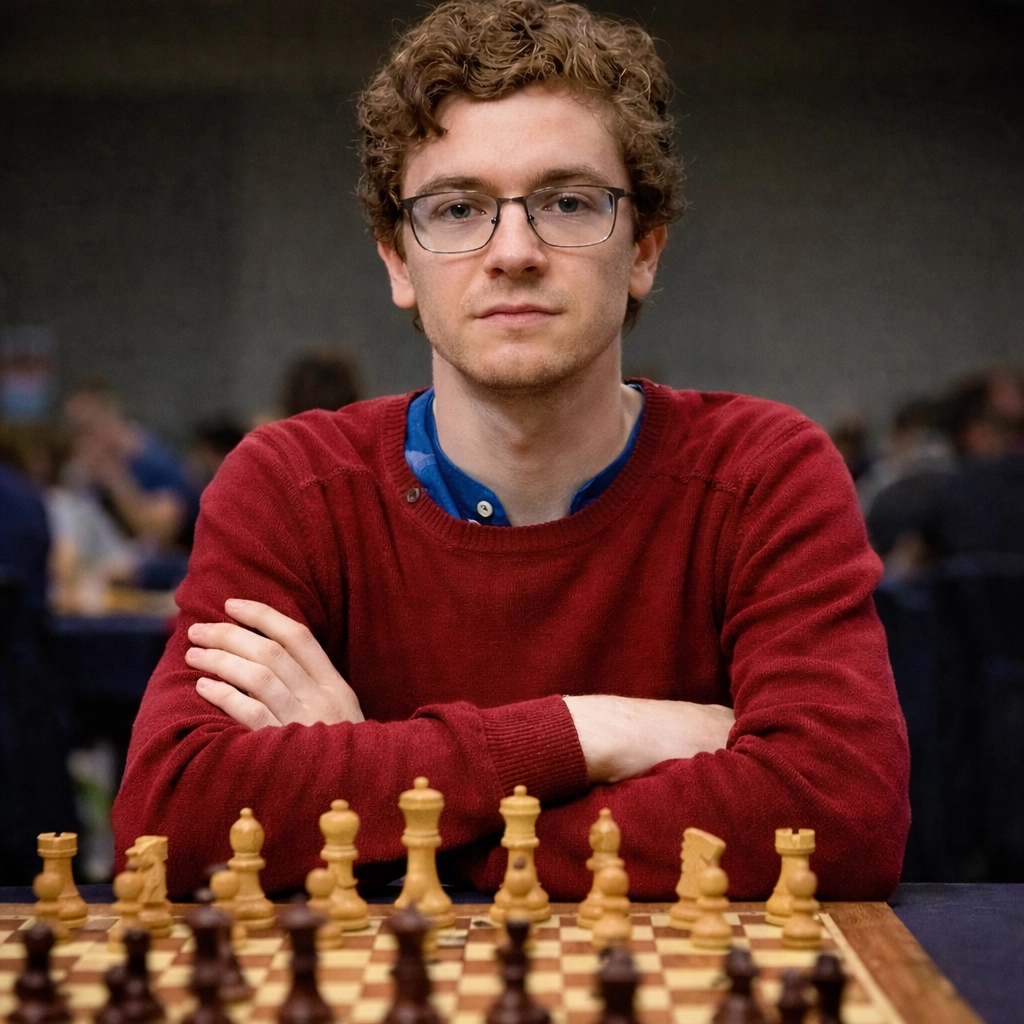
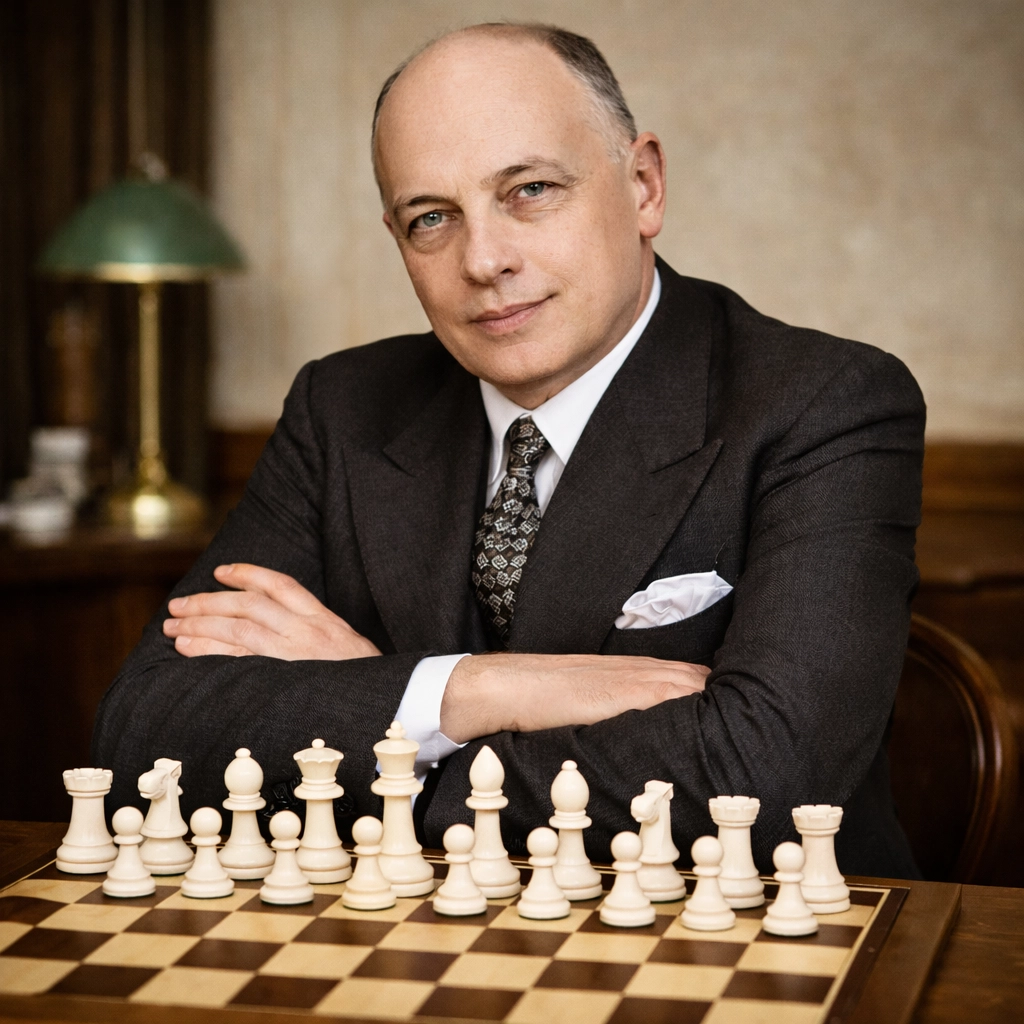
1. Introduction: Who Savielly Tartakower Was and Why He Is a Singular Figure
Savielly Tartakower is one of those figures who do not fit comfortably into any simple category. He was not a world champion, yet he defeated and competed with almost all of them. He did not lead a formal school, yet he influenced entire generations. He was not the most systematic theorist, but many of his ideas are still alive today.
His uniqueness comes from a very rare combination:
- sustained competitive strength over decades
- vast general culture
- exceptional literary talent
- an ironic and critical vision of chess
Tartakower understood chess as a reflection of the human condition. For him, a game was not only a sequence of correct or incorrect moves, but a psychological, creative, and contextual struggle.
Historically, he represents the moment when chess reaches a self-awareness as a cultural phenomenon.
2. Chess at the Beginning of the 20th Century: Transition and Crisis of Paradigms
Tartakower emerged during a time of deep rupture in the history of chess. At the beginning of the 20th century, the classical model inherited from Steinitz and Tarrasch began to be questioned.
Traditional certainties (direct occupation of the center, “correct” development, rigid principles) could no longer explain the full complexity of the game. This is when hypermodernism appeared, proposing:
- indirect control of the center
- structural flexibility
- dynamism over dogma
Tartakower experienced this transition from within. He was not a radical revolutionary, but neither was he a conservative. His greatness lies in understanding both visions and moving naturally between them.
3. Origins, Identity, and a Life Marked by History
Tartakower’s life is inseparable from the turbulent history of Europe in the 20th century. He was born in a multicultural context and lived through wars, exiles, and changes of national identity.
This background explains:
- his cosmopolitan vision
- his constant irony
- his rejection of absolute truths
Tartakower was a doctor, soldier, intellectual, and professional chess player. This richness of life is reflected in the way he played and wrote: he never oversimplified and never fell into dogmas.
His chess is that of someone who has seen the world in all its complexity.
4. Tartakower as a Player: Style, Flexibility, and Pragmatism
From a purely chess perspective, Tartakower stands out for an essential quality: adaptability. He did not have a single rigid style, but an extraordinary capacity to:
- adjust his play to the opponent
- change plans according to the position
- accept strategic compromises
He could attack brilliantly, defend tenaciously, or maneuver patiently depending on what the position required. This flexibility made him an extremely uncomfortable opponent.
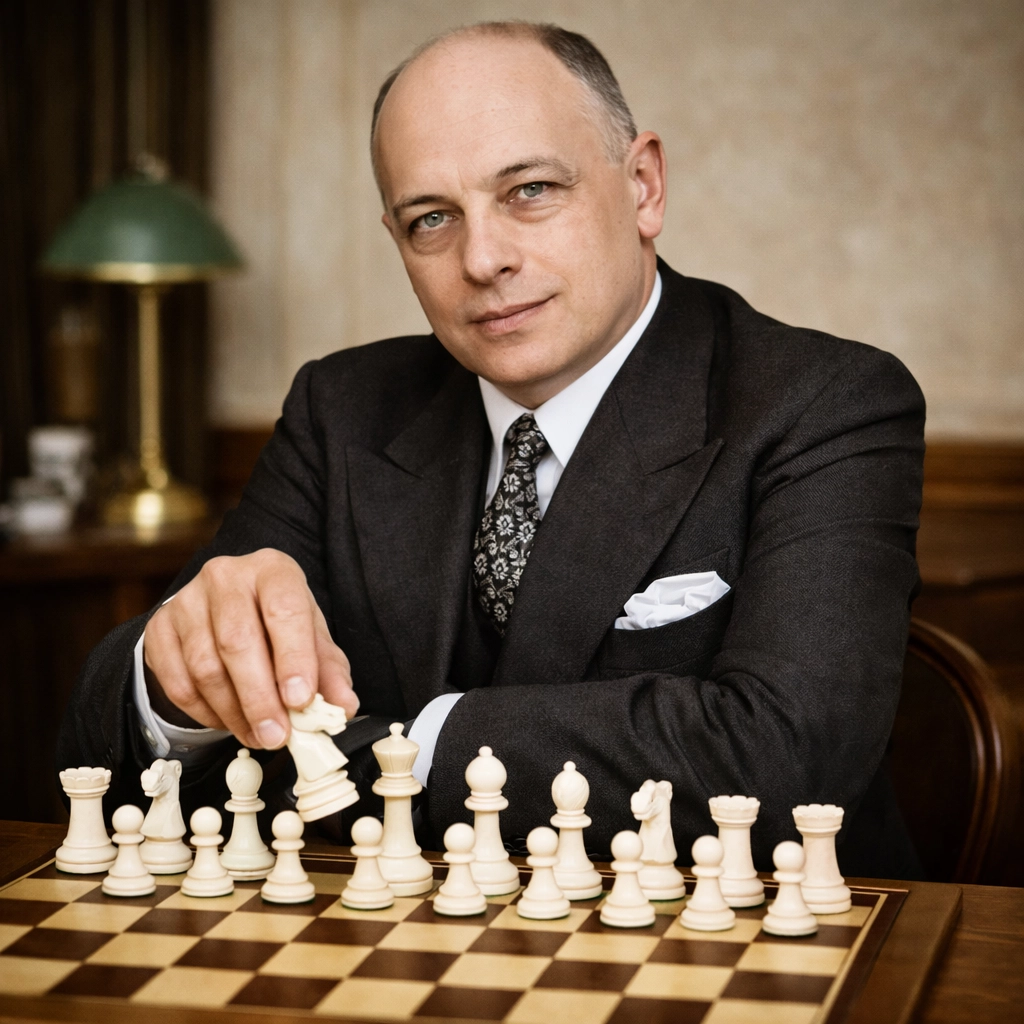
Tartakower understood that chess is not won by following recipes, but by interpreting the concrete position.
5. Hypermodernism Without Dogmas: Tartakower Compared with Nimzowitsch and Réti
Although Tartakower is often associated with the hypermodern movement, his relationship with this school is complex and nuanced. Unlike Nimzowitsch, who built a closed theoretical system, or Réti, who sought radical new forms, Tartakower was skeptical by nature.
He accepted hypermodern ideas such as:
- indirect control of the center
- the importance of flexibility
- the relativity of principles
But always with an implicit warning: no idea is valid in every position. This approach makes him a more intellectually open and less dogmatic figure than many of his contemporaries.
6. Openings, Ideas, and Lasting Theoretical Contributions
Tartakower’s name is linked to multiple theoretical ideas, especially in openings. He was not always the first to play them, but he was often the one who understood, refined, and popularized them.
Among his contributions are:
- solid and flexible structures in the Queen’s Gambit
- deeply human defensive ideas
- long-term plans in seemingly passive structures
More than “inventing” openings, Tartakower taught how to think about them and how to adapt them to the opponent and the moment.
7. Tartakower the Writer: Aphorisms, Irony, and Chess Thought
Here Tartakower becomes truly unique. No other grandmaster has produced so many memorable, ironic, and profound phrases about chess.
His aphorisms are not mere jokes; they are distillations of experience. Through humor, Tartakower explains difficult truths:
- the psychology of mistakes
- the inevitability of error
- the relativity of the “best move”
Thanks to his literary talent, chess becomes accessible, human, and reflective. Tartakower teaches not from a pedestal, but through intellectual complicity.
8. Psychology and the Art of the Practical Decision
One of Tartakower’s most interesting qualities was his deep understanding of practical chess. He knew that a game is not played by machines, but by human beings who make decisions under pressure.
Because of this, he valued:
- creating difficult problems for the opponent
- choosing moves that complicate decisions
- maintaining tension in the position
Tartakower understood that the best move is not always the one suggested by pure theory, but the one that places the opponent in the most uncomfortable situation.
9. Memorable Games and Competitive Achievements
Throughout his career, Tartakower competed in the strongest tournaments of his era and achieved numerous remarkable results against the greatest players in the world.
His games are especially valued for their:
- strategic richness
- unexpected ideas
- psychological depth
Even when he did not win tournaments, his games often contained ideas that influenced future generations of players.
10. Tartakower and the Culture of Chess
Unlike many professional players, Tartakower was deeply connected to the broader intellectual culture of his time. He wrote essays, journalistic pieces, and analytical works that explored chess not only as a sport but also as a cultural phenomenon.
In his writings, chess appears as:
- a form of artistic expression
- a reflection of human psychology
- a symbolic struggle of ideas
This perspective helped elevate chess beyond mere competition.
11. Influence on Later Generations
The influence of Tartakower extends far beyond his own era. Many modern players and authors have been inspired by his flexible thinking and his refusal to accept rigid dogmas.
His legacy can be seen in:
- modern strategic thinking
- the importance of practical play
- a more human and psychological approach to chess
In this sense, Tartakower can be considered one of the intellectual bridges between classical chess and the modern era.
12. A Man of Wit: Famous Chess Aphorisms
Tartakower is remembered not only for his games but also for his brilliant and humorous aphorisms, many of which have become part of chess folklore.
These phrases often capture deep truths about the game while remaining playful and memorable.
Through them, Tartakower reminds us that chess is both serious and joyful, demanding discipline while allowing creativity and humor.
13. The Balance Between Art and Science
Tartakower believed that chess exists at the intersection of science and art. Calculation and logic are essential, but intuition, creativity, and imagination are equally important.
This balanced vision contrasts with more rigid approaches that treat chess as a purely technical discipline.
For Tartakower, the beauty of chess lies precisely in this tension between structure and freedom.
14. Historical Significance
From a historical perspective, Tartakower occupies a unique place in chess history. He was not the dominant champion of his era, yet he played a crucial role in shaping the intellectual environment of modern chess.
His contributions helped broaden the understanding of strategy, psychology, and creativity within the game.
15. Why Tartakower Still Matters Today
In today’s age of powerful engines and precise preparation, Tartakower’s ideas remain surprisingly relevant.
Modern players still benefit from:
- flexible thinking
- psychological awareness
- creative interpretation of positions
These are exactly the qualities that Tartakower embodied throughout his career.
16. Conclusion: A Unique Mind in Chess History
Savielly Tartakower remains one of the most fascinating personalities in chess history. His legacy is not limited to specific openings or tournament results, but extends to a broader vision of the game.
He showed that chess can be simultaneously competitive, intellectual, artistic, and human. For this reason, his work and ideas continue to inspire players, writers, and chess lovers around the world.