The Scottish Opening is one of the most dynamic openings in chess. It’s ideal for players seeking an open, tactical game right from the start. In this article, we offer a deep analysis of its main variations, strategic ideas, and key features so you can understand and play it effectively in your games.
History of the Scottish Opening
The Scottish Opening dates back to the 18th century and was popularized in a match between Scottish and English players. Over time, it has gained popularity at all levels and remains a powerful option even in top-level play.
Basic Moves of the Scottish Opening
The Scottish Opening begins with:
1.e4 e5
2.Nf3 Nc6
3.d4
With 3.d4, White aims to open the center and challenge Black’s control. This move sets the tone for a fast and direct game.

Strategic Ideas Behind the Scottish Opening
This opening focuses on central control and creating open lines. Key concepts include:
- Quick central opening: White aims to develop pieces rapidly while opening lines for attacks.
- Direct and tactical play: By opening the center, this opening often leads to active, sharp positions.
- Wide range of possibilities: The resulting positions can lead to balanced endgames or quick attacks, depending on how Black responds.

Main Variations of the Scottish Opening
1. Classical Variation (Main Line)
In this line, Black accepts the central pawn, opening the position and facilitating development.
Main line: 1.e4 e5 2.Nf3 Nc6 3.d4 exd4 4.Nxd4
From here, Black has several options:
- 4…d6 (a more solid, slower development)
- 4…Bc5 (puts pressure on the knight and invites an open game)
- 4…Nf6 (develops a piece while attacking the e4 pawn)

2. Scotch Gambit
In the Scotch Gambit, White sacrifices a pawn to gain development speed and open the position.
Main line: 1.e4 e5 2.Nf3 Nc6 3.d4 exd4 4.c3
After 4.c3, Black has two main responses:
4…dxc3 (accepting the gambit, allowing White quick development)
4…d5 (declining the gambit and counterattacking in the center)

3. Schmidt Variation
Also called the Steinitz line, this variation sees Black decline the pawn and strike back in the center instead.
Main line: 1.e4 e5 2.Nf3 Nc6 3.d4 d5
This may lead to transpositions or strategic, tactical battles. White may continue with:
4.exd5 Qxd5, followed by 5.Nc3 to gain tempo by attacking the queen
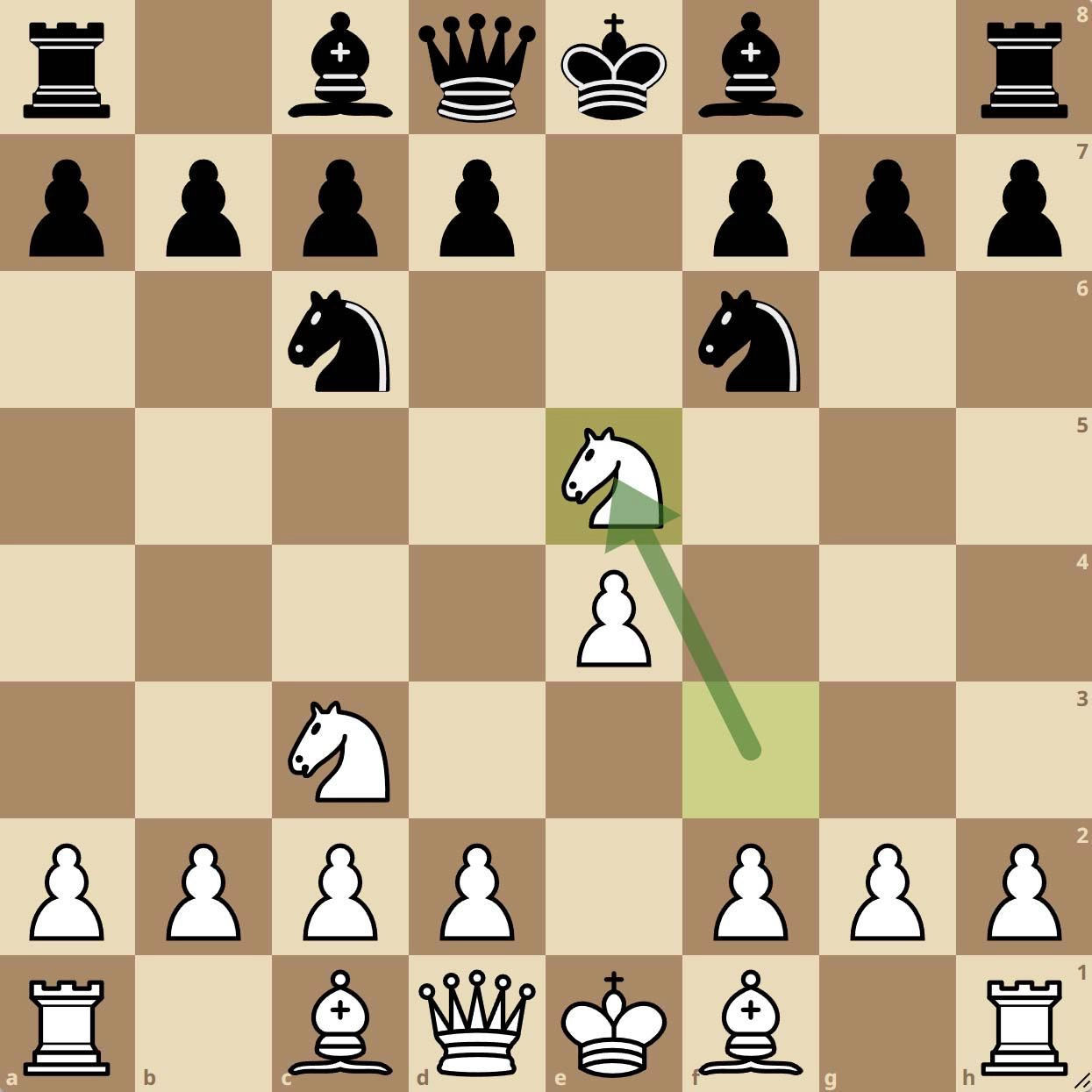
4.Nxe5 (a risky move aiming for complications)

4. Mieses Variation
A less common but solid option for Black, aiming to simplify the center and trade pieces.
Main line: 1.e4 e5 2.Nf3 Nc6 3.d4 exd4 4.Nxd4 Nf6
With 4…Nf6, Black attacks the e4 pawn. Common continuations for White:
5.Nxc6 bxc6, doubling Black’s pawns but keeping a solid structure
5.Nc3 (developing and keeping central tension)

Tips for Playing the Scottish Opening
Here are some practical tips to improve your play with this opening:
- Develop your pieces quickly: The Scottish Opening favors speed and initiative, so get your pieces out early.
- Maintain central control: Use your minor pieces to control key central squares.
- Don’t waste tactical chances: Open lines allow for sharp tactics, stay alert and train actively to recognize them.
Common Mistakes in the Scottish Opening
Avoiding these mistakes will help improve your results:
- Neglecting piece development: Don’t keep your pieces stuck on the back rank, develop everything efficiently.
- Ignoring central defense: Letting your opponent seize full central control can be dangerous.
- Overlooking king safety: Although aggressive, this opening still requires you to protect your king.
Conclusion
The Scottish Opening is an excellent choice for players of all levels who enjoy active play and tactical chances. Its open structure and quick pace lead to highly dynamic positions. Mastering the key ideas and variations will allow you to challenge your opponents right from the first moves.
If you want to learn more about the Scottish Opening, its lines and middlegame plans, join our online chess school, your first class is FREE!