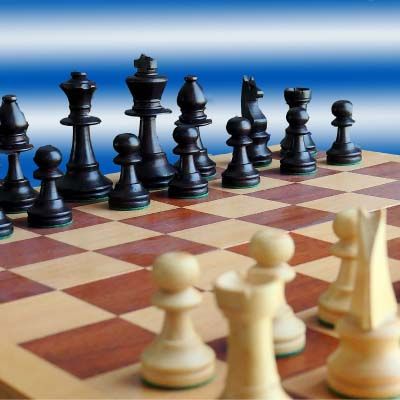
Military analysts and geopolitical experts often rely on strategic metaphors to explain complex conflicts. Among the most frequently used comparisons is chess. The analogy is not accidental. Chess represents one of the clearest strategic systems ever created: two sides, defined resources, visible positions and a sequence of decisions that generate cumulative consequences.
In modern conflicts, particularly in strategically sensitive regions such as the Middle East, many political, military and diplomatic moves are interpreted in similar terms. Actions rarely occur in isolation. They form part of longer sequences in which each decision shapes the options available to the opponent.
For this reason, concepts commonly associated with chess — initiative, positional control, indirect pressure, strategic sacrifices and balance of forces — are frequently used to describe how international crises evolve.
The Opening Phase: Initiative and Strategic Tempo
In chess, the opening establishes the tone of the game. The first moves aim to control space, develop pieces and, above all, gain the initiative. Holding the initiative means forcing the opponent to react, shaping the rhythm of the entire game.
In international conflicts, a comparable dynamic often appears. When a state or coalition launches a military operation or makes a significant strategic decision, the objective is frequently to alter the existing balance and create a new strategic environment.
Initial actions do not always aim for immediate victory. More often, they seek to establish a favorable position from which sustained pressure can be applied. Strategically, the opening phase is about controlling tempo and placing the adversary in a reactive position.
As in chess, tempo can determine how the entire confrontation unfolds.
The Geopolitical Board: Regions That Function as the “Center”
One of the fundamental principles of chess strategy is control of the center. Central squares allow greater mobility for pieces and create long-term positional advantages.
In geopolitics, certain regions play a comparable role. These are areas where military, economic, energy and diplomatic interests intersect. Control or influence over these regions can significantly affect both regional and global balances of power.
In the Middle East, the Persian Gulf and the surrounding maritime routes represent strategic spaces of this kind. These routes connect energy resources with international markets and are therefore critical to global economic stability.
Their significance extends far beyond geography. The stability and control of these areas influence energy flows, trade routes and security alliances, making them comparable to the central squares of a chessboard.
The Pieces on the Board: States, Alliances and Indirect Actors
In chess, each piece fulfills a specific function. Rooks dominate open files, knights operate effectively in complex structures and bishops exert long-range pressure. The effectiveness of a position depends not only on individual pieces but also on their coordination.
In geopolitical conflicts, the actors involved extend beyond the states directly engaged in confrontation. Alliances, regional organizations, irregular forces, militias and indirect participants often play significant roles.
These actors may expand the operational reach of major powers or create pressure across multiple fronts. In analytical terms, they function similarly to supporting pieces on a chessboard: they may not determine the outcome alone, but they significantly influence the structure of the conflict.
The interaction between state and non-state actors adds layers of complexity, much like the coordination between pieces shapes the dynamics of a chess position.
Strategic Pressure: Direct and Indirect Attacks
In chess, not every attack is immediate or direct. Pressure is often applied gradually through positional advantages: controlling open lines, fixing structural weaknesses or restricting the opponent’s mobility.
Modern conflicts frequently display similar strategic patterns. Military operations, economic sanctions, alliance structures and demonstrations of military capability can all serve as forms of cumulative pressure.
The objective is not always to eliminate the opponent’s capacity immediately. In many cases, the strategy focuses on limiting the adversary’s options over time, forcing increasingly constrained decisions.
This gradual pressure resembles positional play in chess, where small advantages accumulate and eventually become decisive.
Strategic Sacrifices and Long-Term Decisions
One of the most recognizable concepts in chess is the sacrifice. A player may deliberately give up material — a piece or pawn — in order to obtain a stronger strategic position.
Comparable dynamics appear in military and geopolitical strategy. Certain decisions involve accepting immediate costs in exchange for potential long-term advantages. Limited operations, withdrawals from specific positions or calculated concessions can all fall into this category.
Strategic analysis evaluates these decisions based on their structural impact. A short-term loss of resources or territory may open new operational opportunities or shift the balance of the conflict.
Both in chess and in military strategy, the central question concerns the relationship between immediate cost and future advantage.
The Role of Uncertainty
A key difference between chess and real-world conflict lies in the availability of information. In chess, both players have complete visibility of the board and all pieces.
In geopolitics, information is rarely complete. Intelligence is partial, internal political dynamics influence decisions and unforeseen variables constantly emerge.
This uncertainty adds an additional layer to strategic analysis. Decision-makers must act on probabilities and assessments rather than certainties.
Despite this difference, the underlying logic of anticipating an opponent’s reactions remains strikingly similar to calculation in chess.
Escalation and Strategic Balance
In many chess games, players eventually reach positions where even a small change can drastically alter the balance of the game. At such moments, strategic evaluation becomes particularly delicate.
International conflicts often encounter comparable stages when tensions approach escalation thresholds. Decisions made during these phases can significantly reshape regional or global dynamics.
Analysts examine such scenarios through concepts such as deterrence, balance of power and response capability. Each actor seeks to avoid an irreversible disadvantage while maintaining pressure on the opponent.
These situations resemble critical positions in chess where every move requires careful evaluation.
Diplomacy and Negotiation as Strategic Phases
Many chess games do not end with an immediate checkmate but with transitions into endgames where the balance of forces determines the final result.
In international politics, diplomatic negotiations can play a similar role. After periods of tension or confrontation, actors may pursue agreements that stabilize the situation or redefine regional power arrangements.
Diplomacy does not necessarily eliminate strategic rivalry. In many cases, it reorganizes it, establishing new positions from which competition continues.
From this perspective, diplomatic processes can be viewed as another phase of the same strategic game.
The Limits of the Analogy
Although the chess metaphor provides a useful framework for understanding certain aspects of international strategy, it also has clear limitations. Real conflicts involve social, economic and human factors that do not exist on a chessboard.
Political decisions are shaped by domestic pressures, public perception, economic considerations and internal institutional dynamics. These variables introduce complexity that goes beyond any simplified strategic model.
Nevertheless, chess remains a valuable conceptual tool for analyzing how decisions are structured in competitive geopolitical environments.
Strategy and Anticipation
Both chess and geopolitics share a fundamental element: anticipation. Actors do not merely respond to present conditions; they attempt to forecast the reactions and strategies of their opponents.
This anticipatory logic creates chains of interdependent decisions. Each action generates likely responses, which in turn shape the next strategic move.
Understanding these dynamics is essential for interpreting how international conflicts evolve.
Conclusion: The Chessboard as Strategic Metaphor
Chess does not fully explain the complexity of modern conflicts, but it offers a powerful framework for understanding strategic behavior.
Initiative, control of key positions, indirect pressure, coordination among actors and the calculation of future consequences are central elements both on the chessboard and in geopolitics.
For that reason, the chess metaphor remains one of the most widely used ways to describe the dynamics of international conflicts.
♟️ In both arenas, every move not only changes the present position — it reshapes the possibilities of the next.