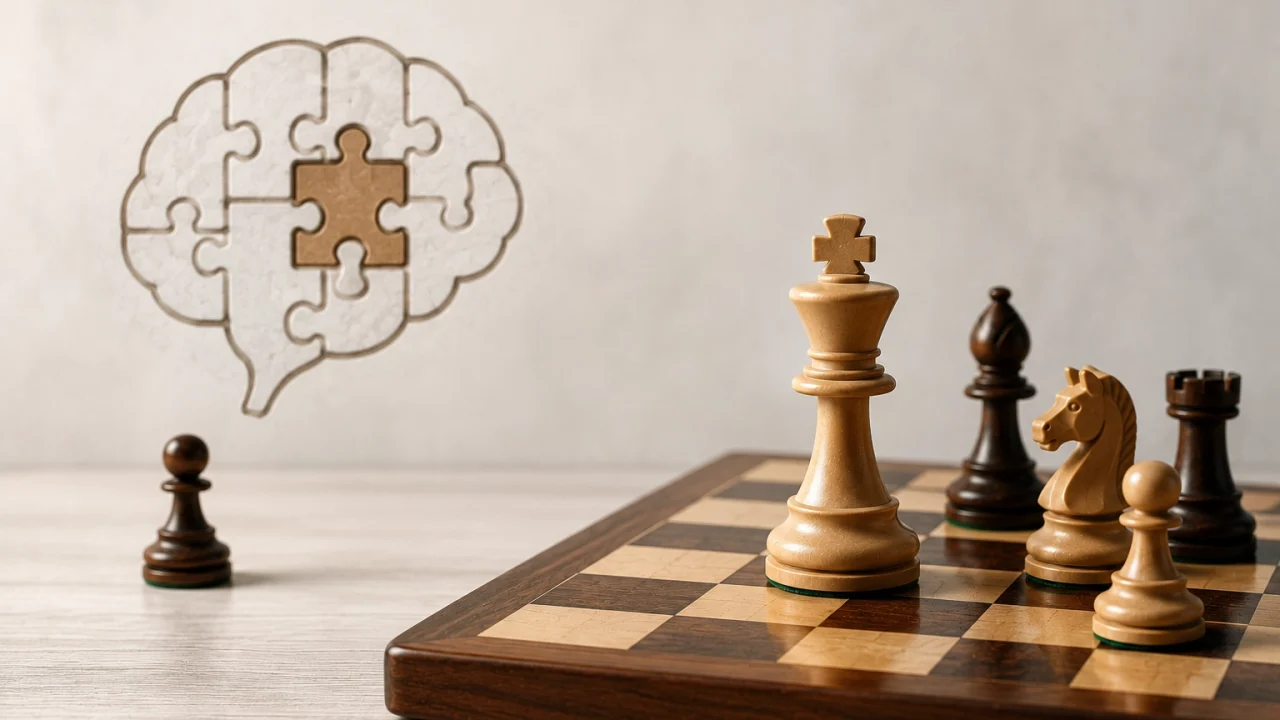
Can a simple board with 64 squares become a tool for training the brain? It may sound surprising, but more and more healthcare professionals, educators, and cognitive specialists are turning to chess for reasons that go far beyond competition. The goal isn’t always to create stronger players—it’s often to help strengthen the mind itself.
More than just a strategy game
At first glance, chess is simply about moving pieces across a board.
But inside the brain, something far more complex is happening.
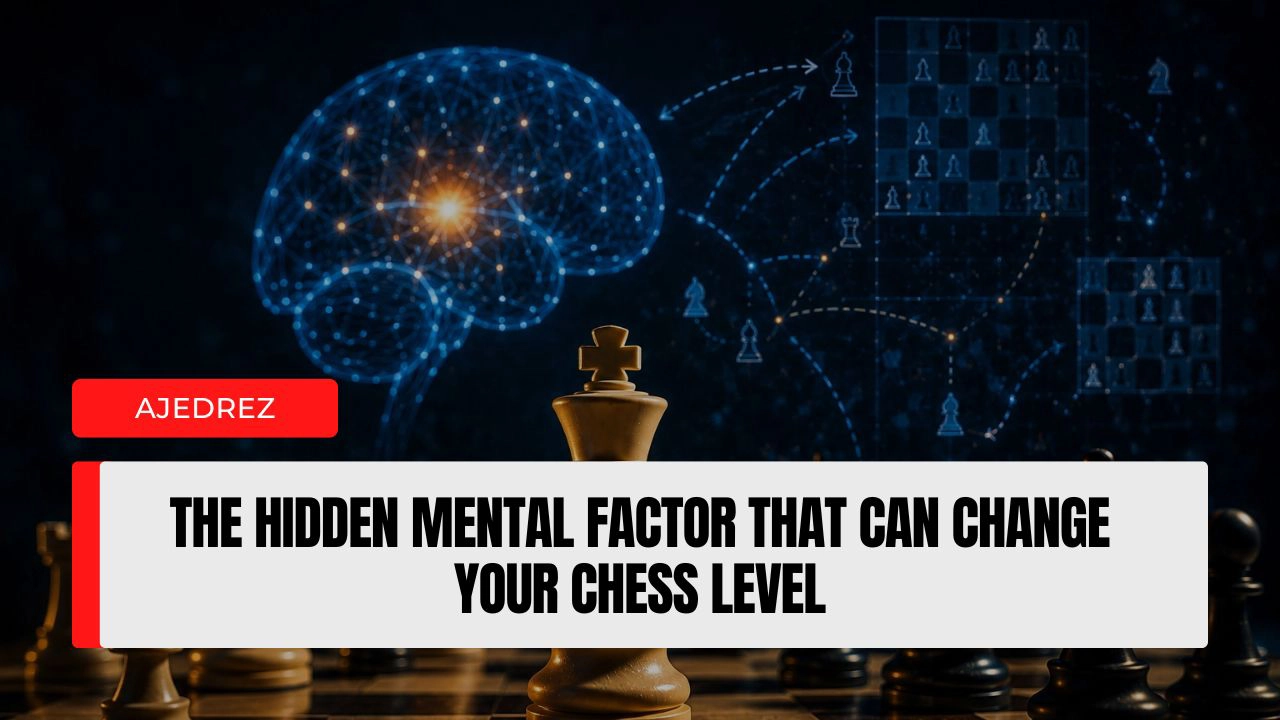
Every move requires players to process information, anticipate consequences, recognize patterns, make decisions, and correct mistakes almost continuously.
Very few activities engage so many cognitive functions at the same time.
That’s one of the reasons chess has attracted the attention of professionals who work with people looking to maintain or recover certain mental abilities.
Not because chess cures diseases.
But because it keeps the brain actively engaged.
A workout for multiple cognitive skills
When a player calculates a variation, they’re doing much more than thinking about the next move.
They imagine different scenarios, eliminate weaker options, hold information in working memory, and choose the best solution.
That process activates functions such as sustained attention, working memory, planning, and problem-solving.
Every mistake also creates an opportunity to adjust strategy and learn.
From a cognitive perspective, that continuous feedback is especially valuable.
The importance of decision-making
One aspect that many specialists appreciate is that chess constantly forces players to make decisions.
There’s no button that reveals the perfect move.
Every choice carries consequences.
That encourages reasoning and problem-solving.
It also develops cognitive flexibility—the ability to change direction when a strategy no longer works.
This is one of the mental skills often targeted in cognitive rehabilitation programs.
The key question: can anyone benefit?
This is where an important question appears.
Do you need natural talent for chess to provide cognitive benefits?
Current scientific evidence suggests the answer is no.
The potential advantages seem to be linked more closely to the learning process than to reaching a high playing level.
Learning new patterns, solving unfamiliar problems, and facing increasingly difficult challenges keeps the brain actively engaged.
Of course, people are different.
Some learn faster.
Others naturally enjoy analytical activities.
Age, previous experience, and certain neurological conditions can also influence results.
But researchers generally agree that training plays a much larger role than many people assume.
Chess is not a medical treatment
This distinction is essential.
Although chess is sometimes included in cognitive stimulation programs, it should never be viewed as a medical treatment.
It does not replace psychologists, neurologists, occupational therapists, or other healthcare professionals.
When chess is used therapeutically, it is typically combined with many other activities designed around each person’s individual needs.
Its role is to complement treatment.
Not replace it.
It also trains emotional skills
The value of chess extends beyond logical thinking.
Every game requires players to deal with frustration.
Accept mistakes.
Wait patiently for the right moment.
Control impulsive decisions.
Stay focused even when things stop going according to plan.
These emotional abilities are also an important part of cognitive training.
Because effective thinking depends not only on memory.
It also depends on how well we manage emotions while solving problems.
A resource for every stage of life
Many people associate chess with children or elite competitors.
In reality, its applications are much broader.
The game can be adapted for different ages, learning styles, and cognitive abilities.
From educational settings to programs designed for older adults, chess offers challenges that can be adjusted to each individual’s needs.
That flexibility is one reason it continues to attract growing interest among professionals focused on brain health.
What science is still trying to understand
Researchers continue exploring exactly how chess influences the brain.
Some studies have found associations between regular chess practice and improvements in specific cognitive skills.
At the same time, scientists emphasize that results vary from person to person, and many questions remain unanswered.
There is broad agreement on one important idea.
Chess can be a valuable tool in certain cognitive training programs.
But its effects depend on many different factors and should never be viewed in isolation.
The final move
Perhaps the greatest value of chess in cognitive therapy isn’t winning games.
Perhaps it lies in everything the brain is forced to do while searching for the next move.
Thinking.
Adapting.
Remembering.
Correcting mistakes.
Planning ahead.
Starting over.
Because every move on the board is more than just another play.
It’s a small mental exercise that reminds us how remarkably adaptable the human brain can be when it’s challenged to keep learning.