When Bad Bunny stepped onto the Super Bowl stage and turned the halftime show into a global cultural moment, most people saw a music spectacle. Millions of viewers, social media exploding, streaming numbers surging and headlines dominating the news cycle for days. It was entertainment, industry, identity. But it was also something else: strategy in motion.
Because what unfolded on that stage was not just performance. It was calculation. It was tempo control. It was environmental awareness. It was risk management. In many ways, it resembled a chess game played inside a stadium.
And the connection is deeper than it first appears.
The opening move sets the tone
In chess, the opening does not decide the game outright, but it establishes direction, rhythm and intent. A confident first move sends a message. Hesitation concedes space.
Bad Bunny did not begin cautiously. He entered with clarity of identity and a repertoire instantly recognizable. He did not attempt to dilute his style to match expectations. He imposed it.
That is what a strong chess player does with a well-chosen opening: they do not merely respond to the opponent — they define the battlefield from the first move.
Controlling the center without touching a piece
In chess, whoever controls the center controls the game. Not necessarily through immediate attacks, but through influence and pressure.
Bad Bunny achieved something similar. He did not simply perform; he dominated the global conversation. For days, the cultural narrative revolved around his show. It was not only about the music, but about symbolism, language and context.
In chess, central control limits the opponent’s options. On the Super Bowl stage, he limited the conversation. The spotlight was fixed.
That is initiative.
The strategic sacrifice
In chess, sacrifices are not reckless gestures. They are calculated decisions: giving something up to gain something greater.
Presenting a performance fully rooted in his cultural identity on a stage traditionally dominated by different norms was, in its own way, a strategic sacrifice. It was not the safest choice. It was not the most conservative path. But it was authentic.
In chess, sacrifices succeed when they generate momentum. On the Super Bowl stage, authenticity generated impact, dialogue and global expansion.
It was not a loss. It was a positional investment.
Tempo is everything
One of chess’s most refined concepts is tempo — knowing precisely when to act. Attack too early and the position collapses. Attack too late and the opportunity is gone.
The performance’s pacing was deliberate. Energy shifts, controlled pauses, calculated climaxes. It was not a random succession of hits, but a constructed narrative.
Tempo cannot be fully taught from a beginner’s manual. It is developed through experience. The same applies on stage.
Reading the opponent — even if unseen
In chess, elite players anticipate how their opponent will react. They prepare for criticism, counterplay and attempts at neutralization.
In a global event like the Super Bowl, the “opponent” is expectation: a diverse audience, media pressure, predictable reactions.
The performance suggested anticipation. It did not attempt to please everyone superficially. It leaned into coherence. And when a player commits to coherent strategy, even criticism amplifies relevance.
In chess terms, that is positional confidence.
The invisible psychological game
Elite chess is not decided by variations alone. It is shaped by psychological pressure — by what you make your opponent feel.
On stage, something similar occurred. It was not merely a musical act; it was a statement of cultural identity on a global platform. That changes the psychological landscape.
Chess and spectacle share a core element: both are narratives of symbolic power.
Managing risk
A mediocre player avoids risk at all costs. A strong player chooses when to embrace it.
The performance was not cautious. It was bold. But that boldness rested on years of brand construction, positioning and artistic coherence. It was not improvisation. It was long-term calculation.
In chess, risk without structure is self-destruction. Risk supported by preparation is dominance.
The cultural endgame
In chess, the endgame reveals who understood the position best. Victory belongs not to the loudest player, but to the one who leaves a winning structure.
After the show, the impact did not fade. It translated into sustained discussion, growth across platforms, international expansion and symbolic consolidation.
That is a strong endgame: turning a moment into lasting influence.
Chess that does not look like chess
Bad Bunny likely did not think in chess terms. There were no literal boards or pawns in sight.
But strategy is not exclusive to chess. Chess is simply strategy in its purest form. When someone acts with vision, coherence, tempo control, risk awareness and environmental reading, they are applying universal strategic principles.
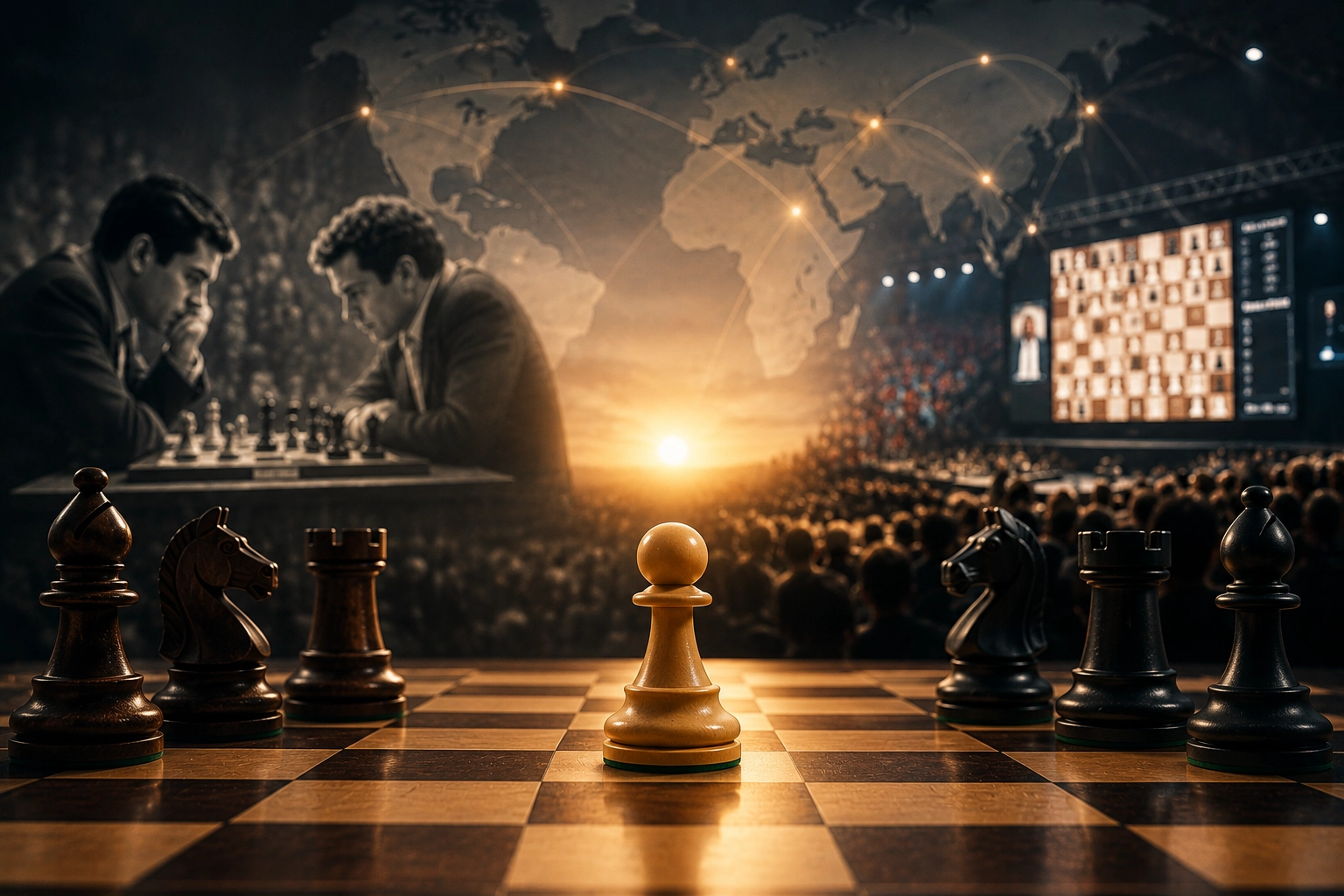
The board can be wooden squares. Or it can be a packed stadium.
The invisible lesson
Chess teaches that success is not built solely on visible talent. It depends on:
- Controlling space
- Managing time
- Choosing risks wisely
- Maintaining initiative
- Converting pressure into advantage
All of these elements were present.
Not as theory — but as execution.
When culture plays chess
Chess does not live in isolation inside silent tournament halls. Its principles appear in politics, economics, sports — and music.
What unfolded was more than a viral performance. It was a demonstration of how influence is built on the largest stage possible.
Bad Bunny may not play chess.
But that night, he played a strategic game flawlessly.
♟️ And he won without ever moving a pawn.