
The French Defense is one of the most solid and popular responses to White’s 1.e4. Characterized by the move 1.e4 e6, this opening focuses on a strong pawn structure, central control, and the potential for counterattack. It is known for its complex pawn formations and multiple strategic variations.
What is the French Defense?
The French Defense begins with 1.e4 e6, a reply that avoids immediate open play and prepares the break with d5 on the next move. Its typical pawn structure on the queenside gives Black a strong central grip, leading to rich, complex games where both sides must play accurately.

Objectives of the French Defense
- Central control: The primary goal is to dominate the center through the d5 break.
- Solid pawn structure: Black builds a strong pawn wall to restrict White’s piece mobility.
- Counterattack: Though solid, the French Defense also allows for counterplay both in the center and on the queenside.

Main Variations of the French Defense
The French Defense offers several variations, each with its own plans and strategic ideas. Below are the most common lines:
1. Advance Variation
This line arises after 3.e5, where White pushes the e4 pawn to gain space. Black then targets weaknesses in White’s pawn chain to begin a counterattack.
Sequence: 1.e4 e6 2.d4 d5 3.e5

2. Exchange Variation
In the Exchange Variation, White captures on d5 early, leading to a symmetrical pawn structure and a simplified position. It’s less common at top levels but popular for players who wish to avoid deep theory.
Sequence: 1.e4 e6 2.d4 d5 3.exd5 exd5

3. Tarrasch Variation
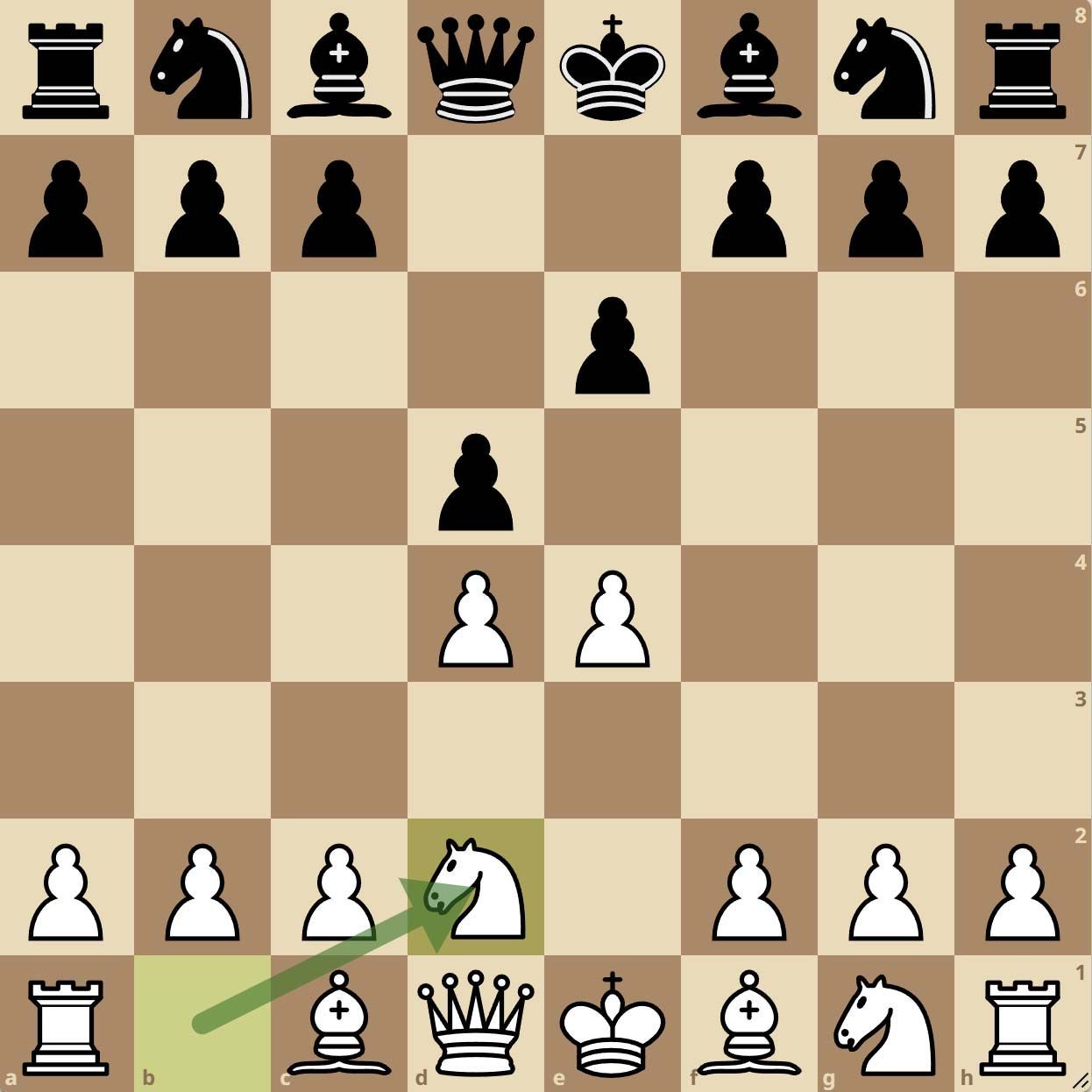
The Tarrasch, marked by the move 3.Nd2, is popular among players looking to avoid early exchanges. Black typically develops naturally while seeking counterplay on the queenside.
Sequence: 1.e4 e6 2.d4 d5 3.Nd2
4. Winawer Variation
The Winawer is defined by 3.Nc3 Bb4, where Black gives up the light-squared bishop to weaken White’s queenside pawns. This leads to sharp, imbalanced positions requiring precise play.
Sequence: 1.e4 e6 2.d4 d5 3.Nc3 Bb4

Comparison of French Defense Variations
| Variation | Advantages | Disadvantages |
|---|---|---|
| Advance Variation | Central control and extra space for White | Black must maneuver carefully to avoid falling behind |
| Exchange Variation | Simplifies the position, less theoretical depth | Lacks dynamism and limits piece activity |
| Tarrasch Variation | Active development and center control | May leave pawn structure vulnerable in the long term |
| Winawer Variation | Direct pressure on White’s pawn structure | Complex tactics that require very accurate handling |
Tips for Playing the French Defense
The French Defense is intricate and requires solid strategy. Here are some key tips:
- Study pawn structures: The French leads to specific formations, understanding them is essential for success.
- Play flexibly: This opening demands adaptation to White’s choices. Avoid automatic moves.
- Watch your light-squared bishop: This piece is often blocked by your own pawns. It’s crucial to find an effective way to activate it.

Pros and Cons of the French Defense
Advantages
- Offers a solid and well-structured defense.
- Enables queenside counterattacks.
- Restricts White’s piece mobility.
Disadvantages
- The light-squared bishop can become passive.
- Requires deep understanding of pawn structures.
- Leads to closed positions, limiting dynamic play at times.
Conclusion
The French Defense is an opening rich in both strategic and tactical possibilities. Its solid structure and focus on central control and counterplay make it an attractive choice for players at all levels. With regular practice and study, the French can become a powerful strategic weapon and a reliable foundation for your chess development.
If you want to learn more about the French Defense, its lines, and middlegame plans, join our online chess school, your first class is FREE!


