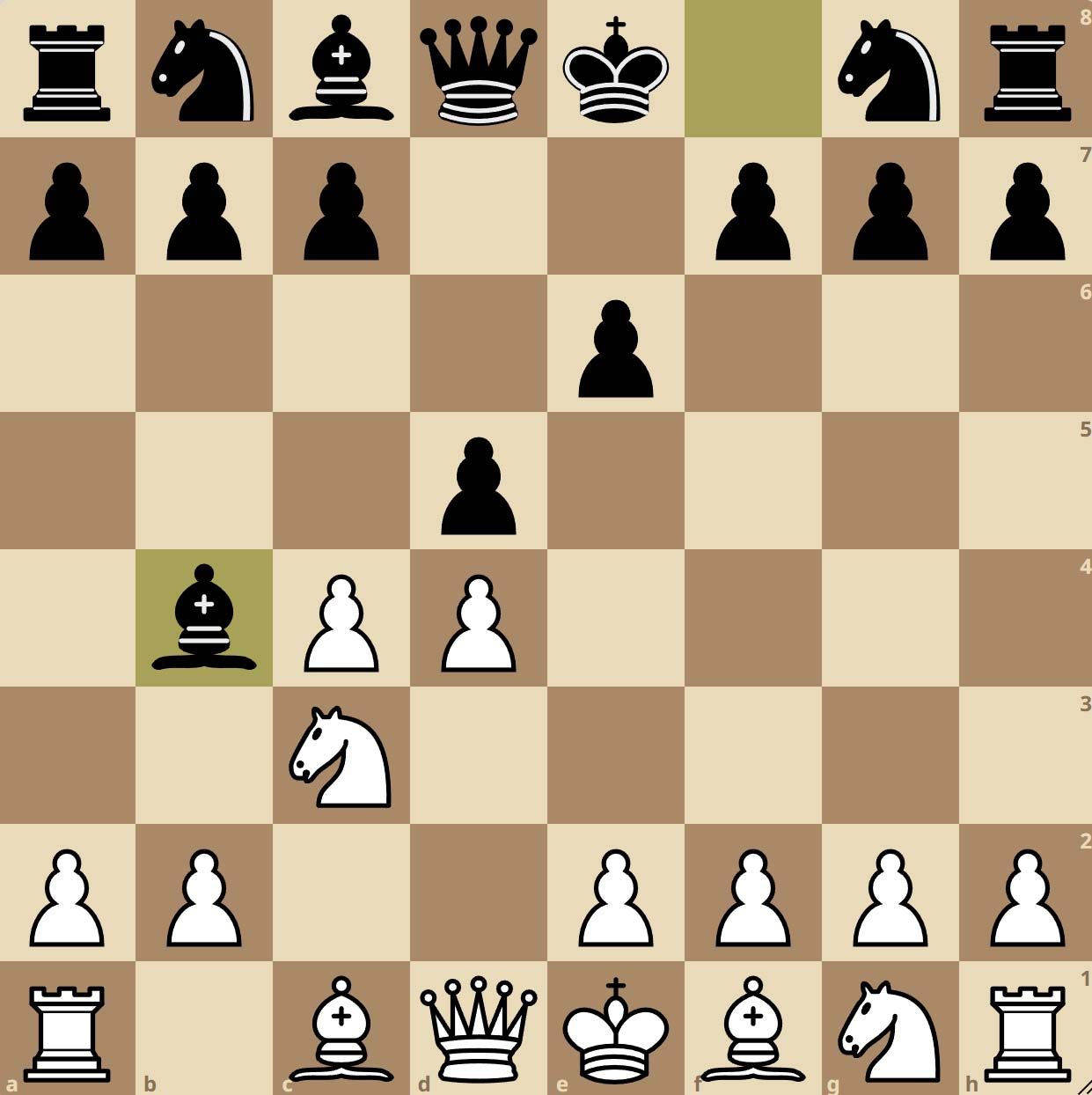
The Cochrane Gambit is a bold and aggressive variation of the Petrov Defense in which White sacrifices a knight early in the game in order to destabilize the Black king’s position and obtain attacking initiative. This opening is named after the Scottish player John Cochrane, who popularized it in the 19th century.
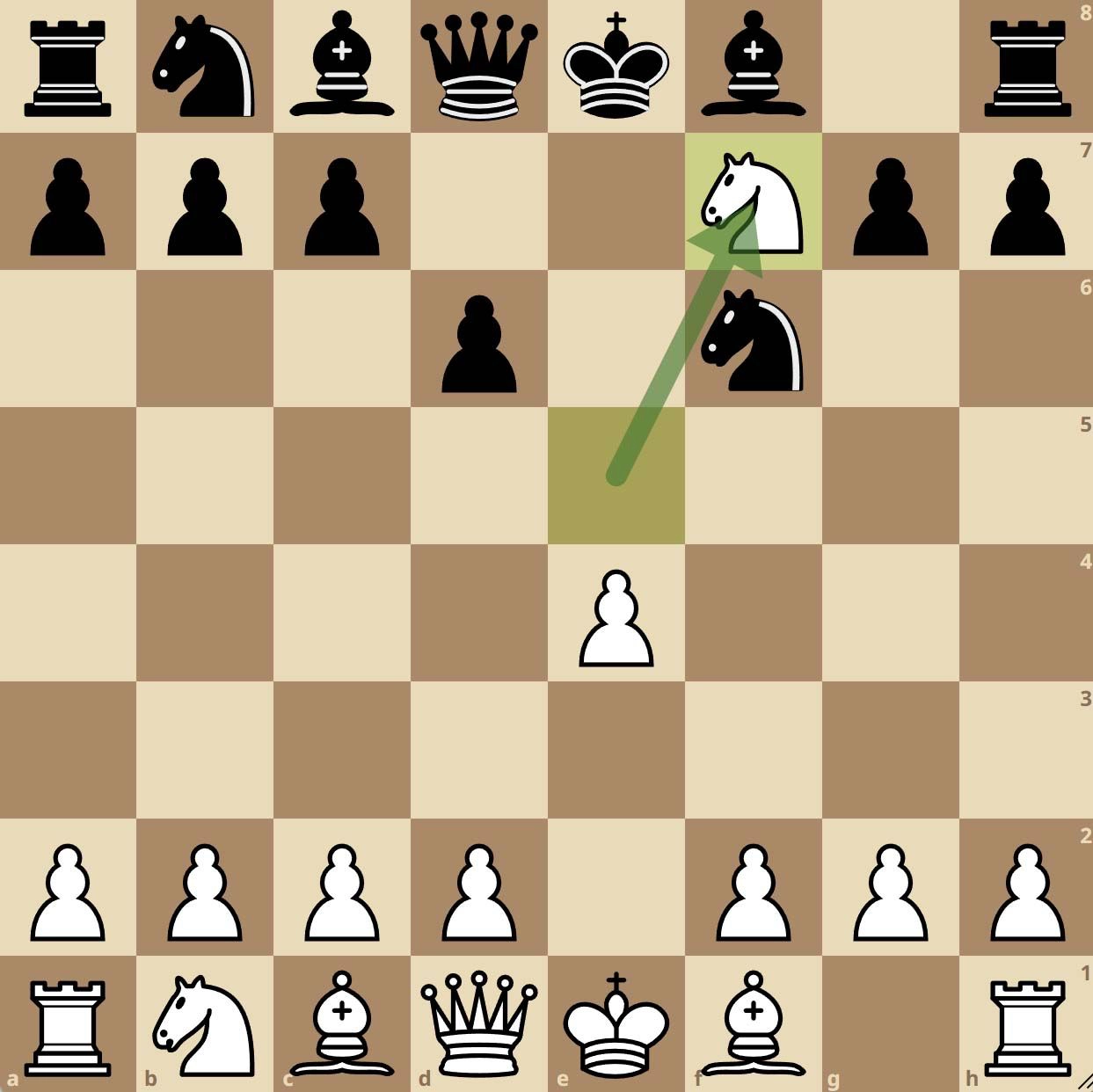
The Cochrane Gambit arises after the moves 1.e4 e5 2.Nf3 Nf6 3.Nxe5 d6 4.Nxf7. In this sequence, White sacrifices a knight on f7, attacking the Black king and forcing it to move. This prevents Black from castling and creates opportunities for a direct and aggressive attack.
Objectives of the Cochrane Gambit
By employing the Cochrane Gambit, White aims to:
- Destabilize the Black king: By forcing the king to move early, castling is prevented and the king becomes exposed to future attacks.
- Gain rapid initiative: In exchange for material, White seeks fast development and the creation of immediate threats.
- Create imbalances: The goal is to generate complex and tactical positions that can surprise the opponent and offer attacking chances.
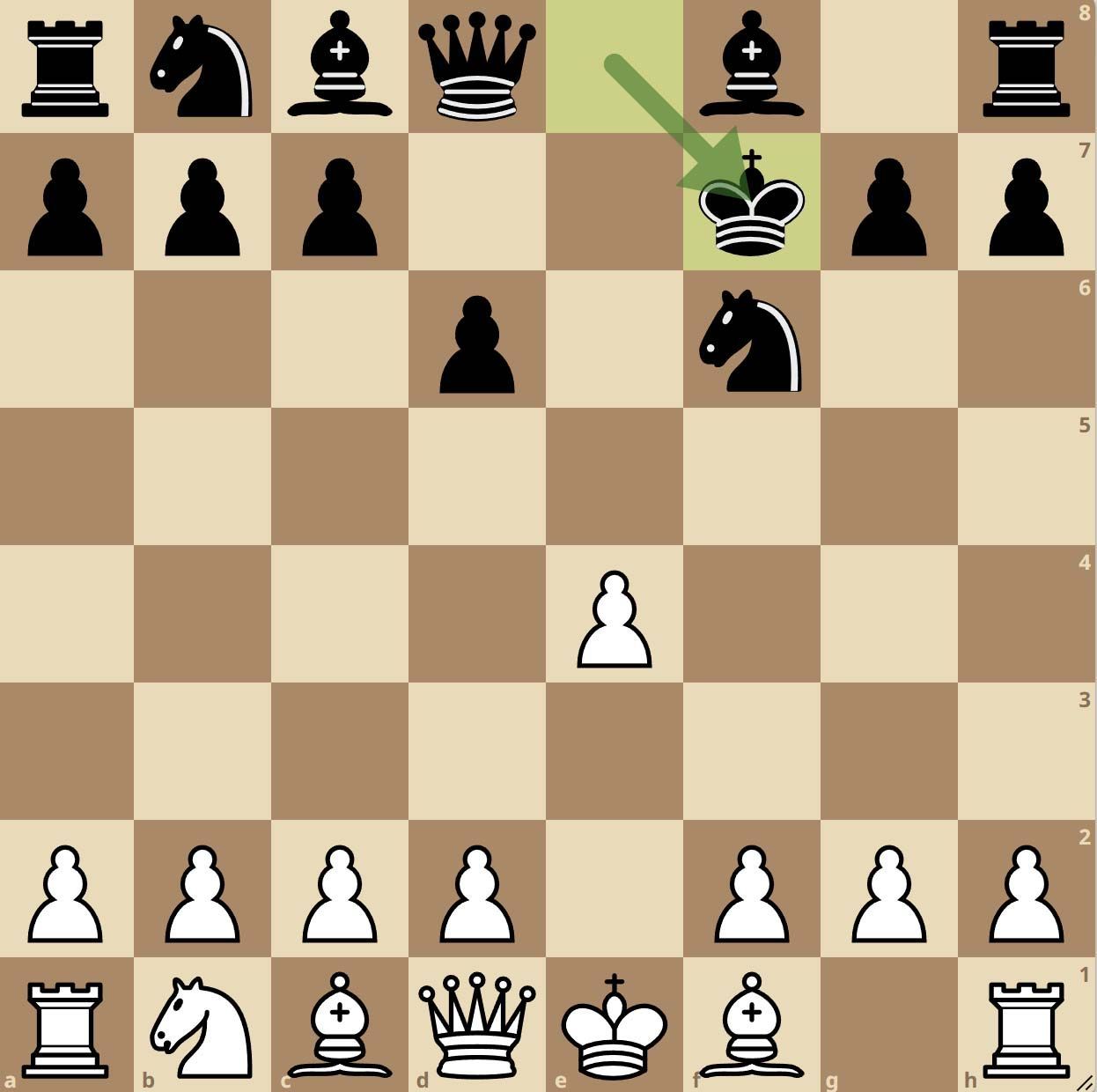
Cochrane Gambit Variations
1. Variation with Nc3
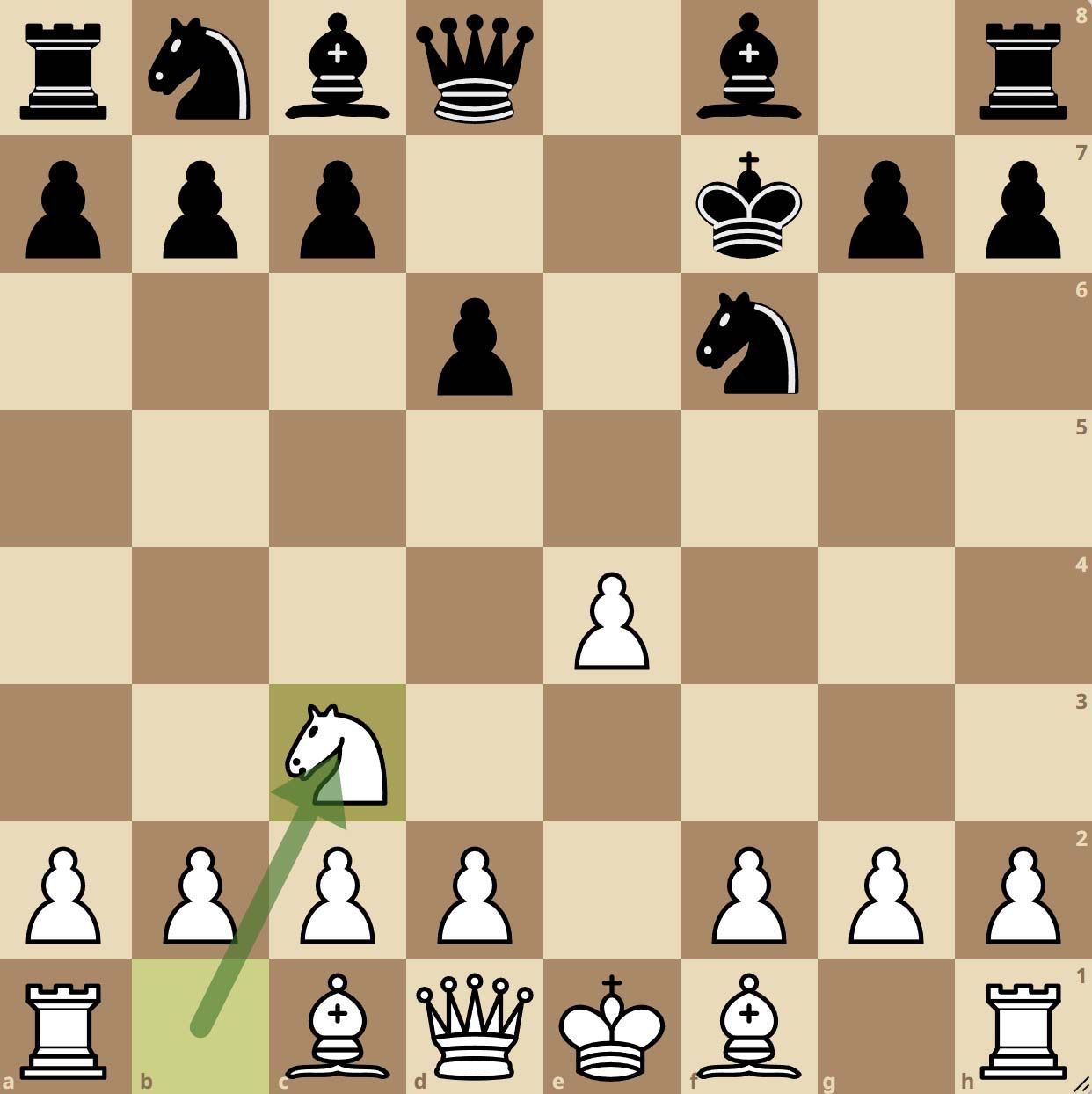
After sacrificing the knight on f7, White aims for rapid development with Nc3, putting pressure on the center and preparing to activate the minor pieces. This variation seeks to maintain the initiative and attack the Black king, which has lost the ability to castle.
1.e4 e5 2.Nf3 Nf6 3.Nxe5 d6 4.Nxf7 Kxf7 5.Nc3
2. Variation with d4
In this variation, White immediately plays d4, aiming to open the center and accelerate the attack. This line emphasizes central control and allows rapid mobilization of the pieces, taking advantage of the exposed Black king.
1.e4 e5 2.Nf3 Nf6 3.Nxe5 d6 4.Nxf7 Kxf7 5.d4
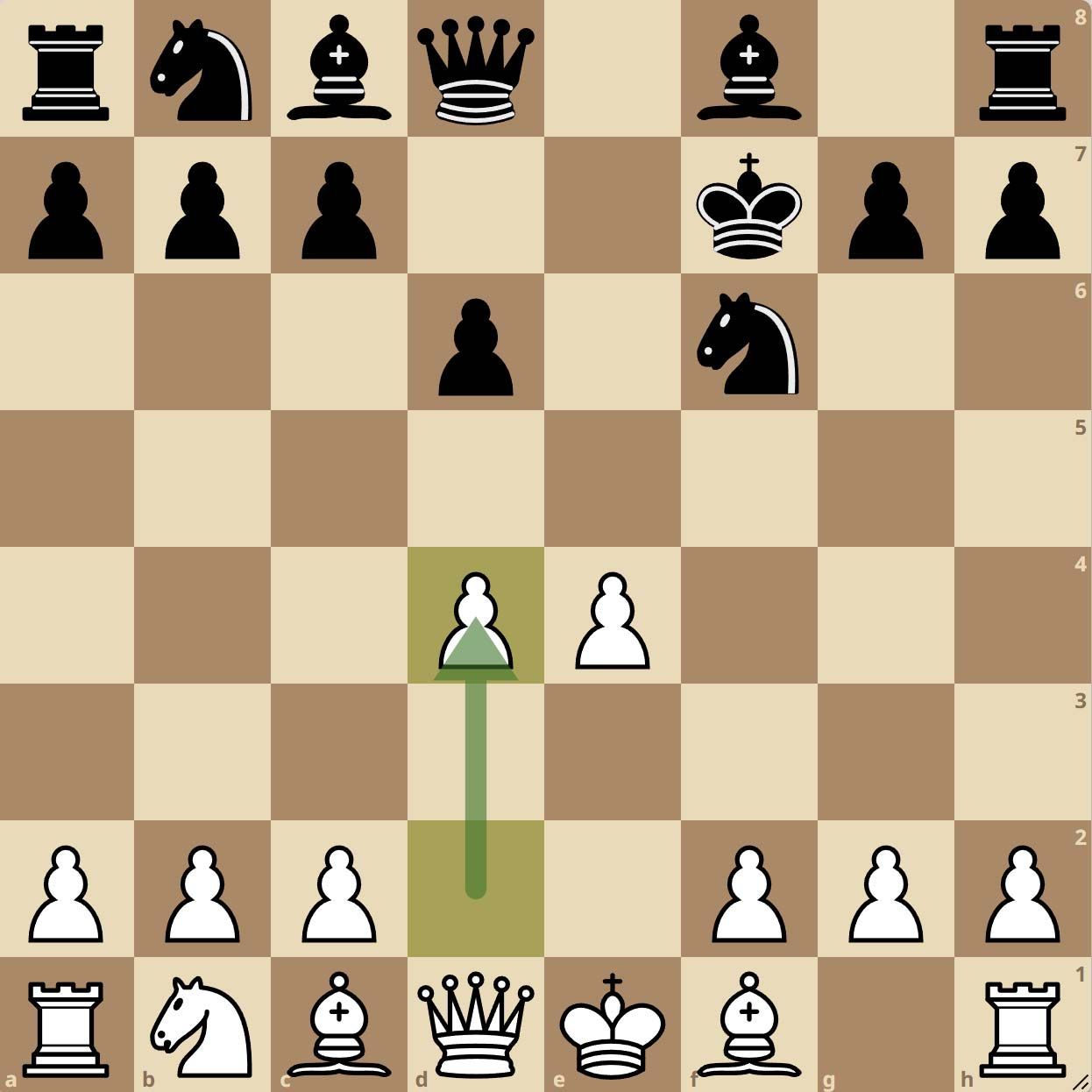
Comparison of the main variations
| Variation | Advantages | Disadvantages |
|---|---|---|
| Variation with Nc3 | Fast development and immediate central pressure | Black can counter with solid development and piece exchanges |
| Variation with d4 | Greater central control and the ability to open lines quickly | The material sacrifice requires precision to maintain the initiative |
Tips for playing the Cochrane Gambit
To make the most of the opportunities offered by the Cochrane Gambit, consider the following tips:
- Rapid development: Develop your minor pieces quickly, especially bishops and knights, to create immediate threats against the exposed king.
- Central control: Use your pawns and pieces to dominate the central squares, allowing better coordination of your attack.
- Constant pressure: Maintain the initiative by creating continuous threats, forcing your opponent to defend and hindering their development.
Conclusion
The Cochrane Gambit is a brave and aggressive option for White, aiming to destabilize the opponent from the very first moves. Although it involves a material sacrifice, it offers strong attacking chances and can surprise players who are unfamiliar with its complexities.
If you want to learn more about the Cochrane Gambit, its lines, and its typical middlegame plans, sign up for our online chess school, where we offer the first class FREE!