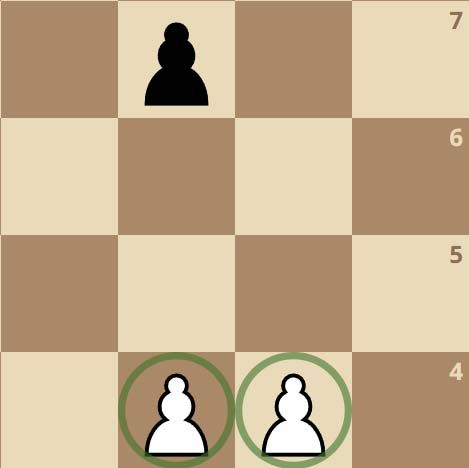

The passed pawn is one of the most fundamental concepts in chess. Knowing how to use it properly can make the difference between winning and losing. It’s a strategic tool that every chess player must understand and master.
In this article, we’ll dive into what a passed pawn is, how it’s created, its advantages, and how to use it effectively in your games. We’ll also look at some practical examples to better illustrate the concept.
What Is a Passed Pawn?
A passed pawn is a pawn that cannot be stopped by an opposing pawn on its way to promotion. In other words, it has a clear path forward with no enemy pawns that can directly block its advance. For a pawn to be considered passed, it must meet two key conditions:
- There are no enemy pawns on the same file or the adjacent files that can block its advance.
- The pawn has a clear route to the eighth rank (or first rank if it’s a black pawn).
Unlike isolated pawns, passed pawns have enormous power, if pushed forward, they become a dangerous threat on the board.

How Is a Passed Pawn Created?
Creating a passed pawn requires careful planning and a solid understanding of positional dynamics. Here are some of the most common ways to create a passed pawn during a game:
1. Capturing Enemy Pawns
One of the most common ways to create a passed pawn is by capturing enemy pawns on adjacent files. When those pawns are removed, your own pawn can move forward freely. This usually involves a battle for key squares where exchanges occur.
Example:
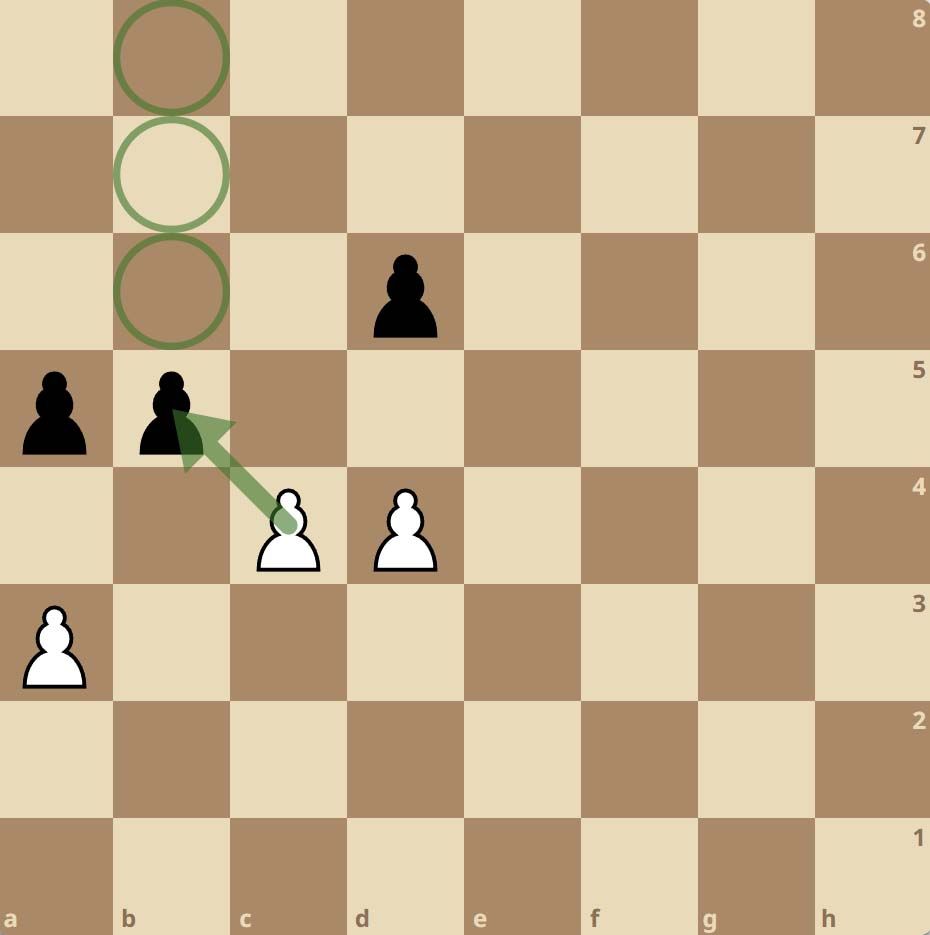
Imagine you have a pawn on c4 and your opponent has a pawn on b5. If you play cxb5, your pawn on b5 becomes passed, it now has no enemy pawns in the neighboring files to stop it.
2. Exploiting Your Opponent’s Weakness
Another way to create a passed pawn is to exploit the weaknesses in your opponent’s pawn structure. If your rival has poorly placed pawns or lacks control of the center, you can advance your pawn into a more favorable position. This is often the case when the opponent has isolated or doubled pawns.

3. Advancing Central Pawns
Controlling the center in chess is a cornerstone of strategy. If you manage to open the center and your opponent doesn’t have a solid defense, you may find an opportunity to advance a pawn and turn it into a passed pawn. But be careful, if you don’t support it properly, the pawn can be stopped.

How to Play with a Passed Pawn
Once you have a passed pawn, it’s essential to make the most of it. Here are some key tips for using it effectively:
1. Protect It with Your Pieces
Despite its power, the passed pawn is vulnerable, especially if isolated. Make sure to protect it with your major pieces (rooks, knights, or queens). Sometimes it’s also necessary to keep a piece near the promotion square to ensure it can’t be captured easily.
2. Advance Gradually
Advancing a passed pawn should be done step by step and with precision. Push it one square at a time, making sure there are no enemy pieces that can stop it. Maintain pressure on your opponent while you do so.
3. Use the Passed Pawn as a Decoy
A passed pawn isn’t just for promoting, it can also serve as a distraction. By threatening promotion, you can force your opponent to commit resources to stop it, giving you room to attack on other parts of the board.
How to Defend Against a Passed Pawn
Defending against a passed pawn can be challenging, but it’s far from impossible. Here are some practical ways to handle the threat:
1. Block It with a Piece
One of the most effective defenses is to block the pawn with a piece. Rooks and knights are especially good for this role because they can hold strong defensive positions without being easily displaced.
2. Launch a Counterattack
When your opponent pushes a passed pawn, they may leave other parts of their position exposed. Take advantage of any structural weaknesses or poorly placed pieces to launch a counterattack. If you create threats elsewhere, they may be forced to abandon the pawn.
3. Cut Off Communication with Supporting Pieces
The pieces supporting a passed pawn are vital to its advance. If you can cut the connection between the pawn and its defenders, the pawn becomes much easier to stop or capture.
Practical Example
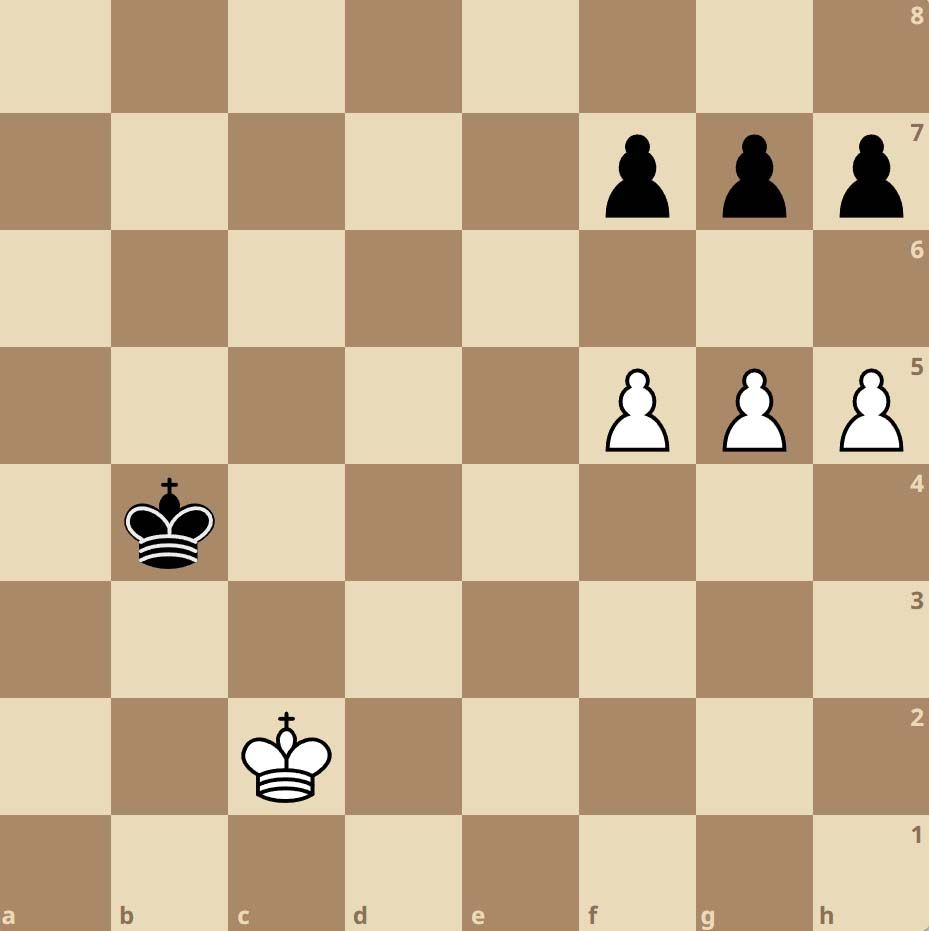
To illustrate how a passed pawn can change the course of a game, consider a common endgame scenario: both sides have three pawns.
White plays g6, sacrificing a pawn. Black has two options:
1…hxg6 → 2. f6! gxf6 3. h6, and now the h-pawn promotes.
In this case, the decoy strategy targets the h-pawn instead.
1…fxg6 → 2. h6! gxh6 3. f6, and the pawn on the f-file promotes.
Here, the h6 move serves as a decoy to divert the g7 pawn and make room for the f-pawn to advance.
Conclusion
The passed pawn is one of the most powerful strategic weapons in chess. Not only does it carry the potential to promote, but it can also destabilize your opponent’s position and apply constant pressure. Learning how to create, defend, and play with a passed pawn is essential for any chess player aiming to improve and win consistently.
To learn more about chess strategy, or if you want to improve other areas of your game, visit our blog entries for free. 😉