Welcome to this new category of our Chesscul blog, your online chess school. In this section we will explore the fascinating journey of chess from its humble origins to the competitive and professional landscape of today. Keep reading and discover the full history of chess! 😉
Where and when was chess invented? Discover its origin
Chess, as we know it today, is the result of a cultural evolution that spans centuries and civilizations. Its origins date back approximately to the 6th century in the Indian subcontinent, where a game called chaturanga emerged, considered the most direct ancestor of modern chess.
Chaturanga was a strategy game for four players that represented the four branches of the ancient Indian army: infantry, cavalry, elephants, and chariots. These pieces evolved over time into the pawns, knights, bishops, and rooks of modern chess. The board consisted of 64 squares, just as it does today, and the objective was to capture the opponent’s king.
Later, chaturanga moved to Persia, where it transformed into shatranj. This game introduced several key modifications: it was played between two people, and the movement rules of the pieces began to take a form closer to contemporary chess. It was during this stage that the term “king in check” (shah mat in Persian) appeared, the origin of the term “checkmate”.
After the Islamic conquest of Persia, shatranj spread throughout the Arab world and later into Europe through the Iberian Peninsula in the 8th century. During the Middle Ages, chess became a symbol of nobility and prestige. Monarchs, aristocrats, and thinkers played chess not only as entertainment but also as an educational tool and a model of strategic thinking.
It was in Renaissance Europe that chess underwent a decisive transformation. At the end of the 15th century, in Italy and Spain, the rules were modified to make the game more dynamic: the queen (formerly a weak piece) acquired her current movement, becoming the most powerful piece on the board, and the bishop gained the ability to move diagonally without limit. This new version of chess was called the chess of the mad queen because of the explosiveness it introduced into the game.
These reforms not only made the game more attractive but also helped popularize it throughout Europe. In the following centuries, chess became a key tool for developing logic, memory, and strategy.
From the 18th century onward, with the rise of Enlightenment thinking, chess became even more closely associated with intellect and science. The first chess clubs were founded, such as the famous London Chess Club, and the first recognized masters emerged, laying the foundations for the future professionalization of the game.

This millennial journey from India to the intellectual cafés of Europe not only demonstrates the cultural richness of chess, but also its power to unite generations and cultures around a board of 64 squares.
In the following sections, we will continue exploring this fascinating history: the world championships, the figures who changed the course of the game, and the digital era that has transformed chess forever.
18th and 19th centuries: chess takes its modern form
The 18th century marked a new stage for chess, when it began to consolidate as a formal intellectual discipline. During this period, the first chess clubs were established, especially in cities such as London and Paris, and chess started to be considered a science of strategic thought, not merely a pastime.
One of the most important milestones was the development of romantic chess, a style of play based on tactics, spectacular sacrifices, and aggressive attacks against the king. This approach was typical of the first half of the 19th century and represented the spirit of the game in that era: creativity, tactical brilliance, and drama in every move.
During this period some of the first great figures of the modern chessboard emerged:
François-André Danican Philidor, French musician and chess player, who wrote one of the first systematic treatises on strategy, L’Analyse du jeu des Échecs (1749), where he formulated positional principles far ahead of his time.
Howard Staunton, considered the strongest player in the world in the 1840s and a key figure in the institutionalization of competitive chess, as well as the promoter of the first international tournament in London (1851).
Adolf Anderssen, the greatest representative of romantic chess, author of legendary games such as The Immortal Game and The Evergreen Game, authentic symbols of 19th-century tactical chess.
Paul Morphy, the American genius who dominated the European elite with an exceptional combination of rapid development, tactical precision, and strategic understanding, anticipating many concepts of modern chess.
In the second half of the 19th century, chess began to evolve toward greater strategic depth and competitive organization. In this context, several figures emerged who acted as a bridge between romanticism and scientific chess:
Mikhail Chigorin, a central figure of Russian chess whose dynamic and creative vision decisively influenced later generations and laid the foundations of the future Soviet school.
Siegbert Tarrasch, one of the great theorists of the late 19th century, defender of clear positional principles and a more scientific conception of the game.
Harry Nelson Pillsbury, a brilliant American talent known for his energetic play and strong performances in international tournaments during the final years of the 19th century.
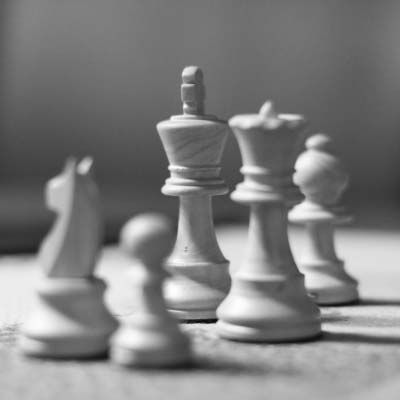
It was also during this period that the design of chess pieces was standardized. In 1849 the Staunton style was introduced, the official chess piece design still used today. Its functional and standardized form facilitated the international spread of the game and the organization of official competitions.
The 19th century concluded with the consolidation of chess as a modern intellectual sport: regular tournaments, ranking systems, timed games, and the introduction of the chess clock. From that moment onward, chess definitively left behind its artisanal stage and entered an era of structured and professional competition.
The World Championship: A new era
The establishment of the World Chess Championship in 1886 marked a turning point in the history of competitive chess. For the first time, the world officially recognized a supreme champion of the board. Wilhelm Steinitz became the first World Champion by defeating Johannes Zukertort in a historic match. Steinitz was not only a great player but also a revolutionary theorist who introduced positional principles that laid the foundations of modern chess.
After Steinitz came champions who not only defended their titles but elevated the depth, precision, and professionalism of the game. Emanuel Lasker held the title for 27 years, imposing a practical and psychological style. José Raúl Capablanca, the Cuban genius, amazed the world with his simple, elegant, and almost error-free play. Alexander Alekhine, with his tactical creativity, ushered in an era of strategic complexity.
Then came Max Euwe, a Dutch mathematician who defeated Alekhine in 1935, bringing scientific rigor and discipline to the game. After World War II, Mikhail Botvinnik emerged as the pillar of Soviet chess. Considered the father of the Soviet school, his systematic approach influenced entire generations.
Botvinnik was followed by great representatives of that school: Vasily Smyslov, champion in 1957 with a harmonious and elegant style; Mikhail Tal, the Magician from Riga, whose tactical vision dazzled the world with brilliant and unpredictable sacrifices; and Tigran Petrosian, master of defensive chess and strategic prevention, who won the title in 1963.
In 1969, Boris Spassky became champion with a universal style capable of adapting to any position. However, his reign was interrupted by one of the most famous moments in chess history: in 1972, Bobby Fischer, the American genius, defeated Spassky in Reykjavík during the Cold War. Fischer became a legend, not only for his talent but for bringing chess into a new media dimension.
After Fischer’s withdrawal, Anatoly Karpov became champion and dominated the scene for more than a decade with a precise positional style and deep understanding of structures. Then came his great rival: Garry Kasparov, an explosive, creative, and dynamic player who marked an era with his absolute dominance from 1985 to 2000.
The next champion was Vladimir Kramnik, who defeated Kasparov in a match without losing a single game. Kramnik ushered in a new era with solid strategic vision and deep theoretical preparation. In 2007, after defeating Veselin Topalov, who had held the title for one year, Viswanathan Anand became the first Indian world champion, standing out for his speed, versatility, and class.
From 2013 onward, Magnus Carlsen became the dominant figure. With an intuitive approach, unmatched strategic understanding, and exceptional endgame mastery, the Norwegian successfully defended his title for a decade. In 2023, after deciding not to defend the crown, a new match crowned Ding Liren as world champion, the first from China, symbolizing the global expansion of chess.
After this, Gukesh D became world champion on December 12, 2024, after defeating Ding Liren.
List of other great chess players
In this list we mention numerous players who are references in the world of chess. We also have several subcategories where we organize them: